
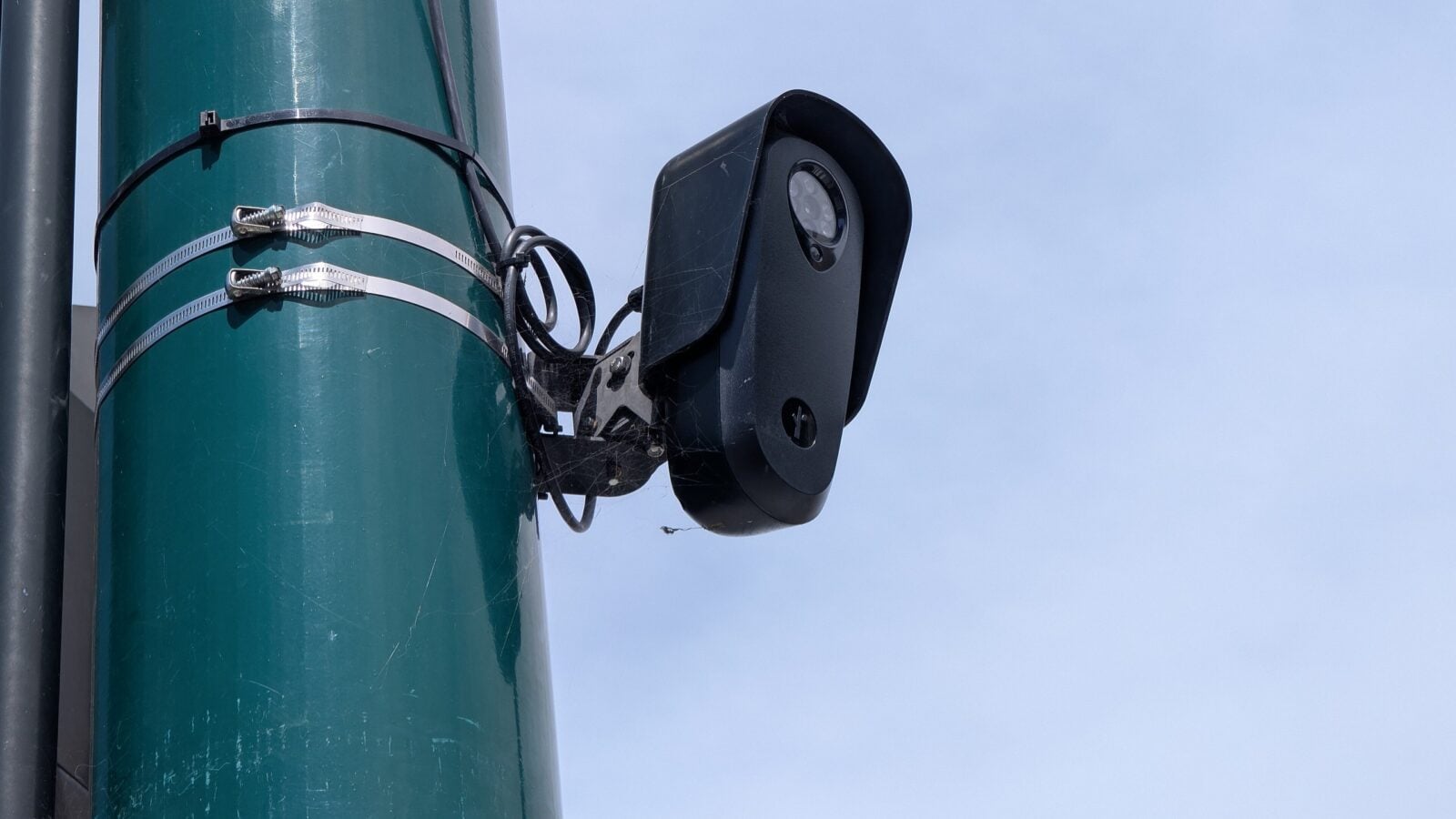
West Lafayette city council voted unanimously on Monday 5 October 2026 to cut the retention period for Flock Safety licence plate camera images from 30 days to seven, WLFI reported, and the same night approved sewer usage rate rises for each of the years 2027 to 2030.
The seven-day limit applies only to images and data not related to an active law enforcement investigation. Data tied to an active investigation may be held longer, as under the 2022 resolution the new measure amends.
Resolution No. 25-2026, sponsored by councillors David Sanders and Stacey Burr, amends Resolution No. 09-22, which the city approved on 3 May 2022. That resolution permits use of the cameras for warrants, criminal investigations and missing persons.
The amendment also states that images “will be static still or short-interval photo burst images” and that “Video recording, live feeds, or voice files will not be utilized.” The remainder of the 2022 resolution is unchanged.
The measure does not remove the city’s four cameras contracted through Flock Safety. The seven-day limit matches current West Lafayette Police Department policy.
At the meeting, councillor Iris O’Donnell Bellisario asked whether losing 23 days of data would be a concern for investigations, the Purdue Exponent reported. Sanders said it was of no concern. Police Chief Adam Ferguson initially disagreed. “Of course there’s a concern,” Ferguson said.
After the meeting Ferguson said his department was prepared for the change. “Quite frankly, we made the seven-day adjustment long before just internally as an agency to try and address those concerns even before the council took action. We’ve been at it for almost a month now,” he said.
City Attorney Eric Burns said restrictions on selling data were legally enforceable. “If they share (the data) at all, other than for law enforcement and all the proper purposes that we’re all aware of, then they are in breach of the agreement,” Burns said.
Before the vote, Burr said the update would not resolve every concern, Based in Lafayette reported. “This is a step in what I anticipate will be further work to address concerns about one of the ALPR vendors and update the data and privacy safeguards of the digital systems we use to improve public safety,” she said.
The council also gave final passage to Ordinance No. 21-2026, sponsored by Mayor Erin R. Easter, on its second of two readings. No residents spoke at the public hearing before the vote, and the ordinance passed unanimously.
The ordinance sets the general user sewer usage rate at $7.51 per 1,000 gallons for service after 31 December 2026, $7.66 for service in 2028, $7.81 for service in 2029 and $7.97 for service after 31 December 2029. The current rate, which took effect on 1 January 2026, is $7.36.
The ordinance states that “persistent elevated inflation has increased the costs of operating and maintaining the sewage works” and that the rates “should be increased in phases”.
A rate study by O.W. Krohn & Associates, the city’s municipal adviser, dated 19 August 2026, proposed four phases of 2 per cent each, effective 1 January 2027, 1 January 2028, 1 January 2029 and 1 January 2030. It said “approximately a 10.0% across-the-board rate increase is required” and that the utility had a shortfall of about $1.3m.
The study estimated that “an average user (5,000 gallons) will experience a monthly bill increase of approximately $1.00 each January 1st.” That figure is the consultant’s estimate and does not appear in the ordinance.
Purdue University’s usage charge is set at $7.15 per 1,000 gallons in 2027, $7.29 in 2028, $7.44 in 2029 and $7.59 from 2030, plus a monthly billing charge of $5.77 in 2027 rising to $6.13 in 2030.
The monthly combined sewer overflow surcharge per equivalent dwelling unit for 5/8 inch or 3/4 inch meters rises from $12.04 in 2027 to $12.28 in 2028, $12.53 in 2029 and $12.78 in 2030 and thereafter.
The city’s Council Quick Notes bulletin of 8 October 2026 recorded both measures as passed. Minutes of the 5 October 2026 meeting had not been posted on the city’s Granicus portal as of 20 October 2026.
Sources:
- City of West Lafayette, City Council agenda, 5 Oct 2026
- Ordinance No. 21-2026 (sewage works rates)
- O.W. Krohn & Associates, 2026 Rate Study, 19 Aug 2026
- Resolution No. 25-2026 (licence plate cameras)
- Resolution No. 09-22 (2022)
- City of West Lafayette, Council Quick Notes, 8 Oct 2026
- WLFI, 6 Oct 2026
- Purdue Exponent, 7 Oct 2026
- Based in Lafayette, 29 Sep 2026