
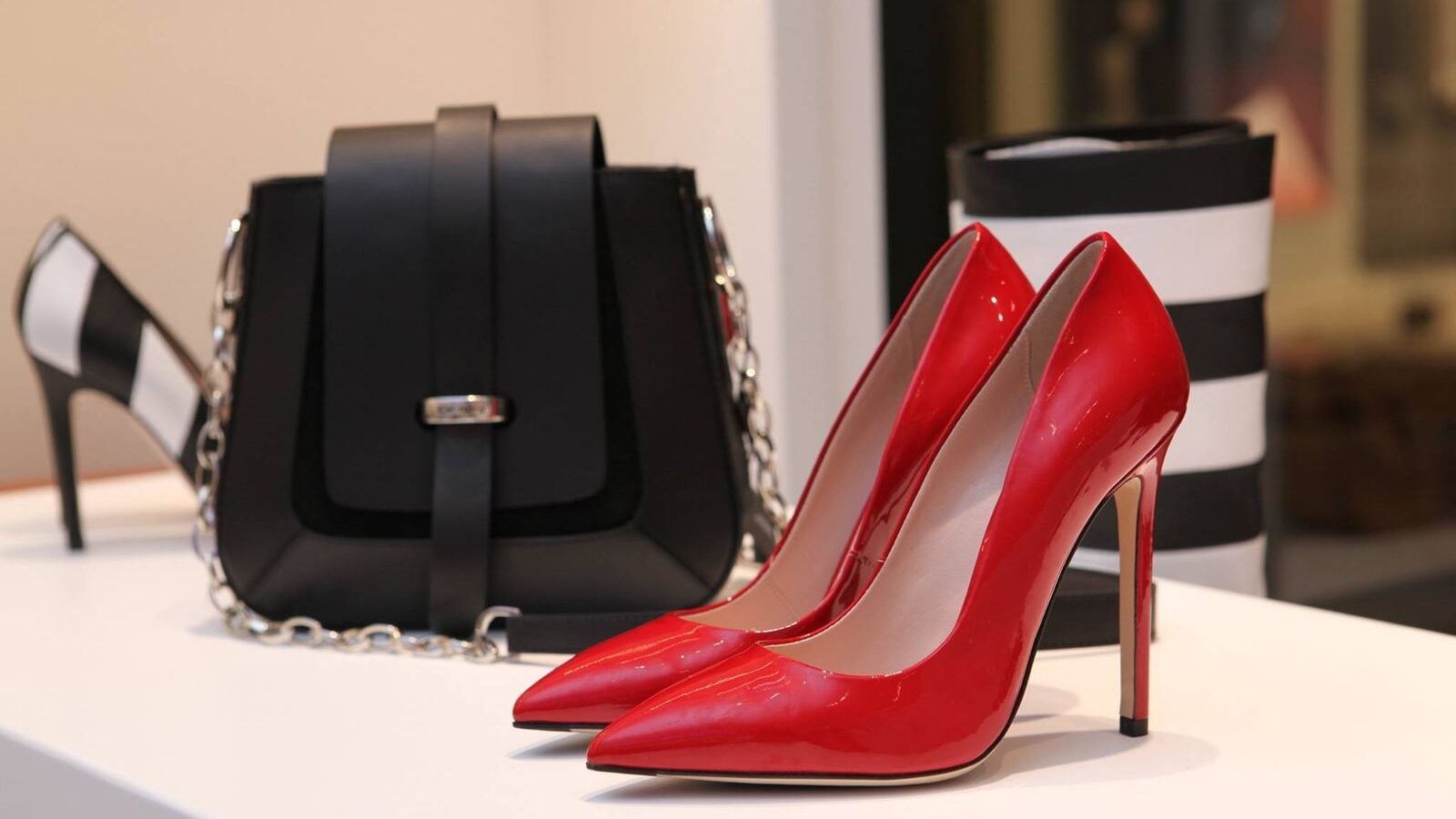
The people working hardest to look wealthy are usually the ones with the least of it. That is closer to arithmetic than to moral judgment. The visible spending is what is left over once the invisible cushion has already gone.
This is what conspicuous consumption looks like in its current, slightly frayed form — not the private wealth of people who already have it, but the visible strain of people trying to convince a rotating audience that they do. The gap between those two things has always existed. What has changed is how much surface area a person is now expected to perform on, and how quickly the audience learns to spot the tells.
The academic literature on this behavior is older than the phones people now use to broadcast it. Conspicuous consumption describes the purchase of goods primarily to display social status rather than for intrinsic utility, a pattern that intensifies under specific conditions: income inequality, dense urban environments, and cultural cues that link visible spending to worth. In a 2022 paper in Frontiers in Psychology, Andrea Velandia-Morales, Rosa Rodríguez-Bailón and Rocío Martínez found that raising people’s perception of economic inequality raised their preference for status goods, with status seeking doing the mediating work. The pressure is not evenly expressed. The middle is where it shows most, because the middle has the most to lose by being mistaken for something below it.
The first habit is the car that outruns the house it is parked at. The German sedan on a payment plan that quietly outweighs every other fixed cost in the household, sitting in the driveway of a rental with an appliance nobody has bothered to get fixed. The car is seen by coworkers, by extended family, by everyone from school. The broken dishwasher is not.
The math is the giveaway. People with actual wealth generally spend a smaller share of their income on visible depreciating assets, because the car is not required to say anything on their behalf. It is transportation. When a vehicle is doing more work as a signal than as a machine, the ratio has flipped.
The second habit is the logo tax. Not the quiet luxury of a well-cut jacket without any branding, but the belt with the interlocking letters, the sneaker with the visible red sole, the tote bag whose entire design purpose is to be read at a distance of fifteen feet. Writing in Psychology Today, Wendy L. Patrick summarises work by Yan Wang and colleagues showing that conspicuous consumption is not limited to people of high status — it can also compensate for feeling low in a hierarchy, and it was most common among people who rated their own socioeconomic position as low and believed they had little chance of moving up. People who feel settled in their position tend, over time, to strip the labels off.
This is not a rule. It is a pattern. Old-money aesthetics have their own performance layered inside them. But the pattern holds well enough that stylists, headhunters, and private-school admissions officers have quietly noticed it for decades.
The third habit is the social feed as portfolio. The vacation is not real until it is posted. The restaurant is not visited until it is geotagged. The renovation is not finished until the before-and-after carousel goes up. Posting frequency itself functions as a signal, a way of demonstrating busyness, access, and mobility to an audience that would not otherwise know. What the grid cannot show is how any of it was financed, or which trips were tacked onto a work conference somebody else paid the airfare for. That is not lying, exactly. It is editing.
The pattern also runs in reverse. People who rarely post tend to organize their sense of worth around something other than the count of witnesses.
The fourth habit is the language of money without the substance of it. Casual references to my guy — a wine guy, a tailor, a mechanic who only works on European engines. Dropping the neighborhood name instead of the city. Using the phrase we usually go to for a restaurant visited twice. Correcting other people’s pronunciation of French, Italian, or Japanese words in ways that were not requested.
The strategy behind it is not confined to American dinner tables. In a 2026 study in Frontiers in Sociology, Shasha Du and Michael Ohsfeldt interviewed 21 students from Chinese middle-class families about how an overseas education gets talked about back home, and found the same experience narrated differently depending on who was listening: pitched as practical investment to elders, as lifestyle to peers. In their phrasing, the conspicuousness itself is strategically modulated depending on the audience. The vocabulary is the delivery mechanism.
People who grew up around money tend to under-name things. People who are climbing tend to over-name them. This is not moral. It is just observable.
The fifth habit is the entertaining that outruns the home. The annual party that has become locally famous inside one particular circle: catered food, a hired bartender, a curated playlist, a photographer who is a friend doing it as a favor but is credited on the invitations. The party costs roughly what a two-week vacation would. What the guests do not see is the retirement account, or the freelance income that has quietly stopped covering what it used to. The party is the answer to a question no one has asked out loud: are they okay? Yes, the party says. They are more than okay.
This is the anxiety underneath the performance, and it is worth naming plainly. People who feel their position is uncertain tend to spend disproportionately on the moments that are witnessed, and cut disproportionately from the moments that are not. The savings account is invisible. The party is not. The cuts go where the cameras are not.
The sixth habit is the child as accessory. Not the ordinary pride of a parent whose kid did something interesting, but the strategic deployment of the child’s activities, schools, and travel as evidence of the parents’ station. The lacrosse club. The Mandarin tutor. The summer program in a European capital. The private school whose name gets worked into the third sentence of any conversation with a new acquaintance.
This pattern is not culturally unique. American parents do it with SAT tutors and travel soccer. British parents do it with prep schools. The child becomes a vehicle for a claim the parent needs to make and cannot make about themselves.
The children usually notice. They may not have the vocabulary for it at eight. By fifteen, most of them do.
The seventh habit is the one most people do not want to look at directly, because it involves the phone in their hand. It is the comparison feed — the endless scroll through people who appear to be a rung higher, followed by a purchase, a booking, or a post that closes the gap. A 2025 survey of 650 college students in Frontiers in Psychology found short-video addiction tracking closely with social anxiety, and more weakly with lower self-control. That study is cross-sectional, so it cannot establish which came first, and its subjects were Chinese undergraduates rather than middle-aged homeowners. But the association it measures is one that people over 30 tend to recognize instantly in themselves.
The scrolling is not neutral. It is the input that generates the next purchase. What used to require an actual encounter with a wealthier neighbor now happens hundreds of times a day, with strangers, in the fifteen minutes before sleep.
None of this is stupid. It is worth saying that clearly, because the framing around “tacky” behavior tends to slide into contempt, and contempt misses the point. The behaviors are responses to a real pressure. Living in an unequal economy while occupying a middle position is genuinely destabilizing. The signals of who is up and who is down have gotten louder, more frequent, and more visible. The cost of being perceived as financially struggling has real social and professional consequences. People are not imagining the pressure. They are responding to it, sometimes badly.
The badly is where the tell lives. Wealth, when it is real, tends toward the invisible. The house is nicer inside than outside. The car is older than expected. The vacation is not posted. The child’s school is mentioned only when asked. The dinner is quiet. The tip is normal. The wine is chosen without commentary.
What looks like restraint from the outside is often just the absence of a need to prove something. Thorstein Veblen’s original argument, made in 1899, was that display is a function of position rather than taste: when standing is already settled, there is no work left for the display to do. The people who have always had it tend to be, in a word, boring about it. The boredom is the flex.
The habits described here are not moral failures. They are the visible edges of a quieter fear — that being ordinary is a form of losing. That fear does not respond to being lectured at. It responds, slowly, to a different kind of confidence, the sort that comes from knowing what a person actually owes, actually owns, and actually wants, independent of who is watching.
The person who no longer needs the audience is the person the audience was supposed to impress.