
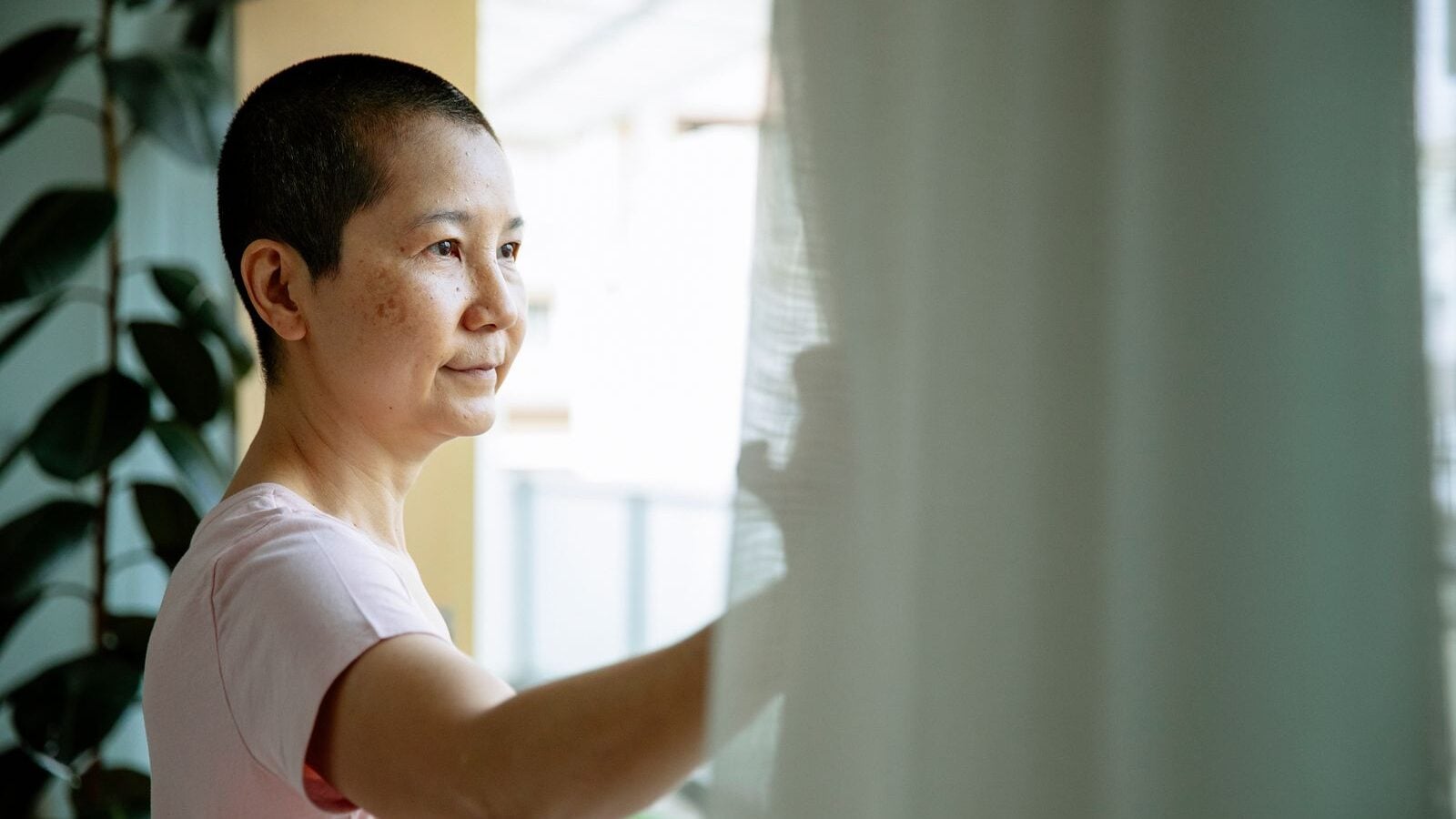
There is a particular kind of person who arrives at a dinner party alone, feels no need to apologize for it, and goes home perfectly content with the quiet that follows.
The cultural assumption underneath singleness is still remarkably stubborn: partnership is treated as the default operating system for a well-lived life, while remaining single is treated as a waiting room.
The evidence is more complicated than that.
A large 2022 study of 4,835 unpartnered adults identified sharply different profiles of single people. Roughly half of the profiles were above the sample average for life satisfaction, while others were struggling. Stronger friendships and family relationships, higher self-esteem, and lower neuroticism were among the variables associated with greater life satisfaction.
That study was cross-sectional, so it cannot tell us that singleness caused anyone’s happiness. It does show something more useful for this discussion: single people are not one psychological type, and their well-being cannot be inferred from relationship status alone.
No study establishes a universal eight-item profile of people who should remain single. What follows is better read as an evidence-informed pattern: traits that can make a highly autonomous life feel less like deprivation and more like a genuine fit.
The first is a high tolerance for solitude that does not automatically become loneliness. Some people can spend an afternoon reading, walking, cooking, or working alone and finish the day restored rather than depleted. They still need human connection, but they do not require constant company to feel that their life is populated.
The second is a sturdy sense of self. People who know what they value, how they prefer to spend their time, and what kind of life they are trying to build are less likely to treat partnership as proof that their life has properly begun. A relationship may add to that life, but it does not have to supply its structure.
The third is warmth spread across several relationships rather than concentrated almost entirely in one. Some single people maintain deep friendships, close family ties, neighborly connections, and communities that provide affection, loyalty, and practical support without being organized around a spouse.
That distinction matters. The 2022 study found that happier groups of singles tended to report stronger personal relationships. Being comfortable without a romantic partner is not the same thing as being disconnected from everyone else.
The fourth is lower neuroticism, or in ordinary language, a tendency toward greater emotional steadiness. In the same research, lower neuroticism was associated with greater life satisfaction among singles. It was not the strongest predictor, but it was part of the pattern.
That does not mean emotionally steady people are somehow unsuited to relationships. It means someone who is generally comfortable regulating their own routines, moods, and decisions may experience less pressure to seek a partnership simply because being alone feels intolerable.
The fifth trait is a strong orientation toward long-term projects that benefit from uninterrupted attention. A novel, a doctorate, a business, an artistic practice, demanding travel, or a craft pursued over decades can absorb enormous amounts of time.
Plenty of partnered people do ambitious work. The relevant difference is preference: some people willingly trade a portion of autonomy for shared life, while others experience control over their time as one of the central pleasures of being alive.
The sixth is a preference for chosen rather than assumed intimacy. Some people feel most themselves when social contact remains largely voluntary: dinner with a friend tonight, solitude tomorrow, family at the weekend, several uninterrupted evenings after that.
The expectations woven into partnership can feel comforting to one person and constraining to another. Neither reaction is automatically more mature. They are different responses to the same bargain.
The seventh is a reasonably developed ability to understand and manage one’s own emotional life. A 2024 Frontiers in Psychology study by Cristina Torrelles-Nadal, Agnès Ros-Morente, and Carla Quesada-Pallarès found preliminary evidence connecting trait emotional intelligence with subjective well-being in a sample of Spanish university students.
The study was not about singleness, so it cannot prove that emotionally intelligent people are better off alone. Its relevance is narrower: people who feel capable of recognizing and managing their own emotions may find an autonomous life easier to sustain than people who rely heavily on a romantic partner for emotional interpretation or regulation.
The eighth is a clear-eyed relationship with the trade-offs of partnership. Serious relationships consume time, attention, money, compromise, and emotional energy. For many people, what comes back in companionship, affection, shared history, and mutual care makes those costs more than worthwhile.
Others do the same arithmetic and reach a different answer. They may value intimacy and still decide that the particular structure of romantic partnership asks them to surrender more autonomy than they want to give.
The complication is that there is also credible evidence pointing in the other direction, especially for younger adults who want a relationship but remain single for a long time.
A 2026 longitudinal study of more than 17,000 young people in Germany and the United Kingdom found that those who remained consistently single into their late twenties tended to experience steeper declines in life satisfaction and increasing loneliness. Depressive symptoms also became more pronounced at that stage.
That evidence should not be waved away. Nor should it be turned into a universal law. The study concerned young people who had never entered a romantic relationship, and its findings describe average differences across a particular life stage rather than a verdict on every single person’s future.
The mistake is to read the average as the individual.
There is a similar danger in trying to turn every preference for solitude into evidence of dysfunction. Research on language and personality can identify statistical patterns in groups, but it should not be used as a shortcut for deciding why one particular person prefers a quieter life. A 2025 article by University of Liverpool researcher Charlotte Entwistle describing research on language and personality functioning makes the limitation explicit: individual words or phrases are not a diagnosis.
A preference for solitude is not the same thing as an inability to connect. The useful distinction is whether someone’s life contains relationships they value and whether their solitude feels chosen rather than imposed.
The people who are genuinely better off single are therefore unlikely to fit a stereotype of the isolated loner. Many have friendships, families, communities, ambitions, affection, and intimacy. What they have declined is one particular way of organizing those things.
Carl Jung’s observation that what irritates people about others can lead to greater self-understanding points toward a broader cultural problem here. What a society insists everyone should want can reveal as much about the society as it does about the person who chooses differently.
Singleness can be painful for someone who wants partnership and cannot find it. It can also be liberating for someone who spent years entering relationships because remaining outside one seemed socially unacceptable.
Both errors begin when one arrangement of a human life is treated as the arrangement, and every deviation becomes a problem to solve.
The steadier reading is that some people thrive with one central romantic bond, some build satisfying lives around several looser bonds, and some want much more room for the work, the walk, the book, the quiet room, and the people who move through it on mutually chosen terms.
None of those lives should be mistaken for a waiting room.