
There was a version of this story worth believing: that the Pentagon had learned something from twenty years of contracting scandals, that Ukraine’s demand for artillery had forced a lean, urgent modernization of American munitions production, that speed and accountability had finally been reconciled. That version is not what happened. The Army spent $533 million on a General Dynamics artillery shell factory in Mesquite, Texas that has not produced a single usable 155 mm shell, and the company has since won $2.5 billion in additional defense contracts.
The reporting comes from ProPublica’s Jesse Coburn, who interviewed 36 people across the Army, Pentagon, General Dynamics and White House and reviewed internal company documents, photos, and video from inside the plant.
The picture that emerges is not one of sabotage or corruption in the cinematic sense. It is something more ordinary and more expensive: a procurement process in which every safeguard designed to catch this exact outcome was waived, bypassed, or overridden in the name of urgency.
Consider how a career defense buyer would normally think about a project like this. Under normal rules, the Army would have solicited multiple vendors, required demonstrated performance of any new machinery, and staged payments against verified output. None of that happened here.
Instead, according to ProPublica, the Army awarded the first contract to General Dynamics in November 2022 with no competitive bidding, using authorities Congress had unlocked to speed weapons to Ukraine after Russia’s invasion. General Dynamics was, at that point, the only company in the United States making 155 mm metal shell bodies, most of it inside a century-old Pennsylvania forge. The obvious low-risk path was to replicate the Pennsylvania process at a new site.
That is not what the Army bought.
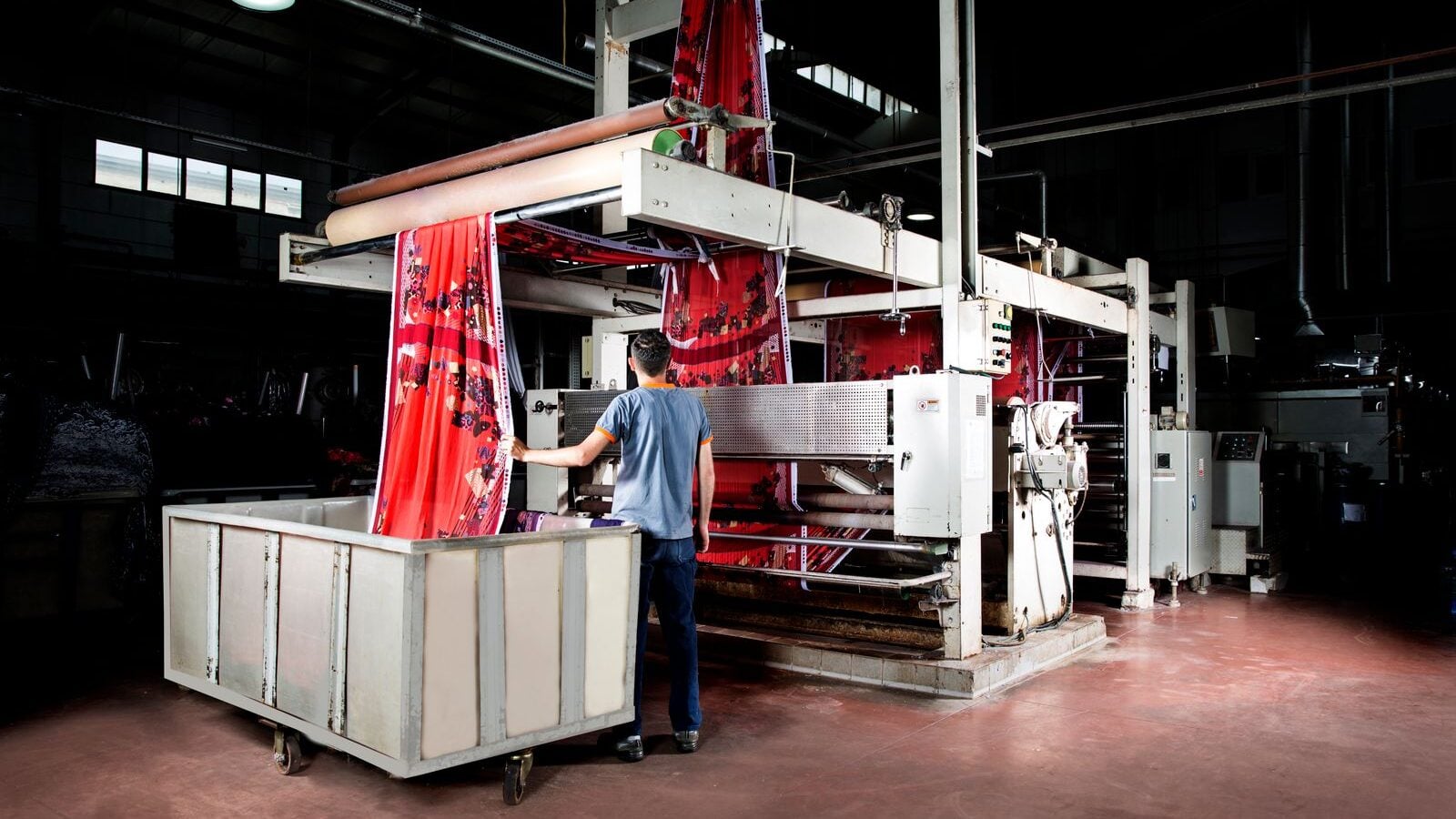
General Dynamics proposed using machinery from Repkon, a Turkish manufacturer whose flow-forming technology had not been proven at the scale or specification the Army required. The Army ordered three Repkon production lines without knowing for certain whether they could make shells that met its specifications. It also, according to the reporting, refused to allow adequate inspections or testing before signing off.
The results were what any contracting officer would have predicted. Robotic arms caught fire. The signature flow-forming device cracked the steel meant to become shells. Walls cracked. Foundations shifted. Twelve former factory workers told ProPublica that machines mangled shells and that they regularly used sledgehammers to force equipment to work. One former Army official described it as an absolute disaster. Another said there was incredible pressure to go fast.
Speed was the entire premise. Speed was also the reason none of the usual checks were performed.
The financial architecture of the deal is where the story shifts from a manufacturing failure to something structural. Defense contracts of this type generally pay in progress payments — cash disbursed as work is performed, not as usable output is delivered. That model assumes the underlying oversight process is working. When the oversight is waived and the payments continue anyway, the contractor collects regardless of whether the plant produces anything.
In August 2025, the Army halted work on two of the three production lines. In December 2025, the government paid General Dynamics $26.3 million in additional progress payments for those same two lines, which had never made a usable shell. General Dynamics has not been required to repay the $533 million. In its detailed statement to ProPublica, the Army offered its account of the project’s timeline and decisions; General Dynamics has said it met or exceeded requirements, a claim referenced in a Department of Defense Inspector General report cited in the reporting.
What the ruling of the marketplace would suggest is that a contractor delivering zero usable output on a half-billion-dollar order would face consequences in future bidding. The opposite occurred. Since the factory halted work, the same General Dynamics unit has been awarded $2.5 billion in new defense contracts.

This is where the story stops being about one factory. The pool of prime contractors capable of executing a large munitions program in the United States is small enough that the Pentagon’s leverage is limited. Punishing the vendor risks punishing the mission. That structural dependence is the reason the standard oversight process exists at all — competitive bidding, technical review, staged acceptance, and first-article testing were designed precisely for situations where the buyer cannot walk away.
Waive those, and the buyer is left with nothing but hope.
The Ukraine spending authority created the political cover to waive them. The war generated a genuine and documented shortage of 155 mm shells, and Congress responded with statutory flexibility intended to move faster than peacetime procurement allows. That flexibility was not, on its face, unreasonable. What it did not include was a mechanism to distinguish between speed that produces shells and speed that produces invoices.
A different kind of failure sits underneath the mechanical one. Choosing untested Turkish flow-forming machinery over a proven American forging process was a technology bet, not a manufacturing plan. Bets like that are how capabilities leap forward when they work. They are also how public money disappears when they do not. The Army made the bet without the testing regime that would have told it whether the bet was survivable.
The engineering critique is not that Repkon’s technology cannot work. It is that no one confirmed it would work at spec before three full production lines were ordered. The sequence — order first, validate later — inverts the standard risk model for capital equipment of this scale.
What the reporting shows is not a single villain. It is a chain of decisions in which each individual link was defensible under wartime urgency, and the aggregate produced a factory that cost $533 million and made nothing. The Army wanted shells fast. Congress wanted the Army unencumbered. General Dynamics wanted the contract. Repkon wanted the reference customer. Every actor got what they asked for. The shells did not arrive.
The lesson is simple: procurement rules are not bureaucratic friction. They are the accumulated memory of every previous failure exactly like this one. When they are suspended, the failures return.
The question the reporting raises, and does not answer, is whether the Pentagon and Congress will treat the Mesquite factory as an anomaly produced by wartime pressure or as a preview of what happens whenever those pressures recur. The next surge in demand — for munitions, for drones, for whatever the next conflict requires — will arrive with the same argument for speed and the same case for waiving the same safeguards.
The half-billion dollars is already gone. What remains to be decided is whether the process that spent it survives intact.
A factory that never made a shell is not a story about one contractor. It is a story about what a government buys when it stops checking.