
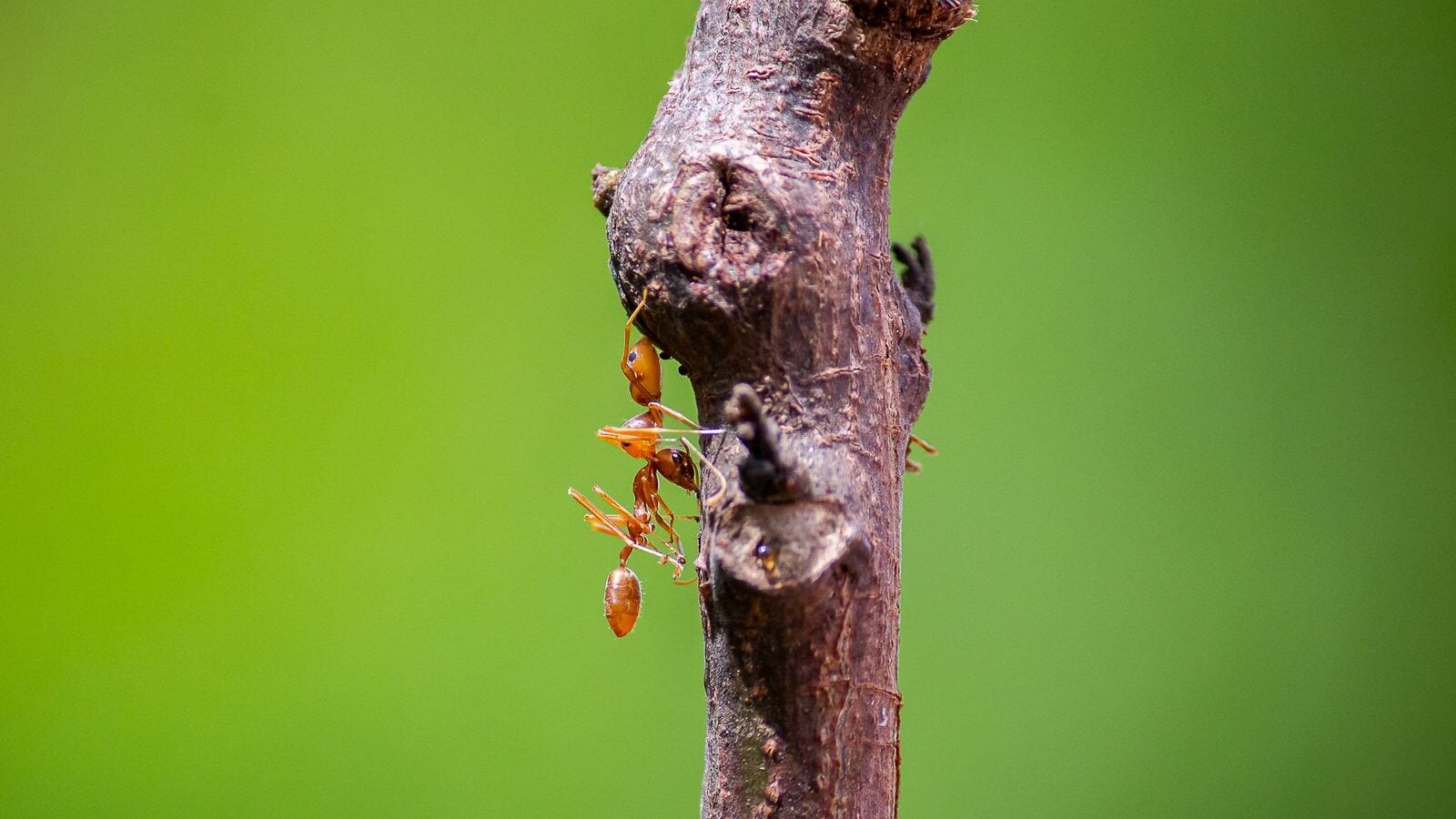
Field medics assess injuries, move casualties, and try to keep wounds from becoming fatal. On the forest floors of sub-Saharan Africa, Matabele ants perform actions that look strikingly similar from a distance. They retrieve injured nestmates after termite raids and tend their wounds once they return to the nest.
The species is Megaponera analis, commonly known as the Matabele ant. According to a 2018 report from the University of Würzburg, the research was conducted at the university’s station in Comoé National Park in Côte d’Ivoire. The ants raid termites several times a day, and termite soldiers can sever the raiders’ limbs with their jaws.
Injured ants release a chemical signal that prompts nestmates to carry them back to the colony. Once inside, other ants hold the damaged limb and repeatedly groom the open wound with their mouthparts. The treatment can continue for several minutes.
The survival figures behind the headline came from controlled experiments reported in 2018. Without attention from nestmates, 80 percent of the injured ants died, leaving a survival rate of about 20 percent. After wound treatment, only 10 percent died, producing a survival rate of roughly 90 percent.
Those figures do not mean that every injured ant in the wild has exactly a 90 percent chance of survival. They describe the outcome under the conditions used in the study. Even with that limitation, the difference gives strong evidence that the treatment was doing something biologically important.
A later 2023 study in Nature Communications clarified part of the mechanism. Researchers found that Matabele ants could distinguish infected wounds from sterile ones and apply secretions from their metapleural glands. Those secretions contained compounds and proteins with antimicrobial or wound-healing properties.
The behavior was more precise than ordinary grooming. Nursing ants first cleaned a wound and sometimes collected gland secretions before applying them to the injury. The researchers identified 112 chemical compounds and 41 proteins in the secretions, although not every wound-care interaction included a visible application of gland material.
The study also found substantial differences in mortality when infected ants had access to nestmates. Ants exposed to Pseudomonas aeruginosa had 93 percent mortality in isolation, compared with 8 percent after being returned to nestmates. That experiment was separate from the original 20-to-90-percent result, but it strengthened the evidence that colony treatment can control infection.
Research published in 2024 added another form of ant wound care, but in a different species. Florida carpenter ants, Camponotus floridanus, were observed cleaning some injuries and amputating others. An institutional account from the Okinawa Institute of Science and Technology explains that the treatment depended on whether the injury was on the femur or the lower-leg tibia.
Femur injuries were cleaned and followed by amputation of the leg. Survival after that treatment reached approximately 90 to 95 percent, compared with less than 40 percent for unattended infected femur injuries. Tibia injuries were treated through intensive cleaning instead, raising survival from about 15 percent to around 75 percent.
The difference appears to involve the speed at which infection can spread. Damage to muscles in the femur slows the circulation of hemolymph, giving the ants enough time to complete an amputation. Infection from a tibia wound can spread more quickly than the ants can remove the leg, so prolonged cleaning becomes the more effective available response.
These findings should not be collapsed into one universal claim about ants. Matabele ants apply antimicrobial material, while Florida carpenter ants lack the same functional gland and can use amputation instead. Both are examples of social wound care, but they involve different species, treatments, survival figures, and experimental designs.
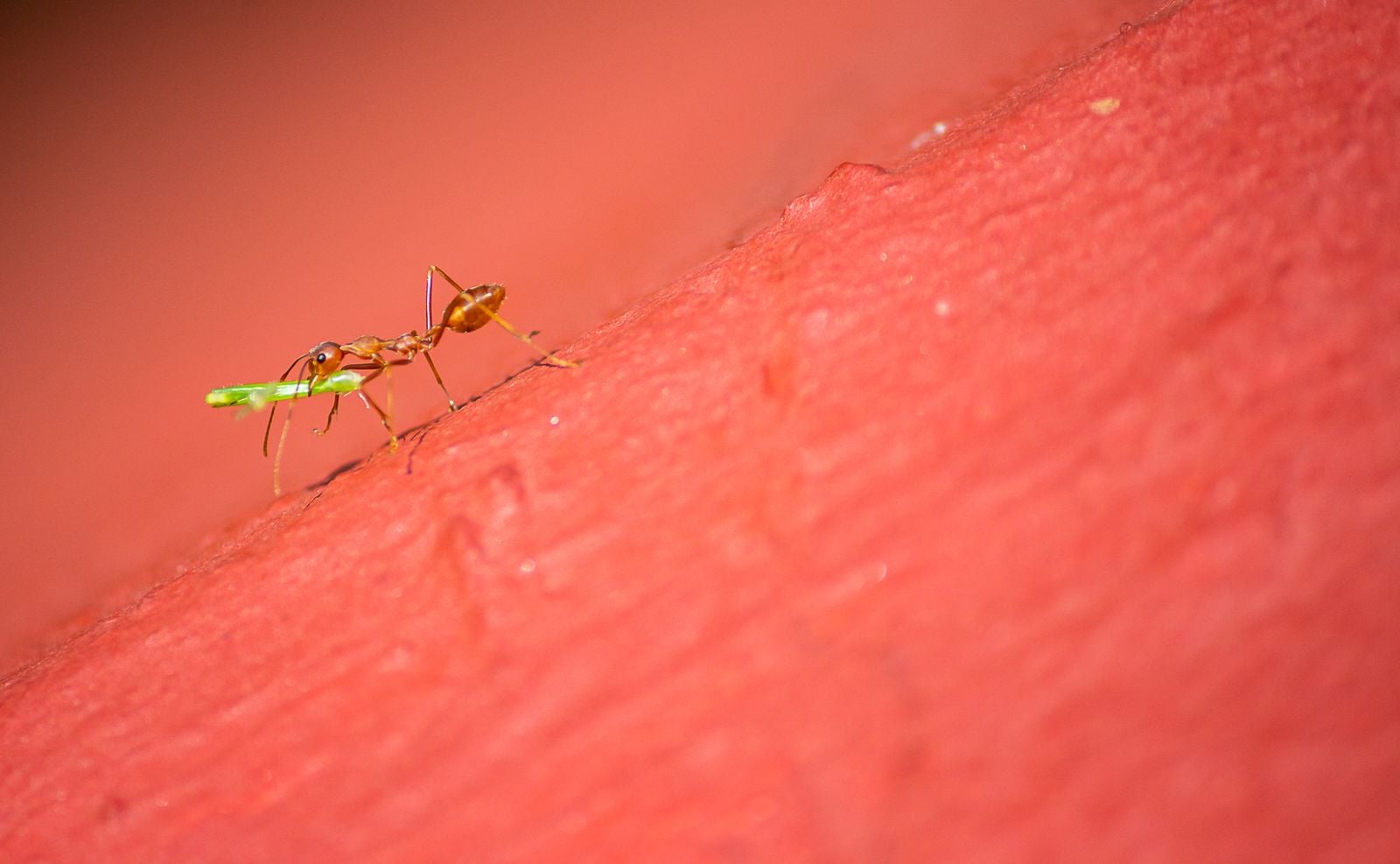
Illustrative photo by Pavan Prasad on Pexels
The results invite a moral interpretation because the observable sequence resembles human rescue. One individual is injured, another carries it to safety, and members of the group provide treatment that improves survival. From a human perspective, the word “care” feels almost unavoidable.
What the experiments establish, however, is behavior and outcome. They do not show that an ant understands suffering, makes an ethical decision, or experiences compassion in the human sense. They also do not prove that ants lack every subjective state associated with care, because that question was not what the experiments measured.
Evolution provides a sufficient explanation for why the behavior could persist. A colony that recovers injured workers retains foragers and other labor that would otherwise be lost. Behaviors that improve the survival of colony members can therefore be favored without requiring a conscious calculation by any individual ant.
That distinction does not make the wound treatment unreal. The injured ant is still carried, the wound is still cleaned, and the probability of survival still changes sharply. Explaining a behavior’s mechanism does not erase its consequences.
The division of labor is also more fluid than the image of a permanent ant medical corps suggests. A 2026 study of the carpenter ant Camponotus fellah found no specialized medics. Wound care was most often provided by workers transitioning from brood care to foraging, whose movement through the nest gave them more contact with injured ants.
That study involved a third species, not the Matabele ants behind the headline or the Florida carpenter ants in the amputation experiments. Its relevance lies in what it shows about colony organization. Temporary patterns of movement and social contact can produce reliable care without a formally assigned caregiver role.
Other experiments show how dramatically colony behavior can change when the underlying signals are disrupted. An August 2026 report on laboratory research involving Argentine ants described opposite responses to two insecticide baits. Boric acid drove workers into tighter groups inside the nest, while the neonicotinoid thiamethoxam sent many workers into the surrounding space.
Thiamethoxam-treated ants also spent more time in light and less time in darkness than untreated ants. The experiment did not prove the precise internal cause of that change, but it showed how one chemical intervention can alter the visible behavior of an entire colony. A coordinated system can appear stable until a signal or biological pathway is disturbed.
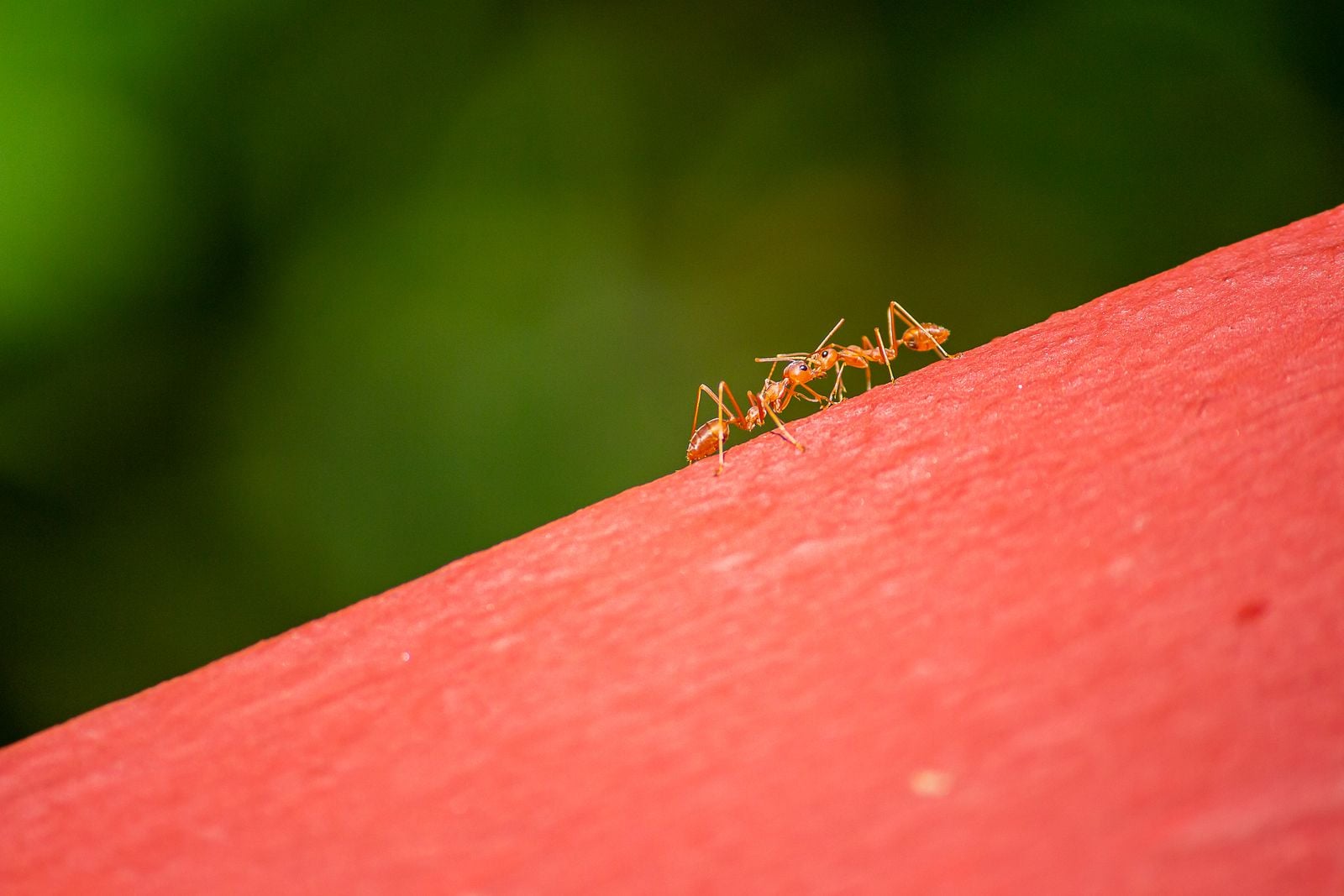
Illustrative photo by Pavan Prasad on Pexels
There is a tempting comparison with microscopic machines that sense their environment and act together. In December 2025, Penn and University of Michigan researchers announced autonomous robots measuring about 200 by 300 by 50 micrometers. The robots can sense temperature, adjust their movement, and travel in coordinated groups.
The comparison has limits. The university’s report discusses possible future use in monitoring individual cells, but it does not say the robots currently repair damaged tissue or that ant colonies served as their design model. The connection is conceptual: both cases show how small agents following local rules can produce behavior that looks organized at a larger scale.
Ant wound care complicates any definition of intelligence that depends entirely on reflection or verbal understanding. The behavior is coordinated, selective, and effective even if it is innate. Calling it “just instinct” names a category without explaining how the treatment works.
The safest conclusion is narrower than the popular story about ants teaching humanity to be compassionate. These colonies have evolved ways to retrieve injured workers, assess wounds, control infection, and improve survival. The evidence does not need a moral lesson to remain extraordinary.
Humans supply the language of medics, patients, kindness, and rescue because those are the closest familiar categories. The ants supply the observable sequence: carrying, cleaning, treatment, and survival. The gap between those facts and the meaning assigned to them is where the story becomes a mirror.