
The man responsible for the Centers for Disease Control and Prevention stood at the Children’s Health Defense conference in Washington on September 17 and told a friendly audience that vaccines lack safety data, that they may drive chronic disease, and that they have, in his words, a strong and steadfast friend at the White House — a message delivered as Pennsylvania’s health authorities counted measles cases and deaths.
The gap between those two facts is the story.
Robert F. Kennedy Jr. spent his Senate confirmation hearings insisting he was not anti-vaccine. He described himself as pro-safety, pro-science, pro-parental choice. Senators who voted to confirm him as Secretary of Health and Human Services cited those assurances. Some said so on the record.
Nineteen months after being sworn in, he keynoted the conference of the organization he founded, telling the room what it came to hear. He counted the time himself from the stage, telling the audience the administration had accomplished in 19 months what would have seemed unthinkable two years earlier.
Vaccination rates remain low in parts of the Amish community. Pennsylvania has now recorded four measles-associated deaths — two Amish infants and two adults — the state’s first in 35 years. The outbreak has reshaped the working lives of pediatric nurses, school administrators, and epidemiologists, whose days are now shaped, in real time, by what the country’s top health official chooses to say into a microphone.
School administrators are drafting exclusion letters to unvaccinated students under state guidelines that assume federal health messaging supports the underlying science. Their jobs require them to enforce a public-health framework that the Secretary of Health and Human Services is publicly undermining.
State epidemiologists have spent weeks waiting for the CDC to formally acknowledge the Pennsylvania measles deaths in its own count. The agency has not counted any measles deaths in 2026, despite requests from the state government. (Update: by late September the CDC listed two 2026 measles deaths nationally, while Pennsylvania reported five, and the state’s case count passed 1,000 in early October.)
These are what a functioning public-health system looks like from the inside — nurses, administrators, epidemiologists, doing the work while the political layer above them shifts underneath their feet.
What is unusual is the shape of the shift.
The typical assumption about political appointees is that once in office, they moderate. The constraints of the job — the briefings, the lawyers, the career staff, the sheer weight of institutional consequence — tend to pull officials toward the median of their agency’s existing position. Kennedy is doing something different. He is using the office to validate the movement that produced him, and the movement is treating that validation as license.
Kennedy’s keynote was slotted directly after a speech by Mark Gorton, president of the MAHA Institute, who introduced himself to the room as the boldest anti-vaxxer at an anti-vax conference. Gorton’s stated position goes considerably further than anything Kennedy has enacted. At a MAHA Institute event in Washington in March 2026, he told the audience that the childhood vaccination schedule needs to be eliminated and that all vaccines should be pulled from the market until they can be proven safe and effective.
Kennedy’s own presentation showed what that argument rests on. He put the text of a hepatitis B vaccine package insert on screen and read out its list of post-marketing adverse reactions, a list that includes conditions never shown to be caused by the vaccine. The insert’s own caveat, which he did not read aloud, states that the reports arrive voluntarily from a population of uncertain size and cannot establish a causal relationship. The distance between a list of reported events and a demonstrated cause is the entire debate.

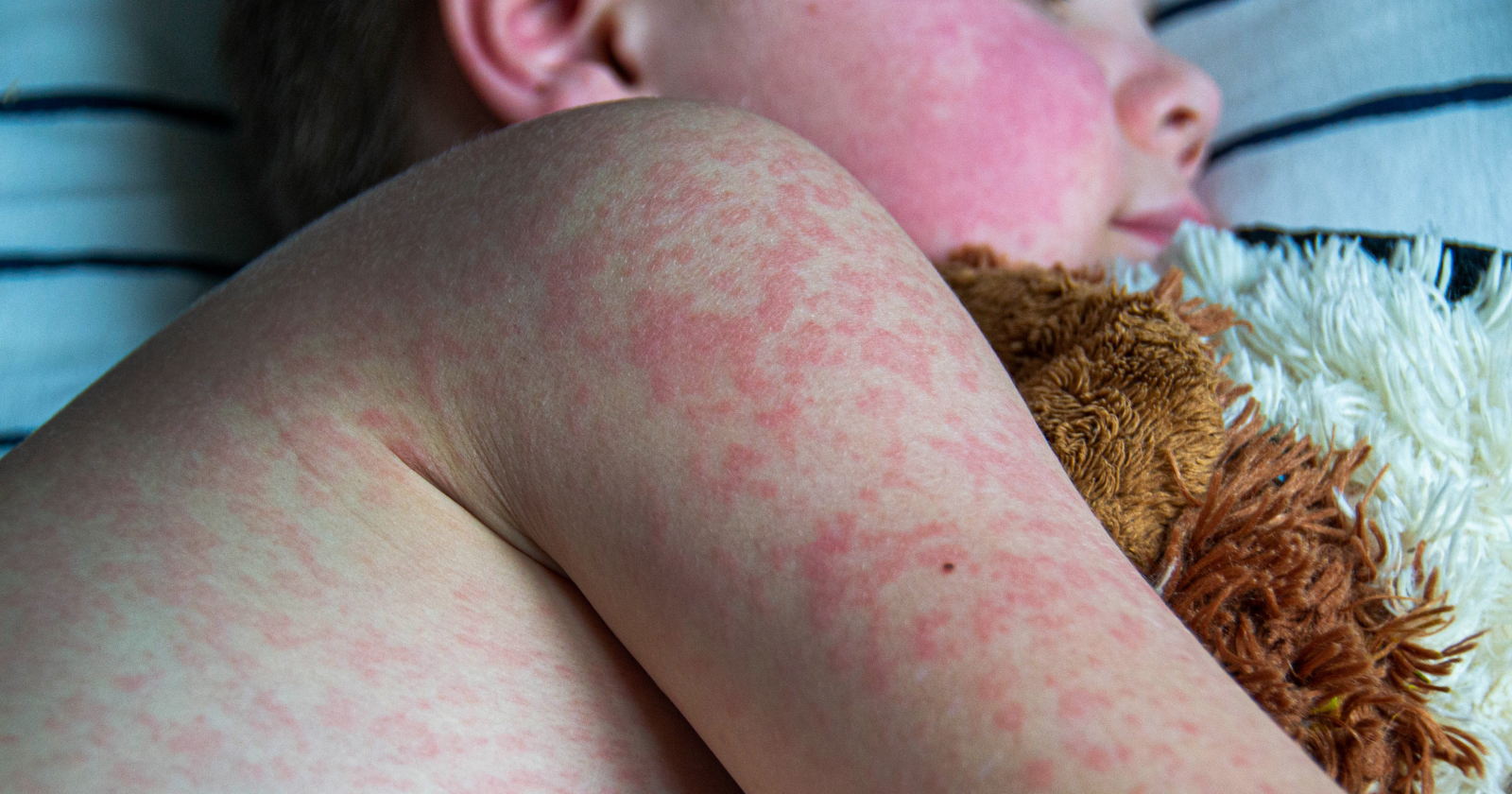
Photo by DΛVΞ GΛRCIΛ on Pexels
Andrew Wakefield, who followed Kennedy onstage at the same conference, authored the 1998 Lancet paper linking the MMR vaccine to autism. That paper was retracted, and Wakefield was struck off the UK medical register. The claim has been tested repeatedly in large population studies across multiple countries and has not survived any of them. Kennedy continues to promote versions of it from a podium that now speaks with the authority of the United States government.
This is where the reader has to hold two things at once.
The first is that vaccine hesitancy is a real phenomenon with real drivers — declining institutional trust, opaque pharmaceutical pricing, the memory of specific regulatory failures, the ordinary anxiety of parenting in a country where medical costs can bankrupt a family. Dismissing every hesitant parent as irrational is both wrong and counterproductive. The Amish communities of Lancaster County have their own long-standing reasons for the choices they make, reasons that predate any current political figure.
The second is that a measles outbreak with a documented death toll is not a debate. It is an event.
The political question is what happens when the person charged with responding to the event is ideologically aligned with the conditions that produced it. Not opposed to the response. Aligned with the cause.
Consider what this does to the ordinary machinery of public health. A local health officer in Pennsylvania issuing vaccination guidance now does so without the reinforcing signal of federal consensus. A pediatrician answering a hesitant parent’s questions can no longer say, with full confidence, that the country’s top health official agrees with the professional recommendation. A state epidemiologist requesting that federal death counts reflect state data waits, and keeps waiting.
The system does not break in a single moment. It degrades at the joints.
Kennedy’s defenders — and there are serious ones, including senators who voted to confirm him — argue that his critique of pharmaceutical capture, of regulatory revolving doors, of the way vaccine injury compensation actually works, contains legitimate elements that the public-health establishment has been too slow to engage with. That argument has merit as a critique of process. It does not extend to the specific factual claims Kennedy made at the conference about vaccine safety data or about links to autism and chronic disease, which are not supported by the evidence base the CDC itself maintains.
The distinction matters. A Secretary of HHS is free to reform the FDA’s relationship with industry. A Secretary of HHS telling a conference audience that we have no idea what the risk profile of childhood vaccines looks like is making a claim the agency he runs would, on its own published data, contradict.
The confirmation hearings produced a version of Kennedy that many senators, including some who had reservations, decided they could work with. The conference produced a different version. Both are on the record. Only one now has the authority of the office.
Family physicians across Pennsylvania have spent the last several weeks answering the same question from parents in slightly different forms. Is the person in charge telling us the vaccines are dangerous? What they say next depends on what they have read that morning and how much time the appointment allows.
They are the interface. They always were. The federal messaging was supposed to make their jobs easier, or at least not harder.
What the Pennsylvania outbreak reveals is not a policy dispute about vaccine schedules. It is what happens when the gap between a confirmed nominee’s assurances and a confirmed official’s conduct becomes wide enough that the machinery of public health has to route around the person running it.
The children in Lancaster County did not vote in the confirmation. They are, however, the ones whose parents are now being told, from the highest podium in American health, that the shot is the thing to be afraid of.
Four families in Pennsylvania are burying someone this outbreak reached.