
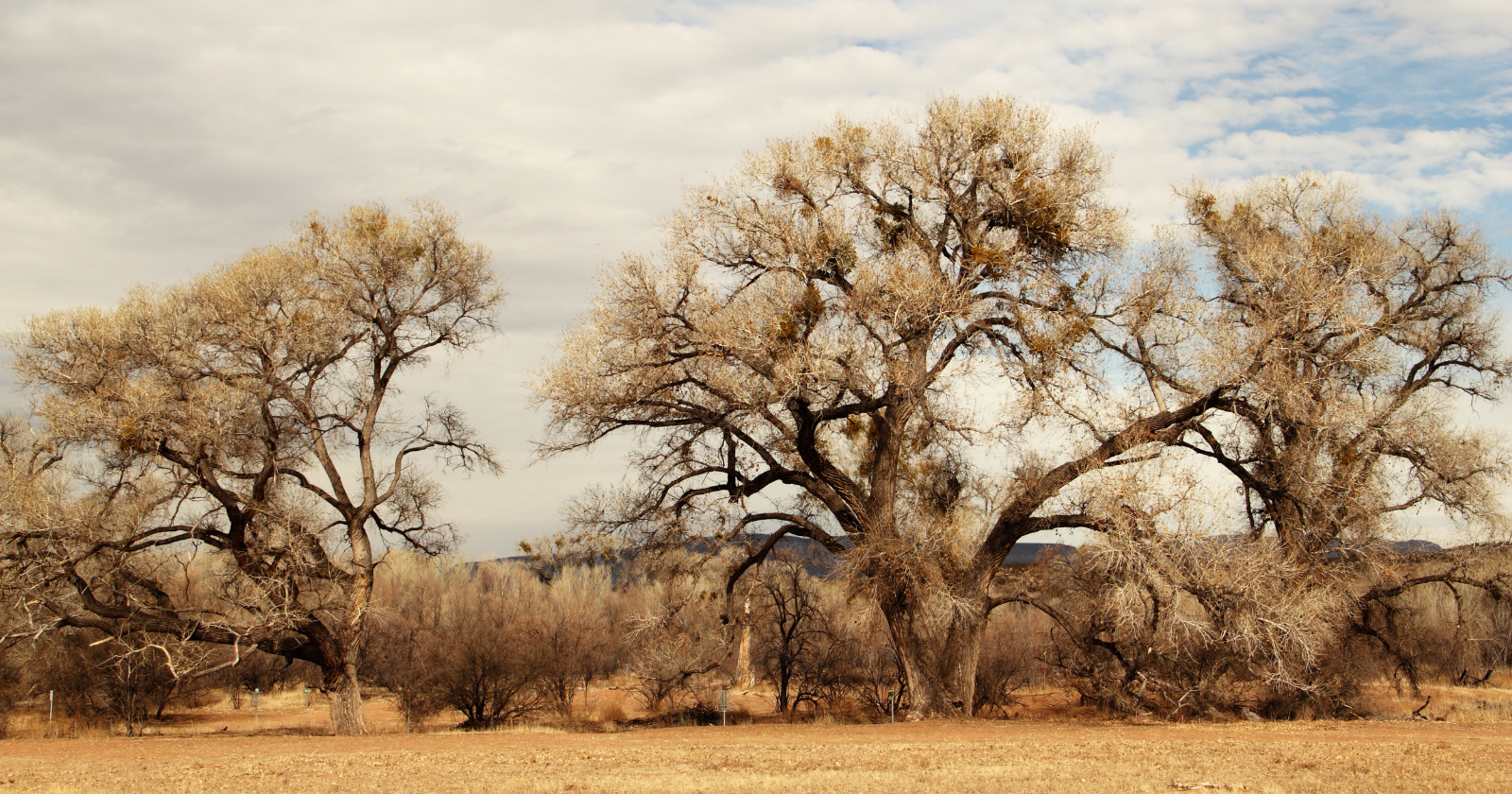
Activists climbed into an ancient Fremont cottonwood in Lochiel, Arizona, on July 29. By August 20, the occupation had entered its fourth week, and the platform was reported to be roughly 50 feet above the ground. Construction had reached the area but stopped before trenching through the occupied alignment.
The tree is the last of four old cottonwoods marked for removal along this part of the U.S.-Mexico border. Contractors working for Fisher Sand & Gravel felled the other three on July 27, two days before the tree-sit began.
The resulting delay is narrow but real. It does not mean construction across the San Rafael Valley has stopped. Machinery and crews have continued working elsewhere, including around the occupied site, while the section immediately obstructed by the tree remains incomplete.
The contrast in scale is still striking. The American Immigration Council calculated that Congress earmarked approximately $170 billion for immigration and border enforcement. Its breakdown placed $46.6 billion specifically into border-wall construction.
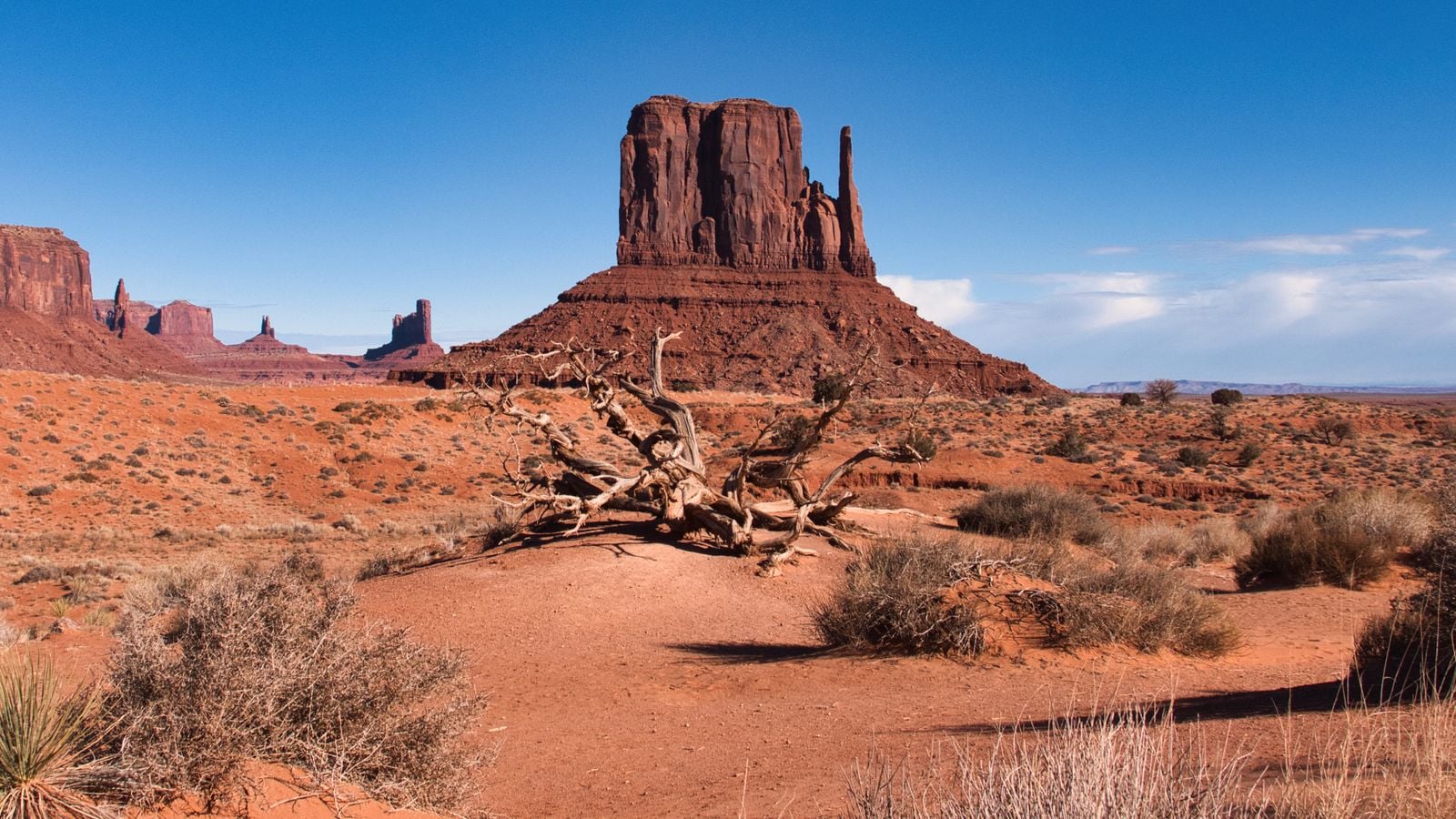
The San Rafael Valley is a high-elevation grassland between the Huachuca and Patagonia mountains. The Center for Biological Diversity describes it as an important corridor for jaguars, ocelots, black bears, pronghorn and hundreds of bird species. The project calls for two parallel 30-foot barriers, with the remaining cottonwood standing in the path of the planned secondary wall.
The legal geography is more complicated than the phrase “private ranchland” suggests. Protesters supporting the occupation have been camping on nearby private property with the owner’s permission. However, the tree’s trunk stands on the federally owned Roosevelt Reservation, a 60-foot strip along the international border.
One protester was arrested when the first three trees were felled and was released the same day without being charged, according to The Guardian. Since then, the support camp and rotating occupation of the platform have continued. Public reporting establishes the persistence of the protest, but it does not establish that federal officials are deliberately avoiding intervention because Lochiel lacks political value.
The response also differs from what has unfolded farther west on the Tohono O’odham Nation. On August 25, the Nation said approximately 20 armed, masked federal agents entered tribal land while contractors performed soil sampling and other preconstruction work. KJZZ reported that the agents guarded contractors at three sites and prevented tribal police from removing them.
That activity followed a federal judge’s decision allowing the project to proceed along the Roosevelt Reservation. Tribal officials have argued that contractors still need permission to cross reservation land to reach the work sites. On August 25, members of Congress called for construction to be suspended until meaningful government-to-government consultation had taken place.
In Big Bend, the political response has taken another form. Construction was temporarily paused after bipartisan criticism, and several prominent Texas Republicans welcomed the pause or distanced themselves from the plans. Their responses ranged from cautious requests for consultation to direct criticism of permanent barriers in the region.
These cases demonstrate that border-wall construction is meeting different obstacles in different places. They do not, by themselves, prove the existence of a federal strategy that ranks protest sites according to political importance. The public record supports a more restrained conclusion: land ownership, court rulings, tribal authority, local opposition and the physical layout of each project can produce sharply different outcomes.
The economics surrounding Lochiel are substantial. Fisher Sand & Gravel received approximately $309 million to build around 27 miles of wall through the San Rafael Valley. Local reporting described the award as a 900-day contract.
Fisher has also become one of the largest beneficiaries of the administration’s broader wall program. Bloomberg reporting published by The Straits Times said the company had won more than $8 billion in Department of Homeland Security contracts since the One Big Beautiful Bill became law. The same report described the Fishers as the first known billionaire family created by the administration’s immigration policy.
What the available reporting does not establish is that Fisher is paid strictly by the mile, that its contract contains special schedule incentives, or that every cost created by the Lochiel delay falls on the federal government. Those conclusions would require the relevant payment and risk-allocation provisions from the contract itself.
The ecological argument remains central to the occupation. Cottonwoods provide nesting habitat, shade and shelter in a riparian environment where mature trees are increasingly scarce. Protesters and conservation groups have framed the remaining tree as both habitat and a physical marker of what the double-wall design would divide.
The Tohono O’odham Nation’s opposition belongs to a related but distinct history. Its official No Wall campaign documents decades of opposition to placing a permanent wall across its lands, while also noting the Nation’s cooperation with other federal border-security measures. That record should not be collapsed into a claim that the Nation formally directs or participates in the Lochiel encampment.
The removal of the first three cottonwoods has also produced a factual dispute. Customs and Border Protection said its preconstruction surveys found no active migratory-bird nests. Sierra Club border program coordinator Erick Meza said he had video showing nesting activity the day before the trees were felled. That disagreement may become relevant to future administrative complaints or litigation, but no filed case establishing a violation was identified.
None of this stops the wider wall project. Crews continue working across Arizona and Texas, and the federal funding remains available. The Lochiel occupation has instead produced a smaller result: one incomplete alignment, one surviving tree and a delay that has lasted roughly a month.
That narrower result is enough to matter. Large infrastructure programs do not need to fail everywhere for resistance to alter what happens at one location. In Lochiel, a rotating group of people in a cottonwood has kept one piece of a multibillion-dollar program from moving on schedule.
The wall continues elsewhere. At this particular point on the map, the tree is still standing.