

Most people assume the hardest part of retirement is running out of money. The research on the transition itself points somewhere else: what tends to run out first is the shape of the day — a Tuesday afternoon with no meeting to attend, no report to file, and no colleague to consult about anything at all.
That is not a hunch. Teresa Amabile, the Edsel Bryant Ford Professor of Business Administration, Emerita, at Harvard Business School, turned her research from creativity to retirement and ran the Retirement Transitions Study, in which she and her colleagues interviewed and surveyed 120 professionals at three companies over four years. The early findings described a pattern rather than a catastrophe. Most people are delighted from the first morning. Then, for many, the glow fades within weeks or months into a harder stretch of questioning who they are and working out how to structure a day that no longer structures itself. Sorting through it typically took six months to two years, and often longer.
Retirement planning in the United States is overwhelmingly financial. Preparedness is framed almost entirely around savings adequacy, health-care costs, and Social Security timing. The emotional infrastructure of the day — the routines, the small social contacts, the identity of being useful — sits outside the spreadsheet, and outside most of the conversations people have with their advisors.
That gap is where the trouble tends to live.
Amabile has recounted how one participant described the approach of retirement: facing it, the person said, was like “standing at the edge of a cliff, staring into a void.” The financial plan does not fill the void. It only funds it.
The reason is structural. Work delivers five things at once: routine, social contact, income, competence, and recognition. A retirement plan that replaces only one of those is a plan that replaces one-fifth of what the job was actually doing. Someone whose role dominated their sense of self faces a different transition from someone who left an exhausting job or already had thick roles outside work. The word “retirement” flattens differences that matter.

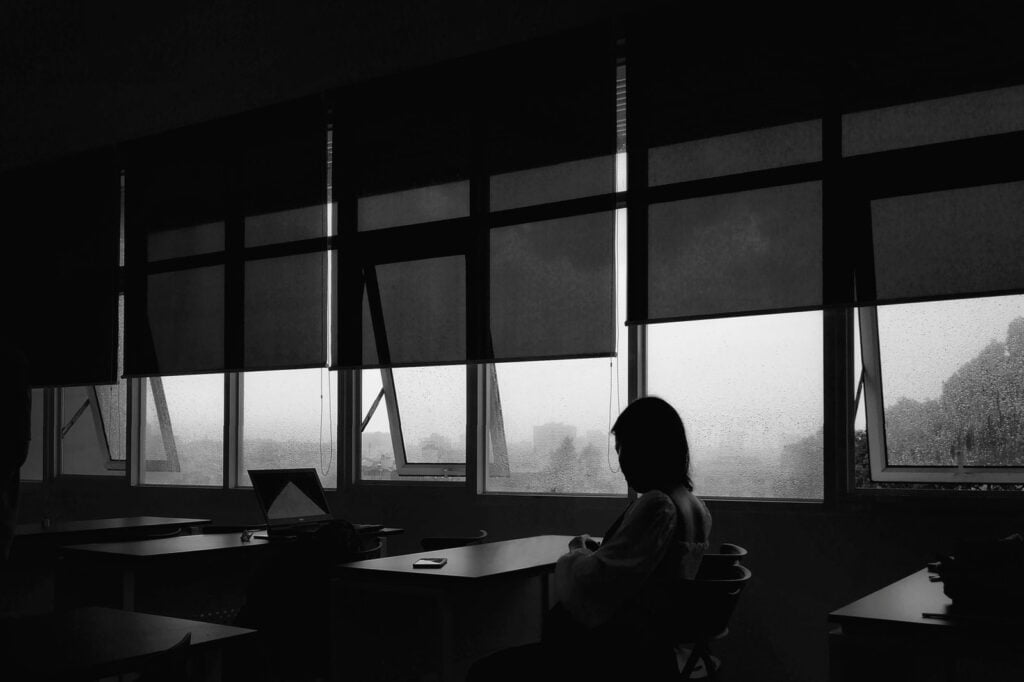
Photo by Skylar Kang on Pexels
Amabile frames the shift architecturally. While you are working, she told Harvard’s Working Knowledge, you are “a kind of tenant in a really settled life structure” — you know where you will be Monday through Friday, and an identity arrives attached to it. Retirement hands you the drawings and makes you the architect instead. That is a different job from the one most people spend two years modelling withdrawal rates for, and almost nobody rehearses it.
Robert Laura, founder and CEO of the Retirement Coaches Association, made a related point to AARP: a lot of people arrive at retirement with only a vague sense of what it will be, when what they need is an actual plan — one that covers replacing the work identity, filling the time, and staying relevant and connected. The questions he suggests people ask themselves before the last day are unglamorous and hard: what are you curious about, what do you want to learn, and who do you want around you.
Those questions sound soft next to standard withdrawal strategies. They are not soft. They are the questions the withdrawal rule cannot answer.
The most vivid version of this problem shows up in professional sport, where retirement often arrives in the mid-thirties and identity collapse can be near-total. Writing in The Conversation, researchers documented how former NRL player William Zillman described his exit from rugby league in stark terms, explaining that the highly structured environment had left him feeling unable to think independently after leaving. Former English international James Graham has described the first eighteen months after leaving the sport as difficult and disorienting, a shift from constant training, close friendships, and total structure to relative emptiness.
Athletes are the extreme case, but the mechanism is not exotic. It is what happens to any identity that has been carried entirely by one role.
The pattern also appears, in a very different setting, in analyses of ex-combatant reintegration. A May 2026 LankaWeb essay by Major General (Dr) H. Lakshman David and Dr. Ruwan M Jayatunge argues that leaving military service is not an administrative event but a wholesale change in identity, routine, purpose, and social belonging. The authors point to South Korea and Singapore, which run transition programmes covering financial literacy, civilian career planning, counselling and technical certification while personnel are still serving, and recommend that Sri Lanka introduce something similar at least three to five years before retirement.
The parallel with corporate retirement is uncomfortable but instructive. Both involve leaving a total institution — one that provided the schedule, the hierarchy, the mission, the friends, and the answer to the question of what you do. Both often provide financial packages and very little else. Both produce a subset of people who cope beautifully and a subset who quietly unravel, and the difference between the two groups has less to do with money than with whether anyone thought about the Tuesday afternoon.
The remedies, where they work, tend to be less dramatic than the problem. Amabile’s team gave the most common one a name: identity bridging, which means taking a piece of the pre-retirement self and carrying it across into the new life rather than leaving it at the door. In the study, an engineer took his skills to a volunteer role building a new community centre. A woman who had spent years mentoring junior colleagues moved her coaching to a community organisation. One man opened a handyman shop that functioned more as a hobby than a business, and said the business cards alone gave him a renewed sense of purpose. The bridge does not have to be grand. It has to be regular, and it has to give someone a reason to answer the phone when it rings.
Bridging does not have to be professional either. Amabile’s researchers found people reviving a non-work identity that had thinned out during the working years — one participant rebuilt a motorcycling life he had set aside for twenty-five years. Some people keep working into their late sixties despite adequate savings, and the instinct is not always avoidance. Sometimes it is an accurate read on what the job was carrying.
Sarah Barry, a retirement coach and the author of 9 Habits of Happy Retirees, drew the distinction for AARP between filling the hours and filling them with something that points somewhere. Busy is what people invent when they have not decided what they want. Direction is what people build when they have.
None of this is a diagnosis. It is a way of describing a common pattern. Some retirees adjust in weeks. Some ease in over years. Some choose to return to part-time work after claiming Social Security early, not because they miscalculated, but because they discovered that identity does not have a full retirement age. Anyone finding the adjustment genuinely unmanageable should talk to a professional. Most transitions, though, are adjustments rather than illnesses, and the shape of the adjustment is set less by savings than by structure.
Which brings the question back to Tuesday afternoon.
The practical advice from the people who study this is almost embarrassingly concrete. Amabile suggests drawing a life map — laying out the activities, relationships, places and groups that make up your current life, marking which matter most and where they collide, then drawing the same map for the person you will be afterwards. Laura’s version is rehearsal: try the thing before you need it, rather than waiting until you arrive. Barry’s is a phased exit, reducing hours rather than stopping dead. Every one of these exercises does the same job. It makes visible what will need solving, while there is still a salary and a schedule underneath you.
This is what the financial plan cannot do. A withdrawal rate cannot tell you whom you will have lunch with in April. A Roth conversion cannot tell you what you will be curious about at 70. A Medicare supplement cannot tell you what you will want to be known for in the second half of your life. Those questions live in a different file, and most people do not open it until the last day of work has already passed.
The people who transition well are, on the available evidence, the ones who treat the emotional architecture of retirement with the same seriousness they treated the spreadsheet. They start earlier than they think they need to. They practice — a day, a week, a phased schedule — before the exit is permanent. They build one or two roles that will still be theirs on the Monday after the retirement party. They accept that the adjustment will take longer than they hope, and shorter than they fear.
What tends to run out first in retirement is not money. It is the answer to a simple question a stranger might ask at a party: What do you do? The people who kept working, in one form or another, on that answer while they still had a job are usually the ones who find they still have one.