

A 2014 study of 395 young adults in romantic relationships, published in Computers in Human Behavior, looked at how couples split their contact between texting, phone calls and face-to-face conversation. The range was almost comic — some couples barely texted at all, others let messaging carry the vast majority of their contact.
The researcher, Shanhong Luo, found that what mattered for attachment and satisfaction was not the raw number of texts a couple sent, but the share of their total communication that texting occupied. Texting was not simply an addition to intimacy. For couples who leaned on it heavily relative to other channels, it was closer to a replacement.
The easy read of that finding is the one most people already carry: texters are avoiders. They cannot handle the real thing. They hide behind the keyboard because they cannot bear the vulnerability of a live voice.
That read is not wrong. It is just incomplete.
Picture a hospital pharmacist whose mother calls twice a week. She almost never picks up — she waits for the voicemail, listens twice, then sends a long, warm text back an hour later. Her mother reads this as coldness. She reads it as the only way to respond without saying something she doesn’t mean.
The gap between those two readings is where most of the argument about texting actually lives.
A phone call collapses two things that used to be separate: hearing something and responding to it. On a call, the pause between those two acts becomes conspicuous. Silence on the line is heavier than silence in a text thread. The caller can hear you breathing. They can hear you not knowing what to say. And so the socially competent thing to do, in real time, is to produce a feeling on demand — surprise, sympathy, enthusiasm, reassurance — before you have actually had it.
Texting removes that demand. It gives you the pause.
That pause is not always avoidance. Sometimes it is the space a person needs to locate what they actually think before performing what they are supposed to think. The distinction matters, because the two look identical from the outside and feel completely different from the inside.

The attachment link described above is real, and it is worth taking seriously. It is also worth being careful with. Studies built on college students in short-term dating relationships cannot tell us what texting means for a 47-year-old managing a chronic illness, a widowed father, or a shift worker whose voice is exhausted by 8 p.m.
Or think of a paramedic who spends nine hours a day talking to strangers in the worst moments of their lives. By the time he gets home, his throat is raw and his tolerance for another live conversation is near zero. He texts his brother, his girlfriend, his closest friends. He is not avoiding them. He is metering himself. The phone call is not the intimate act here. The text — sent at 11 p.m., considered, specific — is.
Or a graduate student whose parents live a continent away, where the time difference makes phone calls a scheduled event, freighted with the pressure of Making The Call Count. Texts are how the small stuff survives. A photo of a soup. A question about a cousin’s wedding. The mundane texture that keeps a relationship alive between the summits. Her parents might say she doesn’t call enough. She would say she has never been closer to them.
None of these people are dodging intimacy. They are choosing a medium that lets them be present without being performative.
The performance question is where the phone call starts to look less neutral than it pretends to be. A phone call is not a purer form of contact. It is a specific one, with its own demands: instant emotional legibility, verbal fluency, the ability to think and feel and respond simultaneously. People who are good at that will always experience the phone as warmer. People who need slightly more time to catch up to their own reactions will experience it as an ambush.
This is part of why the pattern splits along generational and situational lines rather than along a simple axis of emotional health. Younger adults who grew up on asynchronous communication often describe unexpected phone calls the way an earlier generation described someone showing up at the front door without warning — not offensive, exactly, but jarring, and requiring a mode-switch they did not consent to. DMNews has looked at how these small phone habits quietly signal age, and the unannounced call is near the top of the list.
None of which means texting is costless. When texting dominates a relationship at the expense of all other contact, satisfaction can drop. There is a version of texting that is genuine metering, and there is a version that is quiet withdrawal, and the two can look almost identical on the phone screen.
The reporting on dating patterns like submarining shows how the same medium that gives thoughtful people space also gives evasive people cover — such as when someone disappears for months and reappears with a casual greeting. Text lets you show up on your own schedule. That is a gift when you are honoring your own capacity. It is a weapon when you are using it to sidestep another person’s.
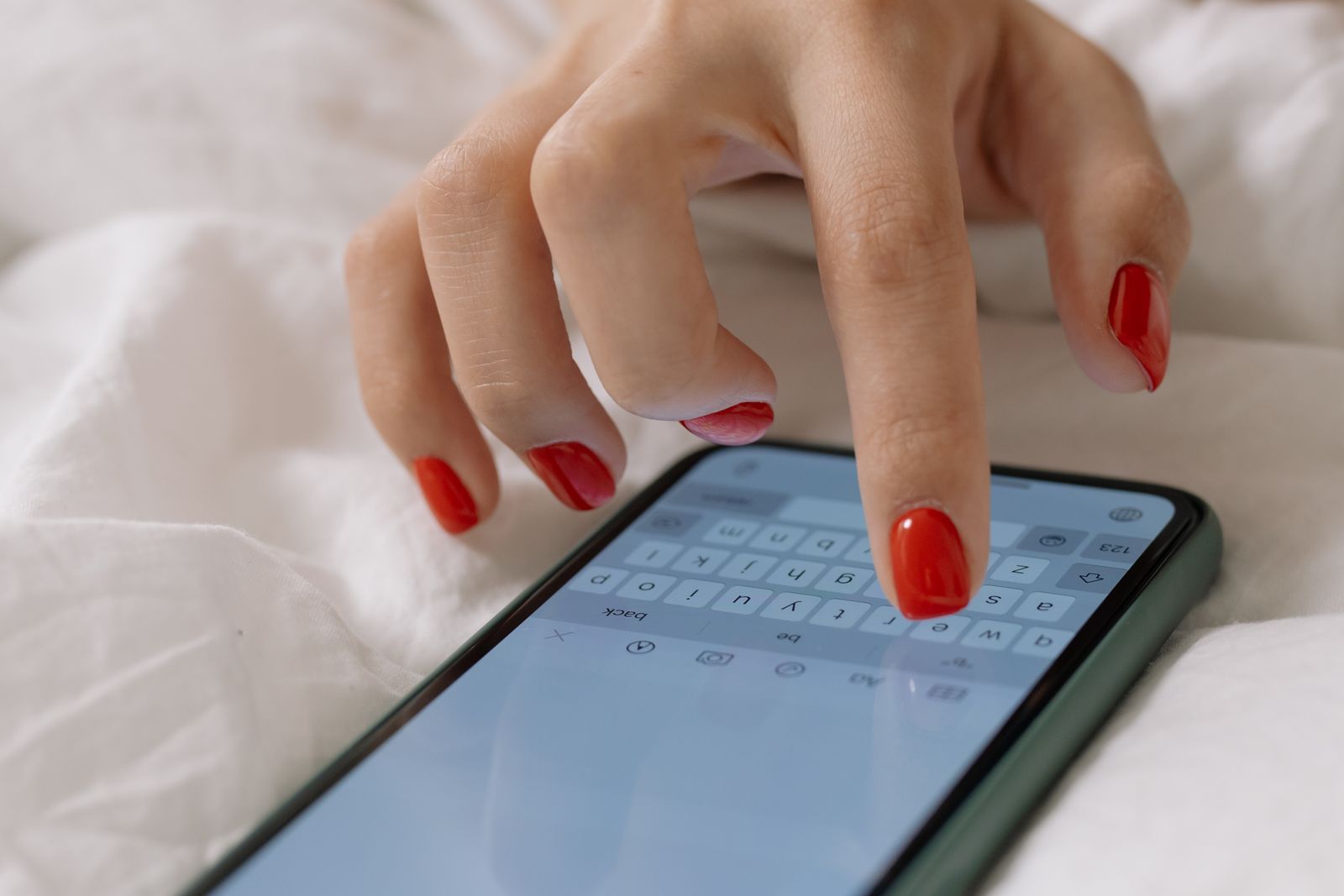
So the honest picture is not that texting is intimate or avoidant. It is that texting exposes what a person is actually doing with the pause it provides.
Some people use the pause to think. To feel the thing first, then decide how to say it. To find the word for what a diagnosis means to them before responding to a friend who just shared one. To sit with a piece of news for twenty minutes and answer with something true instead of something reflexive.
Other people use the pause to disappear.
The same medium serves both, which is why the debate about texting keeps stalling. Everyone is describing a real experience. They are just describing different uses of the same tool.
There is a further layer worth naming, which is what the pause protects against. On a live call, a certain kind of intimacy gets simulated whether you mean it or not. You laugh in the right place. You make the sympathetic noise. You produce, in real time, the emotional shape the other person expects. This is not dishonesty exactly. It is the social lubrication that lets voice conversations work. But for some people, particularly those who grew up in households where feelings had to be produced on demand to keep the peace, the phone call reactivates a very old reflex — the reflex to perform the feeling before checking whether it is there. DMNews has explored how adults from those households often develop very specific self-protective habits, and a preference for asynchronous contact is one of the quieter ones.
For someone with that history, the text thread is not distance from intimacy. It is the only place intimacy can actually be honest, because it is the only place they get to feel the feeling first and speak from it, rather than speak in order to summon it.
Small reassurance texts — text me when you get home, let me know you landed — do something similar in the other direction. They are not surveillance. They are a low-cost way to keep a thread of care alive between people whose lives no longer overlap by default. They ask for confirmation, not conversation.
The complication now is that even the text thread is losing its status as the honest medium. There is something telling in online reactions to AI-assisted messaging tools. If texting were merely lazy or avoidant, outsourcing it to a language model would be a natural next step. The fact that people find it a betrayal suggests they understood, on some level, that a good text was never lazy. It was considered. The pause was the point.
Which brings the question back to what any of this is actually about.
Preferring texts to calls is not, on its own, evidence of anything about a person’s capacity for closeness. It is evidence of what they need in order to respond honestly. Some people need immediacy to feel connected. Some people need a beat to feel truthful. Both are legitimate. Neither is a diagnosis.
The trouble arrives when the two types try to love each other without understanding this, and one keeps calling while the other keeps typing, and each reads the other’s medium as a rejection of the relationship itself.
What the texter is often protecting is not distance from the person on the other end. It is the small, private interval between hearing something and knowing how they feel about it — the interval that lets their eventual response be their own, rather than the one the moment demanded.