

There is a particular kind of professional who rehearses an ordinary phone call the way other people rehearse a job interview — sketching an opening line, drafting two or three likely replies, and preparing an answer to each, all in the ninety seconds before dialing a number as routine as the dentist’s office. It is a private ritual she has never mentioned to anyone, because on paper she is entirely composed: she negotiates with opposing counsel by email all day without a flicker of hesitation, and admitting that a routine phone call requires a script feels disproportionate to who she otherwise is.
This is not, by any clinical measure, social anxiety.
She gives depositions. She hosts dinner parties. She has, in the past year, ended a long relationship and started a new job without visible tremor.
What she has is something more specific. A pattern of behavior that shows up around a particular kind of interaction — the unscripted, live, voice-to-voice exchange where the other person’s reaction arrives in real time and cannot be edited before it lands.
The reflex to rehearse for those exchanges is not the same thing as generalized anxiety, though the two get confused constantly. Generalized anxiety spreads across domains. Rehearsal, of this kind, is domain-specific and often performed by people who look calm everywhere else. It is a habit that serves a hidden function, and the function usually points backward.
Somewhere in the history of the rehearser, a phone call — or a knock on a door, or the sound of a car in the driveway — carried a payload. Not always. Not predictably. But often enough that the nervous system took notes.
Consider adults who grew up with parents whose reactions were unpredictable—where a simple question about their day could lead to delight or fury depending on variables that were never clear: tone of voice, word choice, whether they made eye contact. Many learned before age ten to run a small internal simulation before speaking: what is she likely to hear, and how do I phrase this so the hearing goes the way I need it to.
Forty years later, he still runs the simulation. He runs it before calling his boss. He runs it before calling the plumber. He does not run it before texting anyone, because text gives him the edit window his childhood taught him to require.
This is not a diagnosis. It is a way of describing a common pattern.
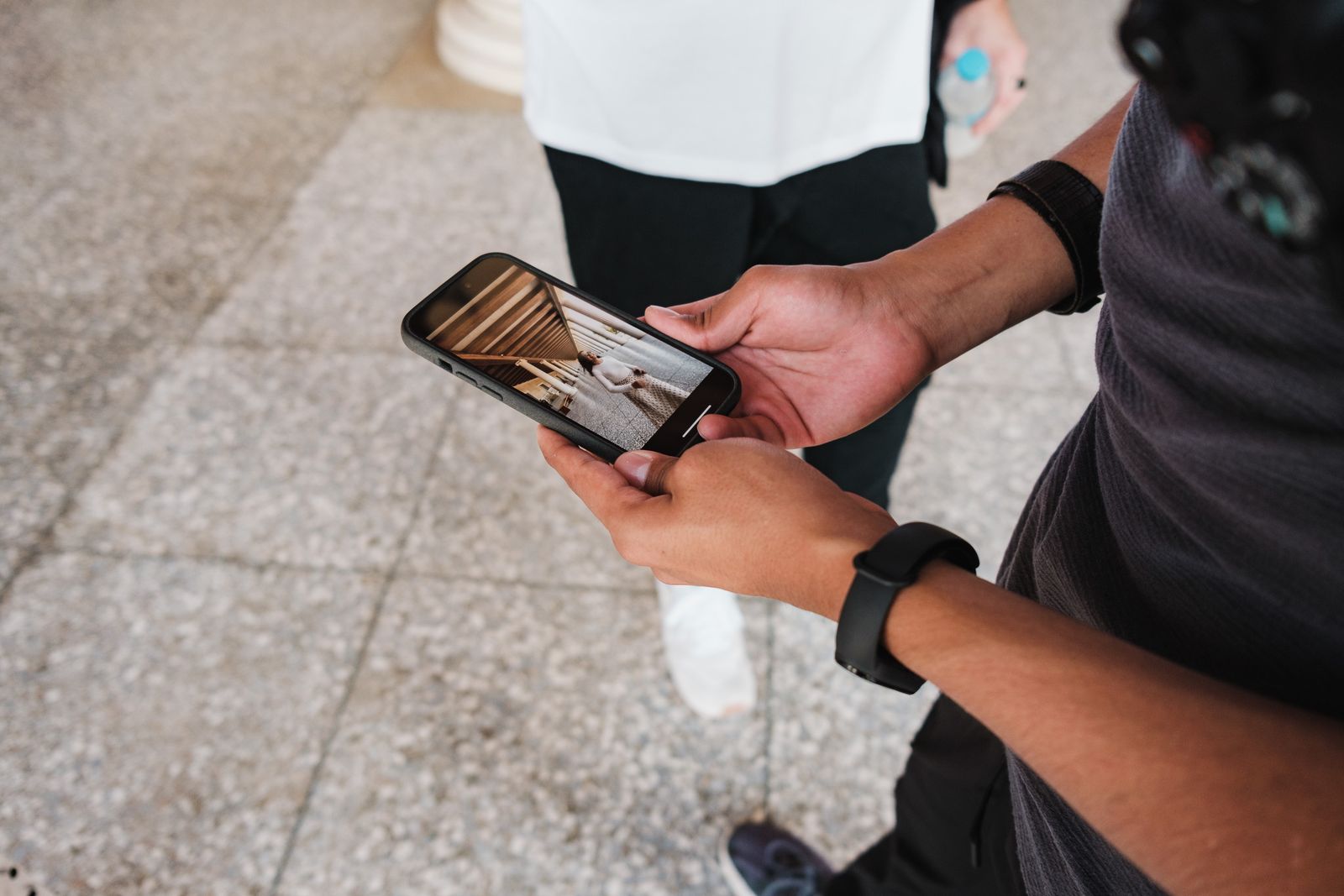
The cultural conversation about phone anxiety has been folded into a broader story about social anxiety generally, one that has grown louder as more people talk openly about feeling on edge in unscripted social moments, particularly at younger ages. Early home environments, including experiences of unpredictability and volatility in parental behavior, often cast a long shadow.
The rehearser’s shadow is often narrower than clinical social anxiety and shaped differently.
People with generalized social anxiety tend to dread the exposure itself — being seen, being evaluated, being present in the room. The rehearser is often fine with exposure. She will happily speak in front of a jury. What she cannot tolerate is the version of exposure where she cannot predict the other person’s next line, because somewhere in her history the other person’s next line was the whole game.
This is where the distinction matters. Treating a rehearser as though they have generalized anxiety, and applying the standard prescriptions — reduce avoidance, expose yourself to the feared situation, sit with the discomfort — often misses what the behavior is actually doing. The rehearsal is not avoidance of the call. The call is happening. The rehearsal is a form of preparation shaped by a nervous system that learned, correctly, at one point, that being caught mid-sentence without a plan carried a cost.
DMNews has previously explored the pattern in which people who overprepare for difficult conversations are often mislabeled as controlling when the more accurate reading is that improvisation once got them in trouble. The phone-call rehearser is a subset of this. The medium is doing specific work: the phone strips away face and body and leaves only voice, which is exactly the channel through which a volatile parent’s mood most often arrived.
Consider Priya, a 29-year-old junior architect in Manchester. Her father did not shout. He went cold. A wrong word — a request phrased with the wrong emphasis, a piece of news delivered at the wrong moment — could produce a two-week silence that the whole household then arranged itself around. Priya became, by twelve, a fluent reader of vocal micro-signals. She could hear the shift in his breathing before the silence began.
She now works in a firm where she speaks to clients constantly, and she rehearses every call. Not because she is afraid of clients. Because voice, for her, is where danger used to live, and the muscle that scanned for danger did not retire when she moved out.
The rehearsal often looks like this: a mental run-through of the opening, a prediction of the other person’s likely response, a drafted counter to two or three of the more difficult replies, and — this is the tell — a specific plan for what to say if the other person becomes displeased. That last item is the one that gives the pattern away. Most people preparing for a routine call do not draft a de-escalation script. Rehearsers do, automatically, without noticing that they are doing something other people are not.
The behavior is also, worth saying, often adaptive. Rehearsers tend to be unusually clear communicators. They arrive at conversations with structure. They anticipate objections. In professional contexts this reads as competence, and it often is. The cost is not visible to colleagues. The cost is the ninety seconds before every call, multiplied across a working life, and the low-grade sense that other people are moving through the same interactions without an internal preparation process.
They are, mostly. Most people pick up the phone.
Recognition of the pattern tends to arrive sideways. A rehearser mentions the notebook to a partner, expecting a nod, and the partner looks confused. Or they read a description like this one and feel the specific discomfort of being described by someone they have not met. The recognition is not always welcome. It can bring with it a re-reading of the childhood home, which is territory most adults have negotiated a truce with.
DMNews has written about the way long relationships quietly file down parts of a personality, and childhood homes do a version of this earlier and deeper. A child in a household where a parent’s mood was weather learned to be a meteorologist. The skill does not un-learn itself when the weather is no longer the parent’s.
It shows up in other places too. The reluctance to accept a compliment without deflecting. The full-body recovery required after an intense social encounter, a pattern DMNews has explored in the context of people who need a day alone after seeing close friends. The specific difficulty of being noticed by a parent whose attention was more often audit than warmth. These are not all the same pattern, but they share a common substrate: a childhood in which the emotional temperature of another person was information the child needed to survive.
The phone is one channel through which that information used to arrive. When the phone rang in Marcus’s childhood home, his mother’s mood could reset the household. When Priya’s father called from the office, the tone of the first three words determined the evening.
The rehearser does not consciously remember any of this at 3:47 on a Wednesday when they are dialing the dentist. They just know they need a minute first.
What often helps, in the accounts of rehearsers who have made peace with the pattern, is not eliminating the rehearsal. It is recognizing what it is, and lowering the stakes attached to it. The ninety seconds are not a symptom to be cured. They are a small ritual the nervous system asks for, in exchange for functioning smoothly the rest of the day. She has stopped feeling embarrassed by her notebook. Marcus, in his forties, has told his wife about the simulation and found that she has one of her own, of a different flavor, for different reasons.
The habit is not the problem. The shame attached to the habit — the sense that a competent adult should not need this — is often what makes the habit feel like evidence of something wrong.
If the pattern is disrupting daily life in a serious way, or arriving with other symptoms that make ordinary functioning difficult, that is a conversation for a qualified professional rather than an essay. This is the work of writers, not clinicians, and there is a difference between describing a common pattern and diagnosing a person.
For most rehearsers, though, the notebook is not pathology. It is memory doing its job, slightly past its expiration date, in a body that used to need it and now mostly doesn’t.
The phone call almost always goes fine. That is the quiet finding buried inside the rehearsal — a lifetime of calls that went fine, delivered to a nervous system that was calibrated by the ones that didn’t.