

An armed man forced his way through a crowd and moved toward Ohio Democratic gubernatorial candidate Amy Acton while she was speaking at the Canfield Fair on Sunday, September 6. According to Associated Press reporting republished by SFGATE, several people were injured before law-enforcement officers stopped him. Acton was not injured.
The Ohio State Highway Patrol identified the man as Patrick Havas, 38. Authorities said Havas had two pistols and a Taser, while the Mahoning County Sheriff’s Office reported recovering two handguns and brass knuckles after his arrest. Investigators emphasized that none of the weapons was brandished or removed from its holster.
Havas was booked on two assault charges and one disorderly-conduct charge. Authorities had not publicly established his motive, and it was not immediately clear whether he had an attorney. Any conclusion about why he approached Acton, whether he intended to use the weapons, or how much preparation preceded the incident would therefore go beyond the information investigators had released.
Acton’s campaign said the man “lunged” at her. Governor Mike DeWine described him as trying to forcefully push himself toward Acton while she was speaking. Republican gubernatorial nominee Vivek Ramaswamy’s campaign also condemned the incident, saying candidates should be able to meet voters without fearing threats or violence.
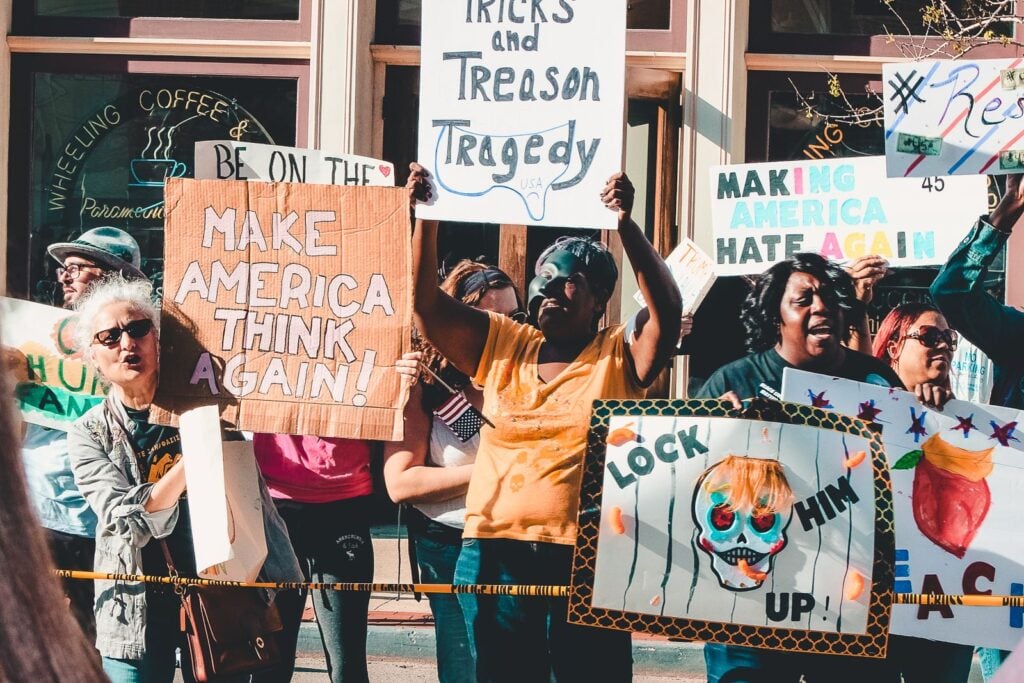
The confrontation took place at the Mahoning County Democratic Party tent, one of the open settings that make county fairs valuable campaign stops. Candidates can speak directly with voters there, but the same proximity that makes those appearances useful also makes controlling access difficult.
Contrary to the initial suggestion that Acton may have been relying only on the fair’s general police presence, she already had a dedicated law-enforcement detail. Local reporting based on the sheriff’s office account says her security detail consisted of Ohio State Highway Patrol troopers. Those troopers confronted Havas as he pushed through the crowd, and Canfield Fair police officers then took him into custody.
That distinction matters. The incident did not occur because Acton arrived without protection. It occurred despite the presence of trained officers, illustrating how quickly a confrontation can develop when a candidate appears in a dense public crowd.
Acton had already experienced intense hostility as Ohio’s health director during the early stages of the COVID-19 pandemic. Protests were held outside her home after she became one of the most visible officials associated with the state’s public-health restrictions. Her campaign for governor therefore began with security concerns that were more concrete than those facing many first-time office seekers.
What the Canfield incident does not establish is motive. It also does not establish that Havas planned an assassination or intended to fire either pistol. The inventory recovered after his arrest is serious, but possession alone cannot answer what he intended to do. That question belongs to investigators and, if additional charges are filed, to prosecutors and the courts.
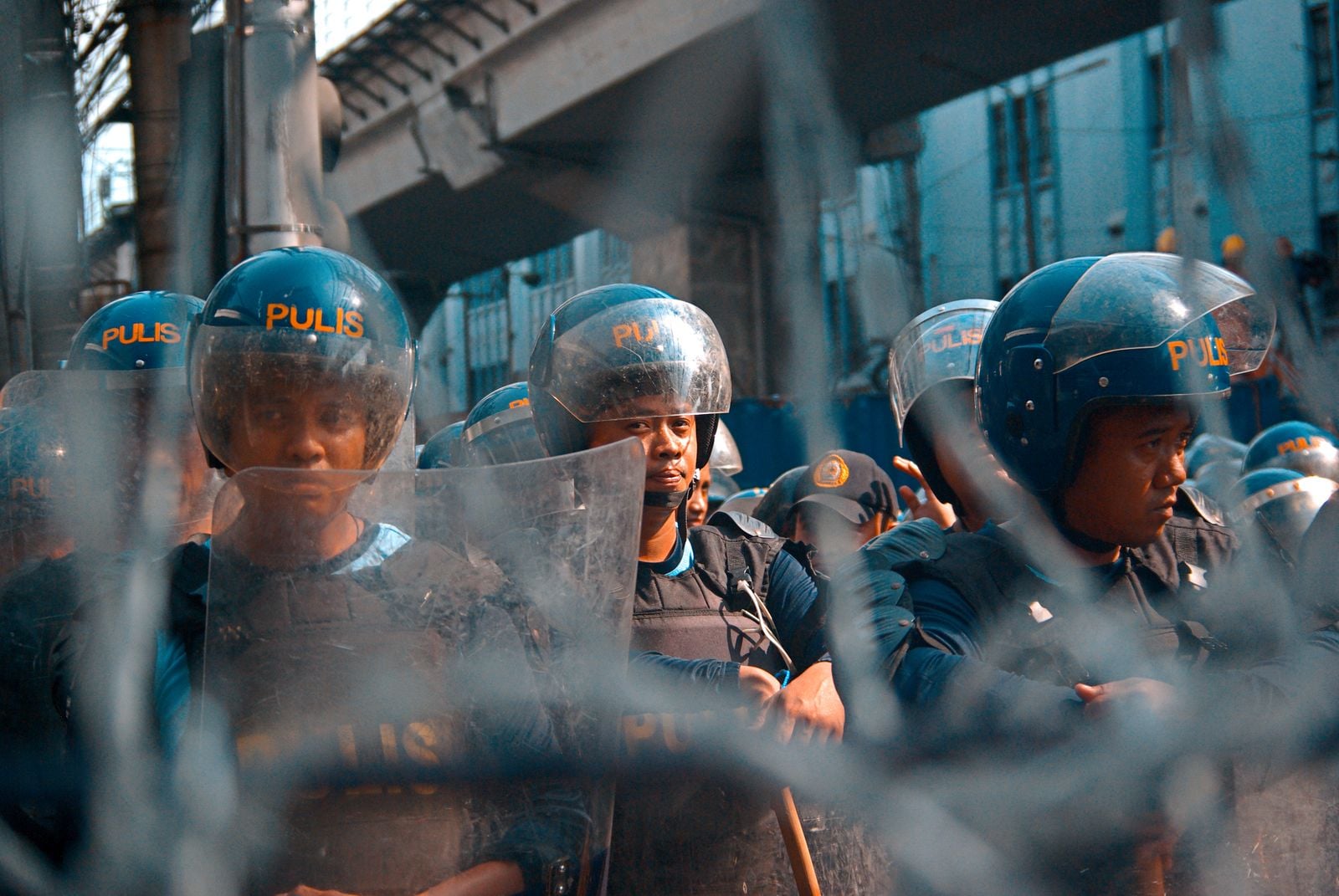
The incident comes approximately eight weeks before Ohio’s November 3 election. Acton is facing Ramaswamy in a closely watched gubernatorial contest, and both campaigns still depend on public events to reach voters beyond television and digital advertising.
Candidate security has meanwhile become a substantial campaign expense nationally. The Independent reported that federal political campaigns and committees spent roughly $41 million on personal, event-related, and cybersecurity during the 2023–2024 election cycle. That figure is broader than physical protection alone and applies to federal committees rather than Ohio’s gubernatorial campaigns, but it shows the scale of the security burden entering modern political budgets.
Gubernatorial candidates do not automatically receive the kind of federal protection assigned to major presidential candidates. Their arrangements can involve campaign-funded personnel, state or local officers, event security, or some combination of those resources. At Canfield, Acton had state troopers close enough to intervene, yet two people were still knocked to the ground during the confrontation and the campaign reported injuries to multiple people.
The immediate response may affect how Acton’s campaign plans future appearances, but no public evidence yet shows that the campaign will cancel events, move them indoors, or redirect spending toward advertising. Those are possible consequences, not established ones.
The broader pressure is nevertheless clear. Retail politics works because voters can approach candidates, listen from a few feet away, and sometimes speak with them directly. Effective security works by controlling that same proximity. Campaigns must continually decide how much openness they can preserve without exposing candidates, staff, volunteers, and bystanders to unacceptable danger.
Acton left the fair unharmed because officers were already present and responded quickly. The unresolved question is not whether she had protection, but how public campaigning remains genuinely public when even a staffed security detail cannot prevent every armed person from entering the crowd.