
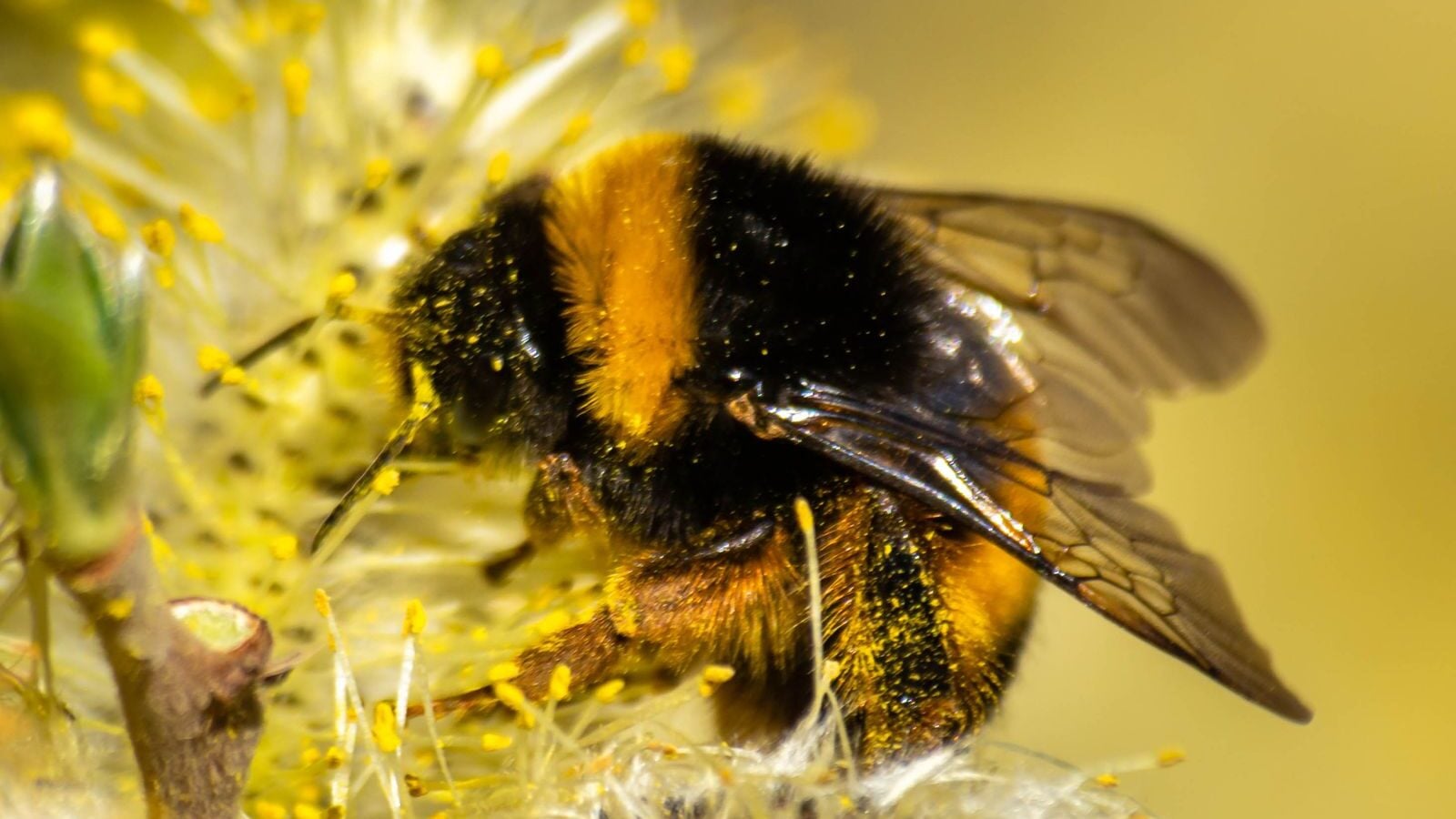
Imagine walking into a workshop where a river otter, given nothing but a smooth pebble and a shallow bowl of water, spends twenty minutes flipping the stone between its paws for no reason anyone can explain. That is roughly what a team of researchers at Queen Mary University of London watched happen inside a small plastic arena, except the animal in question was a bumblebee, the object was a tiny wooden ball, and there was no food waiting anywhere.
The bees rolled the balls anyway. Repeatedly. Some individuals rolled them dozens of times in a row. Young bees rolled more than older bees. The behavior had no obvious purpose, no reward, no training. It looked, unmistakably, like play.
The researchers who ran the experiment, led by Samadi Galpayage and Lars Chittka, spent months trying to describe what they were seeing in language that would not embarrass them at a conference. They kept arriving at the same word. According to Queen Mary University of London’s own summary of the study, the team allowed bumblebees to move through a chamber where they could either walk a clear path to a feeding area or detour into a zone filled with wooden balls. The bees kept detouring. They rolled the balls even when the food was right there.
The study, published in Animal Behaviour, met every criterion behavioral scientists use to distinguish genuine play from something that looks like it. The behavior was voluntary. It offered no immediate survival benefit. It was repeated but not stereotyped. It occurred only when the bees were relaxed and well-fed. Young bees did it more than older bees, which mirrors the pattern seen in mammals. The NPR write-up of the research noted that the team had ruled out the obvious alternative explanations one by one, and were left with the explanation they had been trying to avoid.
What makes this uncomfortable, scientifically, is not the behavior itself. It is what the behavior implies about the inner life of a creature with a brain far smaller than a human’s.
The ball-rolling paper did not arrive in isolation. It sits inside a growing body of work suggesting that the bumblebee brain does far more than anyone expected. A separate experiment, reported this year and covered by CNN via KTVZ, found that bumblebees could spontaneously solve a novel problem — rolling a foam ball beneath an artificial flower and climbing on it to reach a sugary reward — without training or trial and error. That study, published in Science, described the behavior as insight, the same cognitive category that made Wolfgang Köhler’s chimpanzees famous a century ago.
Insight is a big word. It means understanding cause and effect without having to bumble your way there. Until recently, scientists reserved it for great apes, elephants, some corvids, and a small argument about octopuses. Adding bumblebees to that list requires either lowering the bar or admitting the bar was never in the right place.
Lars Chittka, quoted in the CNN piece, compared the achievement to a person walking into a room, noticing a lightbulb needs changing, going to a different room to fetch a chair, and returning with it. This is not a metaphor scientists reach for casually.
Now hold the ball-rolling study next to the insight study. In one, the bees solve a problem to get food. In the other, they manipulate objects when there is no problem to solve and no food to get. Together the two findings sketch something that used to be reserved for vertebrates: a creature that can think its way through a puzzle and also, when the puzzle is gone, mess around for its own sake.
The Queen Mary team was careful. They did not claim the bees were conscious. They did not claim the bees were happy. What they said, in effect, was that the behavior fit every operational definition of play that researchers use for dogs, rats, and young primates, and that refusing to call it play would require a special exemption invented specifically for insects. That kind of exemption is what philosophers of science call an ad hoc rescue — a rule added to protect a prior belief rather than to explain the data.
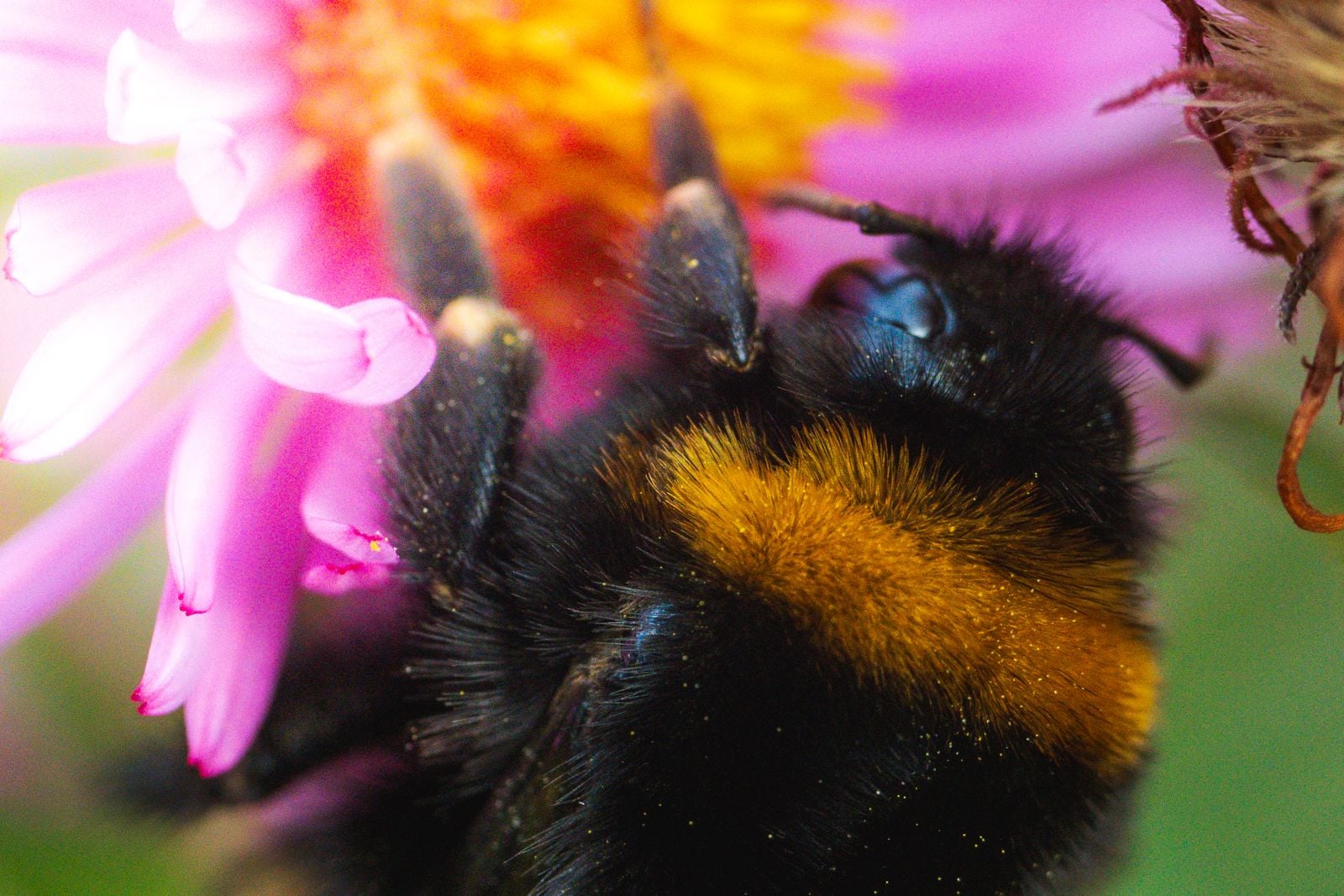
Consider what this does to the map of the animal mind. For most of the twentieth century, that map was drawn as a ladder. Humans at the top, then primates, then other mammals, birds somewhere in the middle, reptiles and fish lower down, and insects near the bottom next to the wiring diagrams. Ball-rolling bumblebees do not slot neatly into that ladder. Neither do the details of the Queen Mary experiment as SciTechDaily summarized them, which showed the bees returning to the ball zone again and again over multiple sessions, in a way that looked less like accident and more like preference.
Preference is the word that makes this hard. Preference implies something inside doing the preferring.
This is where the research collides with the softer edges of how humans relate to the natural world. It is one thing to know that pollinators are important. That framing has been around for decades, and it treats bees as machinery — small, essential, replaceable in principle if you could just build the right drone. It is another thing to consider that the small essential machinery might be having a mildly good time rolling a wooden ball. The moral arithmetic changes.
The stakes here are not abstract. The bumblebee species most beloved by researchers are in trouble. The Guardian’s coverage of the 2026 Invertebrate of the Year spotlighted Bombus dahlbomii, the giant ginger bumblebee of Patagonia, whose populations have collapsed under pressure from invasive European bumblebees imported for commercial pollination. Habitat loss and disease are doing to bumblebees what habitat loss and disease have done to more charismatic mammals. The difference is that we have spent less time asking what, exactly, we are losing.
If a bumblebee will detour from its route to push a ball around, the answer to that question is not only economic.
There is a temptation, when writing about findings like these, to reach for the language of enchantment. Look, tiny beings with tiny joys. That framing feels good and does the research a disservice, because the interesting thing is not that bees are magical. The interesting thing is that our confidence about what a small nervous system can and cannot do was built on very little evidence and a lot of convenience. It was easier to assume insects were mechanical. It made the moral bookkeeping simpler. It made pesticide use easier to defend. It made the ecosystem feel more like a spreadsheet.
The bees rolling balls at Queen Mary are not, by themselves, an argument for anything. They are a data point that keeps refusing to sit still. Every attempt to explain the behavior in terms of foraging, thermoregulation, or accidental contact failed. Every criterion for play succeeded. At some point, the parsimonious explanation stops being the mechanical one.
This shift matters beyond entomology. The habit of assuming other minds are simpler than they are — of taking the absence of evidence for inner experience as evidence of its absence — is a pattern that shows up in how humans read each other as well. We tend to assume the other person is running on autopilot until they do something that forces us to reconsider. Bees, it turns out, are doing something that forces us to reconsider.
The formal recognition of such behaviors often arrives long after informal observations. The Scientific American piece on the ball-rolling bees noted that the finding aligned with what animal behaviorists had suspected for years but lacked the experimental design to demonstrate. Chittka’s team designed the arena specifically to give the bees a choice between a productive route and a pointless one. The bees chose pointless often enough to matter.
The honest position, on the available evidence, is this. We do not know whether bumblebees experience anything. We do not have a way to ask them, and any answer they gave would still have to travel through our interpretive machinery. What we know is that they behave in ways that, in any other animal we have studied, we would take as evidence of an inner state. We know that refusing to extend the same inference to insects requires a rule we invented to protect a prior belief.
The bees rolled the balls. They rolled them without being trained, without being rewarded, and without being asked. The researchers did their best to explain it in a way that would not require rewriting the map. The explanation they were left with is the one they had been avoiding.
Sometimes an animal does something small and pointless and the whole architecture of assumption shifts an inch. An inch is enough.