
The standard reading of what happened at Columbia University in the spring of 2024 is that a research institution, caught between fierce constituencies, tried to hold a neutral line on a political conflict its students were fighting over. The tax filings suggest something else. Columbia was not a referee. It was a funder — on one side.
According to The Intercept’s analysis of the university’s IRS filings, Columbia paid $100,000 to the Israel on Campus Coalition and $75,000 to the American Israel Education Foundation, an AIPAC affiliate, in the fiscal year ending June 2024. In the following fiscal year, it paid $7,200 to the Anti-Defamation League for program services. Over the past decade, the university has routed roughly $250,000 to AIPAC’s charity arm.
In the same period, pro-Palestine, Arab, and Muslim organizations received little or nothing from the university’s grant-making.
Consider what a policy of neutrality would actually look like on paper. It would look like an institution that either funds ethnic and political advocacy organizations across the spectrum of its student body, or funds none of them, or funds only organizations that provide direct educational services rather than foreign-policy lobbying. Columbia’s tax returns describe a different pattern.
The distinction matters because of who the recipients are. AIPAC’s affiliate and the Israel on Campus Coalition are not general cultural or community organizations. They exist to shape political discourse around a specific foreign state. Among the hundreds of grants Columbia made in fiscal year 2024, they stand out as rare examples of the university directly funding advocacy tied to another country’s foreign policy.
Universities of Columbia’s size make hundreds of grants a year, most of them to peer institutions and hospitals. A grant is not an accident. Someone at the university signed off. Someone decided this organization, at this amount, in this year.
That is the first thing the filings clarify. These payments are not passive.
The second thing worth understanding is the vehicle. Much of the giving Columbia has directed toward pro-Israel groups over the years has moved through donor-advised funds. Mark De Fusco, a researcher on financial transactions in higher education formerly with the Pullias Center for Higher Education, told The Intercept that the structure’s appeal is straightforward: donors can give without their names attaching to the gift. The money moves. The name does not.
For a university, that architecture solves a specific problem. It lets an institution direct funds toward politically charged recipients without a public paper trail linking any individual trustee, donor, or administrator to the choice. The grant appears on the fund’s filings, not on the giver’s.
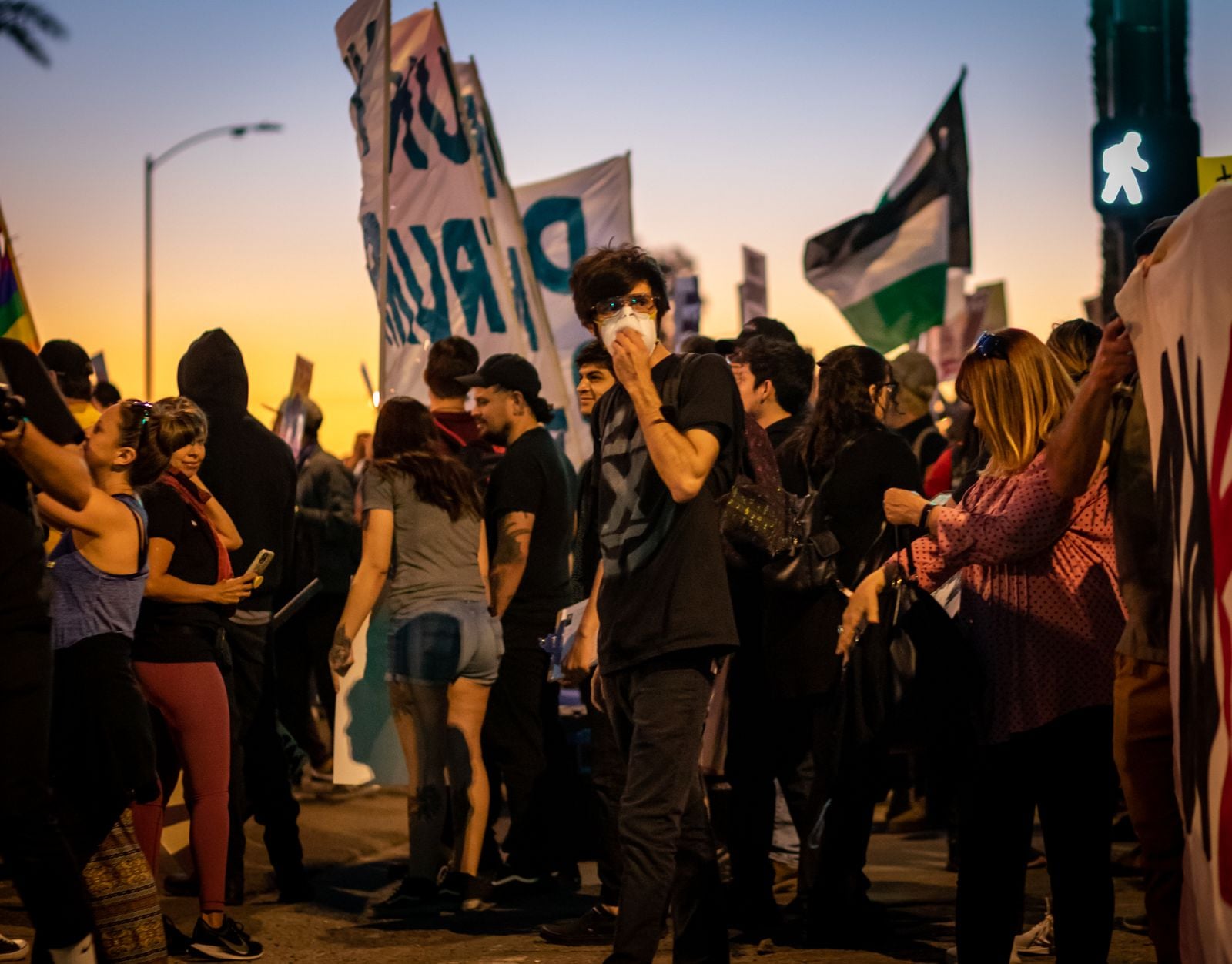
That opacity is the backdrop against which Columbia’s response to student protests in 2024 and 2025 should be read. Students in the pro-Palestine encampments were demanding disclosure. They wanted to know what the university’s endowment held, what its financial relationships were, and where the money went. The university responded by suspending student groups and calling in the New York Police Department.
Joseph Howley, a Columbia classics professor, told The Intercept that the filings confirmed what he and colleagues had suspected since the fall of 2023: that pro-Israel positions function as the institution’s de facto policy. The tax filings, in his account, put a number on what students and faculty had already inferred from the university’s actions and public statements.
None of this settles the underlying political question about Israel, Palestine, or the war in Gaza. Reasonable people disagree, and the disagreement inside Columbia’s own faculty and student body is as sharp as it is anywhere. What the filings do settle is a narrower question about institutional posture. A university that funds one side of a political conflict while policing the other cannot credibly describe itself as neutral in that conflict.
None of Columbia’s giving appears to be illegal. Universities have wide latitude in their grant-making. Donor-advised funds are a legitimate, if criticized, feature of American philanthropy. The question is not one of legality. It is one of consistency between stated values and financial behavior.
The gap between those two is where institutional credibility lives or dies.
There is a longer arc here worth naming. American universities spent much of the last decade building an elaborate vocabulary around inclusion, belonging, and the protection of marginalized voices on campus. That vocabulary was applied unevenly during the protests of 2024, and the unevenness was not random. It tracked the direction of the money.
Students at universities across the country have watched this pattern unfold. When the words about protecting students are recited on one campus while the grants on another campus flow in one direction only, students notice.
The ADL relationship is a useful test case, and it’s one The Intercept’s investigation drew a direct line to. In July 2025, Columbia announced a partnership with the organization for antisemitism-related programming and training. A month earlier, ADL chief executive Jonathan Greenblatt had likened pro-Palestinian student protesters to members of groups like ISIS and al-Qaeda, in remarks to Republican state attorneys general first reported by the Forward. The partnership went forward anyway.
A university seeking to reduce hostility on its campus could reasonably choose to work with organizations focused on combating antisemitism. A university seeking to do so credibly might also decline to partner with an organization whose leader has recently characterized a substantial portion of its own student body as terrorist sympathizers. Columbia did not make that second choice.
Trust erodes not from a single decision but from the accumulation of small ones that all point the same direction. A grant here. A partnership there. A police call. A suspension. Each defensible in isolation. Together, a pattern.
The pattern at Columbia, as the tax filings describe it, is not hidden. It is written into the 990s. Anyone with the patience to read them can see where the money went and where it did not.
Which returns the story to the question the students were asking in the encampments. They wanted disclosure. The disclosure existed. It was in the filings the whole time.
What The Intercept’s reporting adds is the assembly. The individual grants are public. Reading them side by side, against the backdrop of who received nothing, against the backdrop of who was arrested for asking, produces the picture the university would prefer its constituents not assemble on their own.
Universities are not neutral institutions. They never have been. They make choices about what to fund, whom to partner with, and which voices on their campus to protect and which to police. The pretense of neutrality is a rhetorical convenience, not a description of practice.
Columbia’s filings make the choice visible. What the institution does with that visibility, and what its students, faculty, and donors do with it, is the part still being written.