
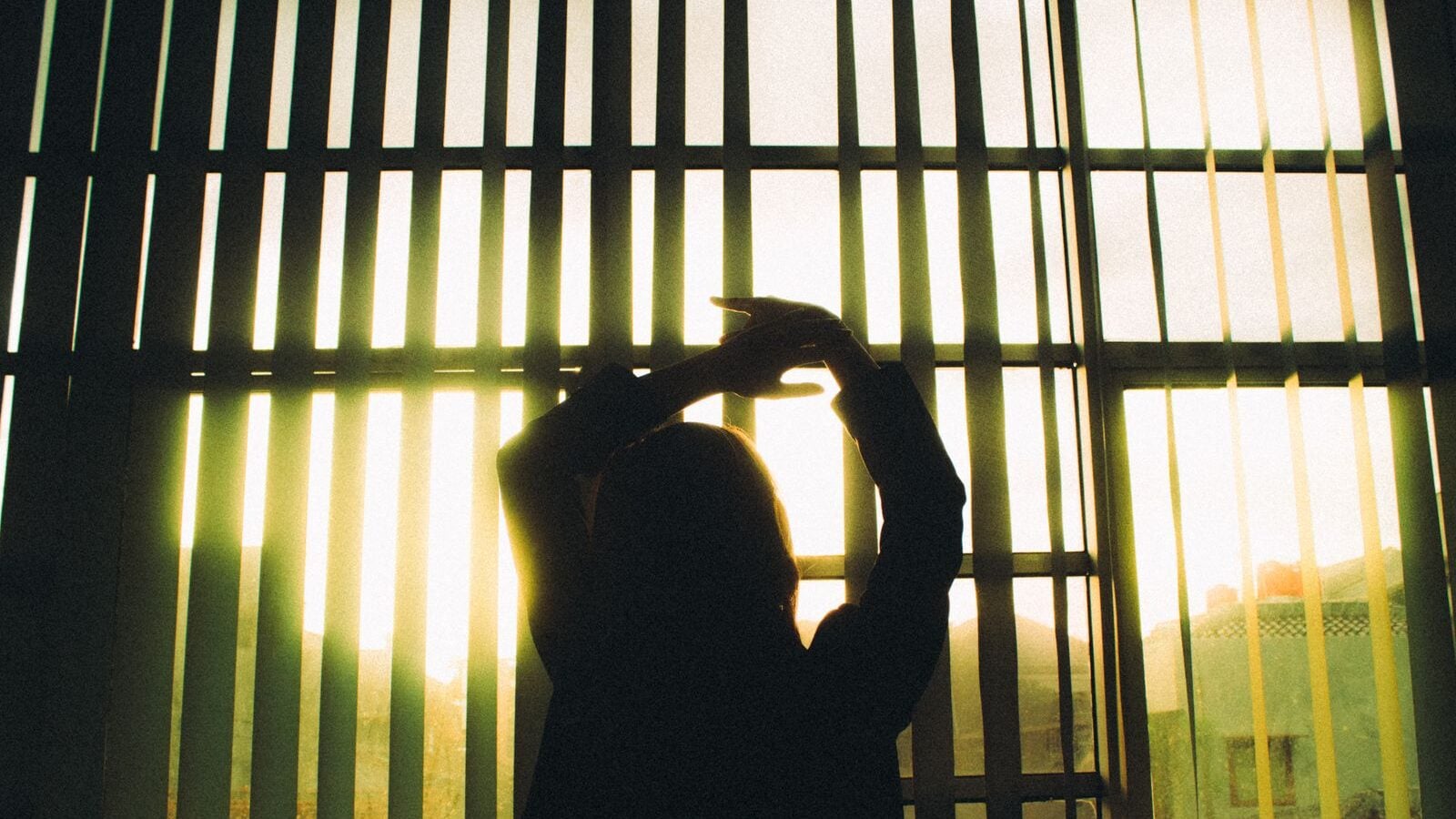
The pattern is familiar to anyone who has watched a friend, a colleague, or a family member cycle through the same complaint for years. They wake up already depleted. They reach for the phone before their eyes fully open. They skip breakfast, skip daylight, skip movement, then wonder by ten in the morning why their body feels like it belongs to someone twenty years older. The tiredness is not a mystery. It is a set of behaviors, repeated daily, that quietly train the body to expect exhaustion.
This is the version of the story that repeats with only the details changing: exhaustion blamed on the job, the commute, or age, while the actual first hour of the day goes unexamined — a screen in bed before the eyes are fully open, coffee on an empty stomach, a fluorescent-lit room entered before the sun is up. The fatigue was never really a condition being endured. It was a routine, performed daily, until it hardened into an explanation.
What follows is a reading of research on circadian biology, movement, light exposure, and morning behavior — not medical advice, and not a diagnosis of anyone’s tiredness. This is journalism, not clinical guidance. But the pattern that emerges across the literature is consistent enough to be worth describing plainly.
The first shift is light. Specifically, morning light. Research on circadian biology published in Nature has long established that the internal clock governing alertness, hormone release, and body temperature is set primarily by exposure to daylight in the early hours after waking. People who spend the first two hours of the day indoors, under artificial light, are effectively telling their body it is still night. The grogginess is not laziness. It is a signal being sent correctly to a body receiving the wrong information.
For a lot of people, the shift that actually moves the energy needle isn’t a supplement or a bloodwork panel that keeps coming back normal. It’s walking to get coffee instead of having it delivered — ten minutes of gray daylight, most days of the week, doing more for afternoon energy than a year of wellness products ever did.
The second shift is movement, but not the kind that requires a gym membership or a training plan. Reporting from NPR on circadian research notes that muscles themselves keep a kind of internal time, and that light activity can act as a signal for the body’s circadian system alongside light exposure. This is one study within a broader body of work, not settled consensus, and the effect size in ordinary life is modest. But the direction is consistent. Even a short walk within the first hour of waking does something that a slow scroll through a phone does not.
The third shift is what happens before caffeine. People who feel constantly depleted often reach for coffee within minutes of waking, on an empty stomach, and then wonder why they crash by mid-morning. A glass of water first — before the coffee, before the phone, before anything else — is one of the smallest behavioral changes possible, and one of the more commonly recommended. It is not glamorous. It is not a hack. It is a correction for the fact that the body has just spent eight hours without fluid.
The fourth shift concerns what is actually eaten, and when. Elite athletes are often held up as models here, but the reality is more ordinary than the marketing suggests. Sports nutrition guidance has converged, in broad terms, on a “food first” philosophy: supplements are treated as a complement to foundational habits, not a substitute for them, and the athletes who perform best are usually the ones who nailed sleep, hydration, and consistent meal timing long before they added anything to a shaker bottle. The same logic applies in reverse for the constantly tired: no supplement will out-perform a morning that starts with actual food.
The same pattern shows up around supplements more broadly. Years of greens powders, protein powders, and adaptogen blends can sit in a cupboard doing very little — not because the individual ingredients are useless, but because they’re being asked to compensate for a breakfast that doesn’t exist. Swap the powders for eggs and oats before the day starts, and the powders suddenly have far less work to do.
The fifth shift is the hardest to name without sounding preachy, so it is worth stating plainly: the phone can wait. The specific behavior of opening email, news, or social feeds within the first ten minutes of waking appears to shape the emotional tone of the entire morning. This is observation more than established science. But it shows up often enough in interviews with business leaders and high performers to be worth noticing: a protected first hour before email, some version of a walk, cold water, or quiet reflection, done before anyone else’s demands arrive. The pattern is not universal, but it recurs often enough to be worth noticing.
Which brings up something worth naming. The people who feel constantly tired often describe their mornings as things that happen to them. The alarm goes off. The phone lights up. The children need something. The inbox is already full. Agency has been surrendered before the day begins. This is a kind of behavioral pattern DMNews has examined in a different context — the difficulty many adults have with stillness — and it shows up in mornings as a reflexive reach for stimulation, for input, for anything other than a quiet room.
The sixth shift is sleep, working backwards. The morning does not begin at 6 a.m. It begins at 10 p.m. the night before. Sleep researchers have repeatedly found that the human system is sensitive to even small shifts in timing — the twice-yearly clock change alone has been linked to measurable dips in alertness and mood in the days that follow. People who feel constantly tired have often been running a self-imposed version of that disruption for years, with bedtimes that drift later on weekends and earlier on Monday, in a permanent low-grade jet lag. The morning habit here is really a night habit: a bedtime that stays roughly constant, seven days a week.
The seventh shift is the most abstract, and the most important. It is the practice of doing one thing at the start of the day that belongs entirely to the person doing it. Not a task for an employer. Not an obligation to a family member. Not a productivity ritual dressed up as self-care. Something small and genuinely chosen. For some people this is journaling. For others it is a walk without a podcast. For others it is fifteen minutes of reading a physical book. The specific activity matters less than the fact of ownership.
Sometimes the whole practice is smaller than that: ten minutes on a balcony with a coffee and no phone. No workout program, no diet overhaul — just a small window of the day reclaimed from everyone else’s agenda. People who do this consistently describe their afternoon fatigue lifting within weeks, not because the habit is dramatic, but because it isn’t.
The temptation, reading a list like this, is to add all seven at once, fail within a week, and conclude that the problem is deeper than mornings. This is a reliable route back to the starting point. The research on habit change is not romantic on this point: one small behavior, sustained for a month, tends to outperform seven ambitious behaviors sustained for four days.
There is also a limit worth naming. Persistent tiredness that does not respond to any behavioral change — that lingers for months, that comes with other symptoms, that interferes with ordinary functioning — is not the subject of this piece. That is a conversation for a doctor, and the seven habits above will not substitute for one. The observations here concern the ordinary low-grade fatigue that most working adults describe at some point, the kind that has behavioral roots rather than medical ones.
What ties the seven habits together is not the habits themselves. It is a shift in what the first hour of the day is for. In the tired version, the morning is a transition zone the body has to be dragged through on the way to real life. In the other version, the morning is where the day is actually made — quietly, without an audience, before anyone else’s agenda arrives.
The people who describe emerging from years of feeling constantly depleted rarely describe a dramatic intervention. They describe getting outside earlier. Drinking water first. Eating something real. Moving a little. Sleeping on a schedule. Protecting the first hour from the phone. Keeping one small thing that belongs to them.
None of this is new information. It is the kind of advice that has appeared in health columns for decades, which is part of why it gets dismissed. The interesting question is not whether the habits work. It is why so many people who know about them do not do them. And the honest answer, in most cases, is that the tiredness has become familiar. It has a shape. It organizes the day. Changing the mornings means giving up an identity built around being drained.
That is the part no morning routine article usually says out loud. The fatigue is doing something. It is explaining why the ambitious project has not started, why the difficult conversation has not happened, why the life that was supposed to be underway by now is still on pause. Waking up rested would remove the alibi.
The seven habits are simple. Deciding you no longer need to be tired is not.