
“Null and void.” That was Hezbollah leader Naim Qassem’s reported verdict on the US-brokered framework agreement, delivered as Israeli strikes continued across southern Lebanon and Beirut. The phrase is doing a lot of work. It signals a peace process that exists on paper and almost nowhere else.
The numbers behind that verdict are the story. Israeli attacks on Lebanon between October 2023 and September 2026 have killed 8,920 people and injured 30,595 others, according to the Lebanese Ministry of Public Health. More than half of the deaths — 4,358 — have come since March 2, 2026, the point at which Israel established a military occupation and so-called buffer zone in the south.
Two peace agreements were signed in June 2026. The killing accelerated after both.
That is the paradox at the center of Lebanon’s current war. Diplomacy has been unusually visible. The results have been unusually invisible. The gap between the two is where the human cost lives.
Consider what the March 2026 shift actually meant on the ground. Before that date, the fighting followed a recognizable pattern of cross-border exchanges, targeted strikes, and periodic escalations tied to events in Gaza. After it, the geography changed. Israeli forces held terrain inside Lebanon. A buffer zone requires enforcement, and enforcement in a populated region means sustained fire.
The health infrastructure has borne a specific and documented share of that fire. The Lebanese Health Ministry recorded 179 Israeli attacks on ambulance crews since March 2, killing 135 healthcare workers. Ambulances are not incidental targets in a modern conflict. They are what stands between a survivable injury and a death certificate. When they stop moving, the injury figures and the fatality figures start to converge.
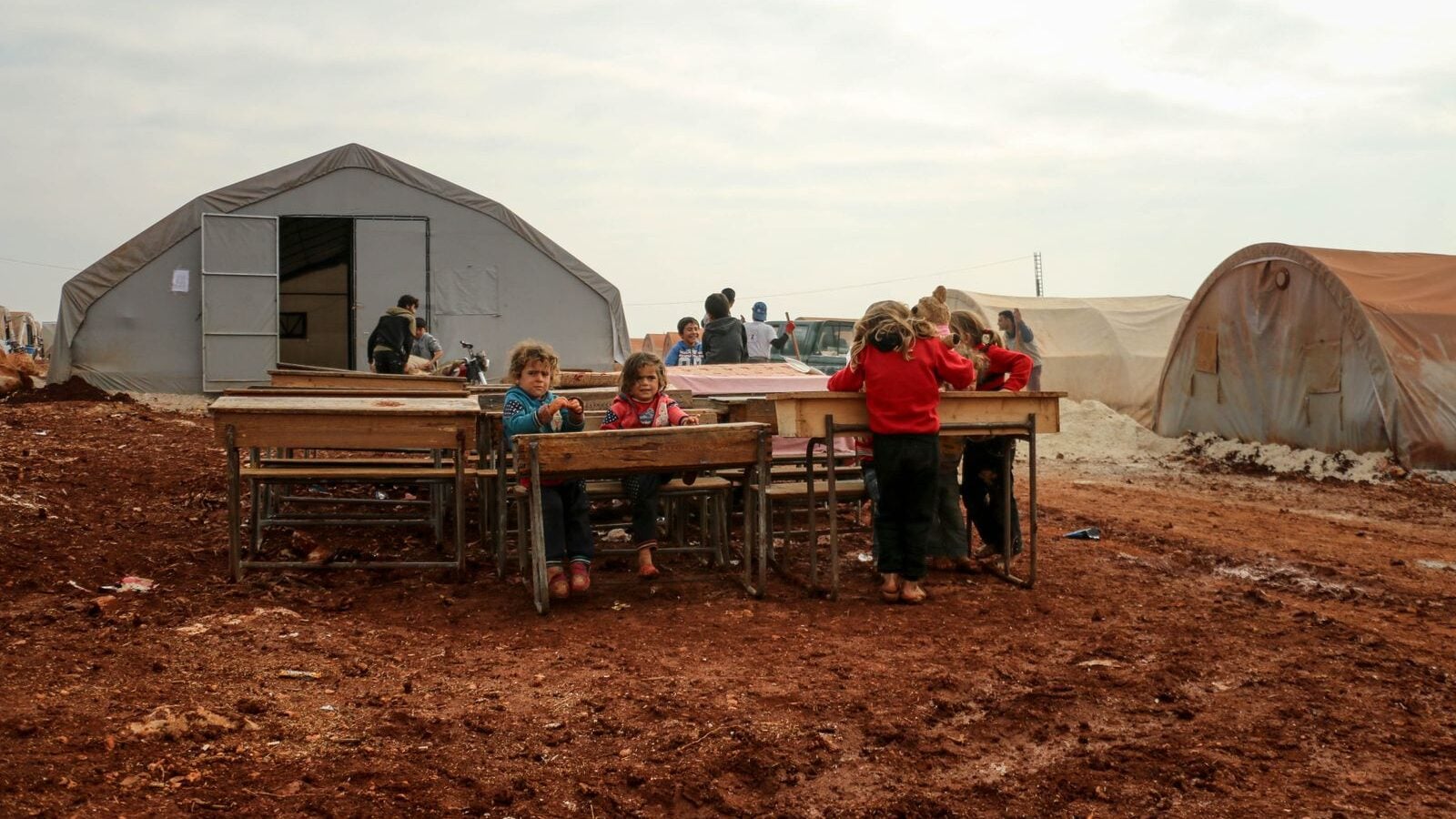
The displacement figures tell the second half of the story. UNHCR reported that 360,000 people remained displaced in August 2026, with at least 22,000 living in collective shelters. Displacement of that scale, sustained for months, produces a secondary crisis of its own — water, sanitation, chronic disease management, education interrupted for an entire school year, economic collapse in villages that people cannot return to.
The framework agreement Hezbollah rejected was meant to produce a phased de-escalation. In the group’s reading, phasing is the problem. A framework that begins with Hezbollah disarmament steps while Israeli forces remain on Lebanese territory is, from their position, a surrender document dressed as a peace plan. In the Israeli reading, withdrawal without prior security guarantees would simply reset the conditions that produced the war. Both positions have internal logic. Neither position has produced a stop to the killing.
This is where the mediation problem becomes structural. US-brokered agreements in this region have historically depended on a specific alignment: an American administration willing to spend political capital pressuring both sides, regional powers with skin in the outcome, and combatants who calculate that the deal on offer is better than the war they are fighting. When any one of those conditions is absent, the paper survives and the ceasefire does not.
The scale of displacement in August — 360,000 people still without homes, per UNHCR — is what happens when both of Lebanon’s overlapping authorities fail simultaneously: a state that cannot fully exercise sovereignty over its own south, and a non-state actor conducting a war the state cannot end. Civilians move because neither side can guarantee they will not be hit.

The reciprocal escalation pattern is visible in the specific incidents. A Hezbollah rocket attack was followed by an Israeli strike on Beirut that killed 31 people. A strike on Kfar Reman killed three and injured 23. Each incident is legible on its own. Strung together, they describe a conflict that has settled into a rhythm neither party appears able or willing to break.
The healthcare worker death toll deserves particular attention because it is a leading indicator. When 135 medical staff are killed in six months, the effect on a small country’s healthcare system is not linear. Lebanese medical education produces a finite number of trauma surgeons, emergency physicians, and paramedics per year. The recovery period for that loss, assuming the war ended tomorrow, would be measured in years.
The question that hangs over the current moment is whether the June framework has any life left in it, or whether it functions now mainly as a diplomatic artifact — something to point to when asked what is being done. The rejection from Hezbollah is unambiguous. The continued Israeli operations suggest the security calculations that produced the March occupation have not changed. The mediating parties have not, on the available evidence, produced new terms.
What is left is a war that international attention has largely rotated away from, conducted in a country whose government does not control the conditions of its own territory, against a backdrop of civilian casualty figures that would in another era have dominated coverage for weeks. The rotation of attention is itself part of the story. Conflicts that lose the front page do not lose their casualty rates. They lose their political urgency, which is a different thing entirely.
DMNews has covered elsewhere how legal frameworks that look protective on paper often function very differently in practice, and the same pattern applies at the international level. A signed agreement is a document. A ceasefire is a behavior. The two are related but not the same, and the distance between them is measured in the figures the Lebanese Health Ministry releases each week.
Nearly 9,000 dead. Two peace agreements signed. An occupation ongoing. A framework declared null. These are not contradictions to be resolved by clever diplomacy. They are the current arrangement, and the people living inside it are running out of time for the arrangement to change.