
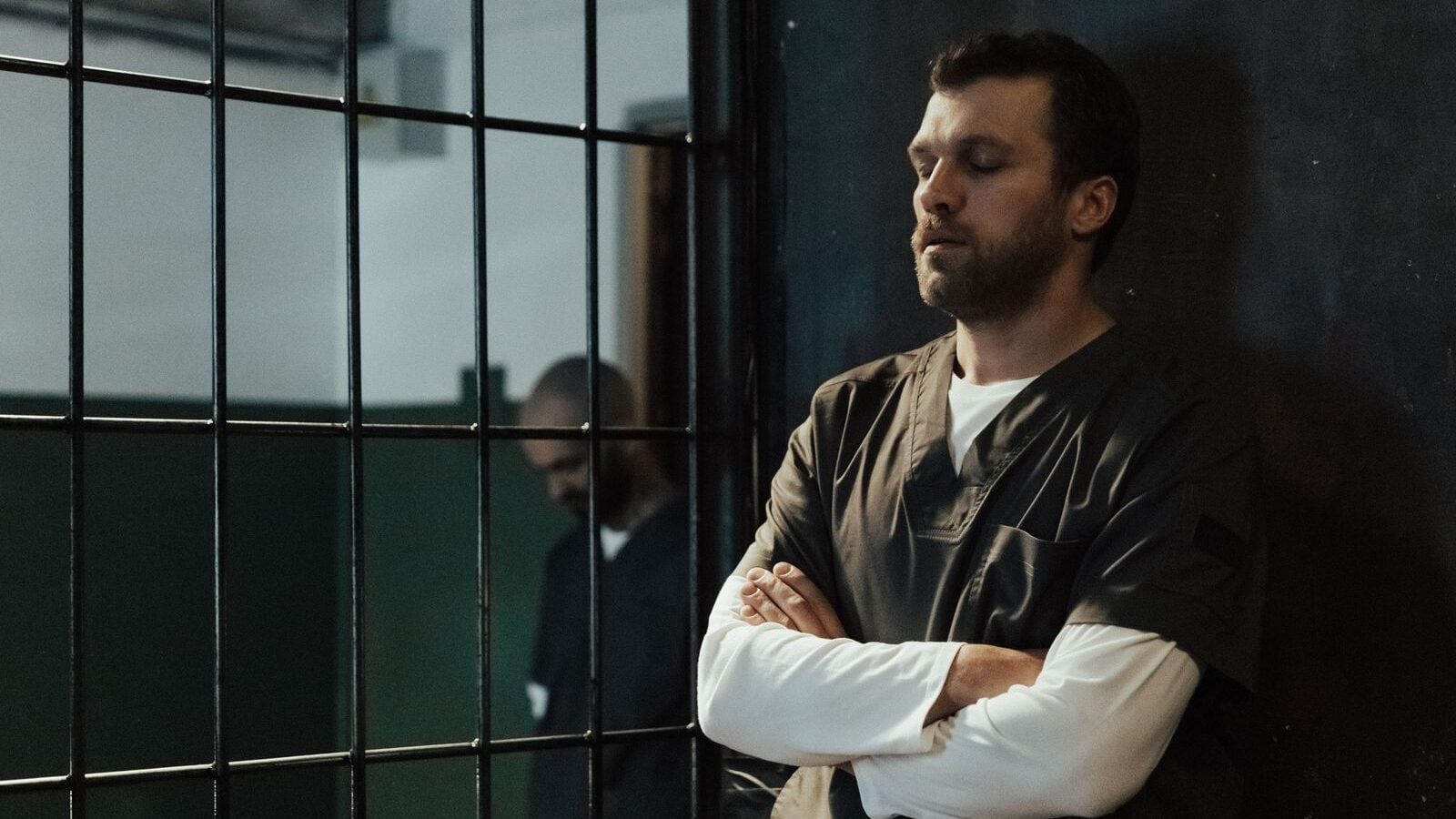
The concrete in the death row tiers of Louisiana State Penitentiary at Angola holds heat the way a cast iron pan does — long after the sun drops, the walls keep radiating. In the summer of 2012, the heat index in one section of death row crossed 126 degrees for 85 straight days. Jimmie Duncan spent nearly two decades of his sentence in a cell like that, alone 23 hours a day, waiting for the state to kill him for a crime the Louisiana Supreme Court has now ruled did not happen the way prosecutors said it did.
He is out of the cell. He is not free.
In June, Louisiana’s highest court threw out Duncan’s 1998 conviction for killing his girlfriend’s toddler. Chief Justice John Weimer, in a concurring opinion, compared the forensic practices used to convict him to 17th-century witch trials. The bite marks that anchored the state’s case, the court found, could not have been made by a human mouth. Duncan works night shifts at a Walmart. The district attorney has said he may retry the case, and that threat is doing something specific: it is keeping Duncan trapped in a legal category the state of Louisiana has quietly weaponized.
Exonerated, but not eligible. Free to work a register, not free to collect what the state owes him.
The paperwork problem is the story. Louisiana runs a restitution program that offers up to $480,000 over a decade to people wrongfully convicted. To collect, an exoneree generally needs the case to be closed — no pending retrial, no lingering threat of re-prosecution. As long as the DA in Ouachita Parish keeps the retrial option alive, Duncan’s case is functionally open. The clock does not start. The money does not move.
Consider what this arrangement actually does. A prosecutor who lost at the state supreme court retains a lever powerful enough to keep an exonerated man in poverty. No new evidence is required. No new charging decision has to be defended in open court. The threat is the punishment.
The retrial threat rarely resolves quickly. It sits. It ages. It becomes the reason a landlord will not rent, the reason a bank will not extend credit, the reason a job application has to explain a 30-year gap without a clean word to describe what happened.
The forensic scaffolding that put Duncan on death row collapsed years ago in the scientific literature but held up for decades inside Louisiana courtrooms. The state’s key experts were pathologist Steven Hayne and dentist Michael West, whose bite-mark analysis has been discredited across the field. Reason magazine documented problems in Duncan’s case as far back as 2009. Oxygen’s coverage of the Innocence Files series catalogued West’s history. A 2026 documentary walked viewers through the specifics of the fabricated evidence. None of that moved the case for Duncan for the better part of a generation.
What finally moved it was a court willing to say plainly what forensic odontologists had been saying quietly for years.
The gap between what science knows and what a courtroom accepts is not a technicality. It is a life. Public defenders describe the frustration of citing peer-reviewed retractions of forensic methods and watching judges shrug. Precedent has inertia. So does prosecutorial reputation. Nobody who charged Duncan wants to be the person who admits the charge was junk.
That is the second layer of the trap. The retrial threat is not only about Duncan’s restitution. It is also about the record. If the DA retries and loses, that loss becomes part of the office’s history. If the DA drops the charges, that decision becomes an admission. Keeping the case in suspended animation resolves neither problem for the prosecutor and creates only one problem — for Duncan.
Meanwhile, Louisiana’s Attorney General Liz Murrill has opposed nearly all applications for compensation and last year told lawmakers the restitution fund should be abolished altogether. The state that convicted Duncan on bite-mark evidence is now, through its top law enforcement officer, arguing the state should owe nothing when it convicts the wrong person.
Read those two facts next to each other. A supreme court comparing the prosecution to witch trials. An attorney general arguing the compensation program should end. These are institutions of the same state, running in opposite directions, and Duncan is in between them.
The collateral damage does not stay in the cell. Duncan’s mother, according to family, turned to alcohol during the years she fought for her son. She died. His brother died of an overdose. His aunt, Elaine Whiteside, described the toll in the ProPublica report on the case. The wrongful conviction of one person is almost always the slow-motion destruction of a family, and the compensation formula — up to $480,000 over ten years — does not pretend to price that. It pretends to acknowledge it.
Exonerees who leave prison without the money the state technically owes them face specific challenges. They come out into a job market that does not know what to do with a 30-year gap. They come out to families thinned by decades of absence. They come out into medical needs — Duncan spent nearly 20 years in solitary in a facility where the heat index sat above 126 for months — with no cushion for what solitary and heat did to the body.
A 2017 class-action settlement eventually required Angola to let death row prisoners spend at least four hours a day outside their cells. That was the floor the state agreed to only after being sued. It arrived deep into Duncan’s sentence.
The Duncan case is a lens, not an anomaly. States with restitution statutes routinely tie eligibility to case closure, which gives prosecutors a mechanism to punish exonerees without ever going back to trial. Some states require a formal declaration of innocence, which is a higher bar than a vacated conviction. Some cap total compensation well below what the wrongful years actually cost. Some, like Louisiana under its current attorney general, are watching lawmakers debate whether the program should exist at all.
The pattern beneath the pattern is that the legal system treats wrongful conviction as an accounting problem it would rather not settle. When it does settle, it settles slowly, partially, and with conditions that favor the state that made the error.
Duncan said it more cleanly than any lawyer could, in a recent interview with ProPublica and Verite News: he is factually innocent, but not free from prosecution. Those are two different states, and only one of them matches what the public thinks the word exonerated means.
Public understanding lags the mechanics. Most people hear “conviction overturned” and picture a man walking out of a courthouse into a press conference and a check. What actually happens is closer to what happened to Duncan: a bail hearing, a return to a life that no longer exists, minimum-wage work, and a state agency waiting to see whether a district attorney will finally close the file.
Louisiana knows how to close the file. It has chosen not to.
Thirty years of a life were taken on evidence a chief justice now calls asinine. The state that took them is arguing about whether it should owe anything for what it took. Duncan works nights at Walmart and waits for a deadline to pass that a prosecutor can extend at will. The witch-trial comparison was not rhetorical. It was a description of how the machinery still works when nobody with the power to stop it decides they have to.