
Philanthropy is usually read as a mirror of belief: follow the money and you find the giver’s real priorities. Robert Kraft’s charitable record complicates that assumption in a very particular way. The Patriots owner has spent years positioning himself as a bridge-builder who supports both Israelis and Palestinians, yet the tax filings tell a narrower story — one where the bridge, on paper, runs almost entirely in one direction.
The immediate trigger was a public row over a concert. Kraft pressured Ed Sheeran to drop the rapper Macklemore from a Gillette Stadium show over Macklemore’s pro-Palestine statements. In the same news cycle, a statement from the stadium emphasized that Kraft had, for decades, supported efforts to create opportunity for Palestinians — jobs, businesses, Israeli-Palestinian relationships.
The tax forms describe a different pattern — one first laid out in detail by an Intercept analysis of Kraft’s charitable filings, published days after the Macklemore dispute broke.
According to that analysis, since 2006 the Kraft Family Foundation has donated to Friends of the IDF, the U.S. fundraising arm for the Israeli military, and to organizations that directly support Israeli soldiers. In 2019, Kraft pledged $20 million to launch the Foundation to Combat Antisemitism — now renamed the Blue Square Alliance Against Hate — framing part of its mission as opposition to the Boycott, Divestment and Sanctions movement. Since 2022, the Kraft Group has given roughly $3 million to the United Democracy Project, the super PAC affiliated with AIPAC, including about $1 million during the 2026 midterm cycle.
None of this is hidden. It sits in public filings, which The Intercept’s review was first to compile and total. What is new is the juxtaposition — the pledge of Palestinian aid, the public claim of decades of Palestinian support, set next to a giving record dominated by pro-Israel advocacy, Israeli military support, and organizations that explicitly work against the Palestinian rights movement.
This is where the story stops being about one billionaire and starts being about a broader mechanism.
Large-scale American philanthropy has always allowed donors to hold multiple, sometimes contradictory, commitments simultaneously. A foundation can fund cancer research, opera houses, and a super PAC in the same fiscal year without any of those activities publicly commenting on the others. The infrastructure of giving — separate legal entities, separate reporting cycles, separate press releases — makes coherent scrutiny difficult by design.

What Kraft’s record demonstrates is how that structural fragmentation can be used rhetorically. A single pledge to Palestinian aid, announced publicly, does considerable reputational work. It sits in headlines. It appears in stadium statements. It becomes the answer to any journalist asking about the owner’s position on the conflict. The two decades of giving to organizations on the other side of that same conflict live in Form 990s that few people read.
Per the same Intercept review of Kraft Family Foundation filings, the Committee for Accuracy in Middle East Reporting and Analysis, or CAMERA, received $63,500 from the foundation over the years. The Middle East Media Research Institute received $150,000 between 2008 and 2018. The Investigative Project on Terrorism received $50,000 in 2011 and 2012. These are organizations that academic research on the U.S. Islamophobia network has documented as part of the ecosystem that shapes American discourse about Muslims and Palestinians.
None of these donations, individually, are enormous by billionaire standards. Together they map a coherent worldview.
The harder question is what the filings can and cannot tell us. Tax records show where money went. They do not show intent, and they do not resolve whether Kraft genuinely believes his giving supports Palestinians in the ways his public statements describe. What the records do show is scale and direction. On the available evidence, the scale of documented pro-Israel giving substantially exceeds the scale of documented Palestinian aid, and the direction of that giving includes organizations whose explicit purpose is to oppose the political movement most American Palestinian advocacy participates in.
This is the pattern that John Mearsheimer and others have described at the institutional level for two decades: a well-funded network of American organizations, philanthropic and political, that shape which criticisms of Israel are audible in mainstream discourse and which are not. Kraft is not the architect of that network. He is one of its funders.
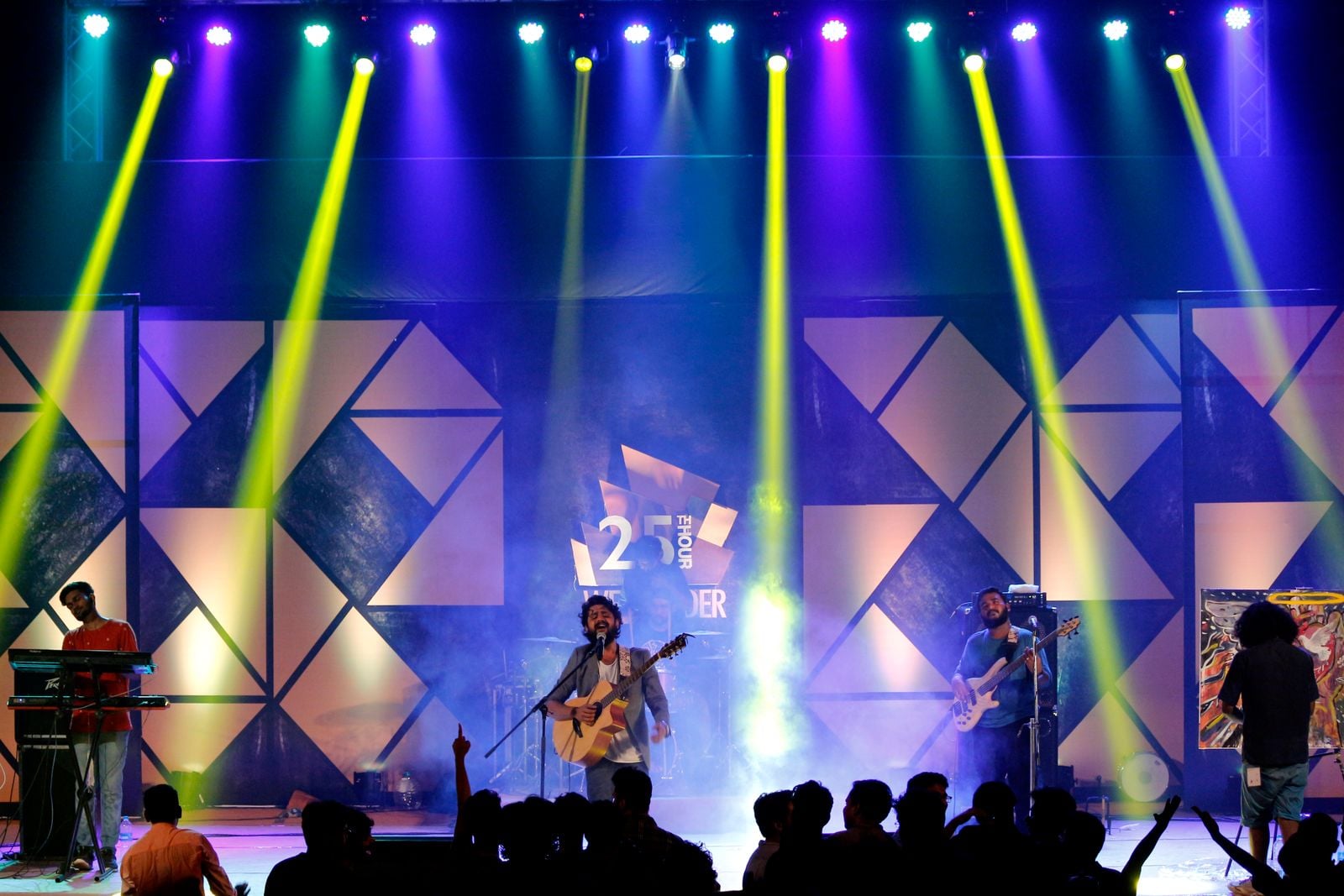
The Macklemore incident illustrates the operational side. A rapper makes statements about Gaza. A concert booking is threatened. The billionaire who pressured for the change is also, as it happens, a longtime donor to organizations that campaign against exactly the kind of speech Macklemore engaged in. The pressure and the philanthropy are not separate activities. They are the same activity, expressed in different registers.
This dynamic plays out across the industry. Artists who make pro-Palestine statements find bookings quietly disappear. The reasons are rarely stated openly. Somewhere in the chain there is usually a venue owner, a sponsor, or a donor who prefers a different lineup. The pressure cannot always be traced. The outcomes can.
This is the part of the story that generalizes beyond Kraft. Wealth concentrated at the top of American life gives individual donors substantial influence over which cultural expressions reach audiences. That influence has always existed. What has changed is the visibility of the pressure points — a stadium statement, a canceled set, a tax filing that contradicts a press release.
There is a version of this story that treats Kraft as uniquely hypocritical. That version misses the structural point. American philanthropy is built to allow the wealthy to hold public positions that their private giving does not fully support, and to hold private commitments that their public positioning softens. The system rewards this. It is why public pledges appear in headlines and decades of Form 990 data does not.
Kraft’s spokespeople point to the Palestinian aid pledge. Critics point to Friends of the IDF. Both are looking at real documents. The disagreement is about which document counts as the honest one.
Read together, the filings suggest that the public statement about supporting Palestinians is not so much false as incomplete. Kraft’s giving supports a particular vision of the conflict, one in which Israeli security is the central value and Palestinian opportunity is welcomed inside that frame. Palestinians who reject that frame — who support BDS, who criticize the Israeli military, who name what is happening in Gaza in terms Kraft’s grantees actively contest — are not the Palestinians his philanthropy is designed to help.
That distinction rarely appears in the press releases. It appears clearly in the tax forms.
The gap between what donors say and what donors fund is not a scandal unique to Kraft. It is the operating condition of American civic life. The institutions we trust to interpret the world for us — media, universities, cultural venues — sit inside funding relationships that shape what they can comfortably say. The Kraft story is useful because it shows those relationships in unusually clear form: a specific owner, a specific pressure, a specific paper trail.
The honest reading of the record is that Kraft’s philanthropy has done what it was funded to do. It has supported Israeli soldiers, opposed BDS, and shaped American discourse about the Middle East. The Palestinian aid pledge is real. It is also, by any measure of dollars, a smaller commitment than the one his critics were pointing at all along.