

A pharmacist compounding a bitter medicine will sometimes coat it in sugar so the patient swallows the whole thing without tasting what is really going down. Missouri Republicans have borrowed the technique, only in reverse: the sugar is a ban on gender transition care for minors, already largely illegal in the state, and the bitter pill underneath is the repeal of abortion rights that voters approved less than two years ago.
That is the mechanism behind Amendment 3, which state Republicans have placed on the November 2026 ballot. The measure bundles a repeal of the 2024 reproductive rights amendment with restrictions on gender transition care for minors — restrictions that already exist under Missouri statute.
The bundling is the story.
In 2024, Missouri voters restored abortion rights by a margin of 51.6% to 48.4%, overturning one of the country’s most restrictive bans. It was a narrow win in a state Donald Trump carried by eighteen points the same night. A shift of roughly 48,000 voters would have sunk it.
Republicans, who hold every statewide office and supermajorities in both chambers, have spent the intervening months trying to undo that vote. The current attempt reuses a strategy that already failed once.
Consider how the arithmetic works on the ground. Polling has found that about 60% of Missouri voters support legal abortion in the first eight weeks of pregnancy, while 67% oppose gender transition medications for minors and 73% oppose surgical interventions. Presented together as a single ballot question, voters favored the combined amendment 47% to 40%.
That gap is the entire theory of the case.
A 34-year-old nurse in Springfield who voted yes on abortion rights in 2024 and holds conservative views on youth medical transition is the kind of voter the strategy targets. Presented with a ballot summary that emphasizes the second issue and obscures the first, such a voter is being asked, in effect, to trade a right she supports for a restriction that changes almost nothing on the ground.
Missouri already bans gender transition care for minors by statute. The constitutional layer adds durability, not immediate policy change. The abortion repeal, by contrast, would take effect.

The ballot language itself has been the subject of litigation. Multiple courts have rejected or rewritten summaries produced by the Missouri Secretary of State’s office for failing to disclose that the amendment would repeal the existing reproductive rights protection. That pattern — a summary written to obscure, a court forced to intervene — is now a recurring feature of Missouri’s initiative process.
Michael Wolff, a former chief justice of the Missouri Supreme Court, put the logic bluntly: if voters were told plainly that the amendment repeals nearly all reproductive health protections, they would vote no.
Which is why they are not being told plainly.
The deeper pattern here is the friction between direct democracy and legislative control in a state where the two have diverged. Missouri voters have, over the past several cycles, approved measures the legislature opposed: they expanded Medicaid, legalized recreational marijuana, raised the minimum wage and required paid sick leave, and restored abortion rights.
The legislature has responded by trying to change the rules. In August, more than 80% of voters rejected an attempt to make constitutional amendments significantly harder to pass. More than 83% voted no on Governor Mike Kehoe’s plan to phase out the state income tax.
Ken Warren, professor emeritus of political science at Saint Louis University and associate director of the SLU/YouGov Poll, offered a diagnosis: because Republicans control everything, they think they can do what they want, and they cannot.
The empirical record supports him. The direct votes keep going the other way.
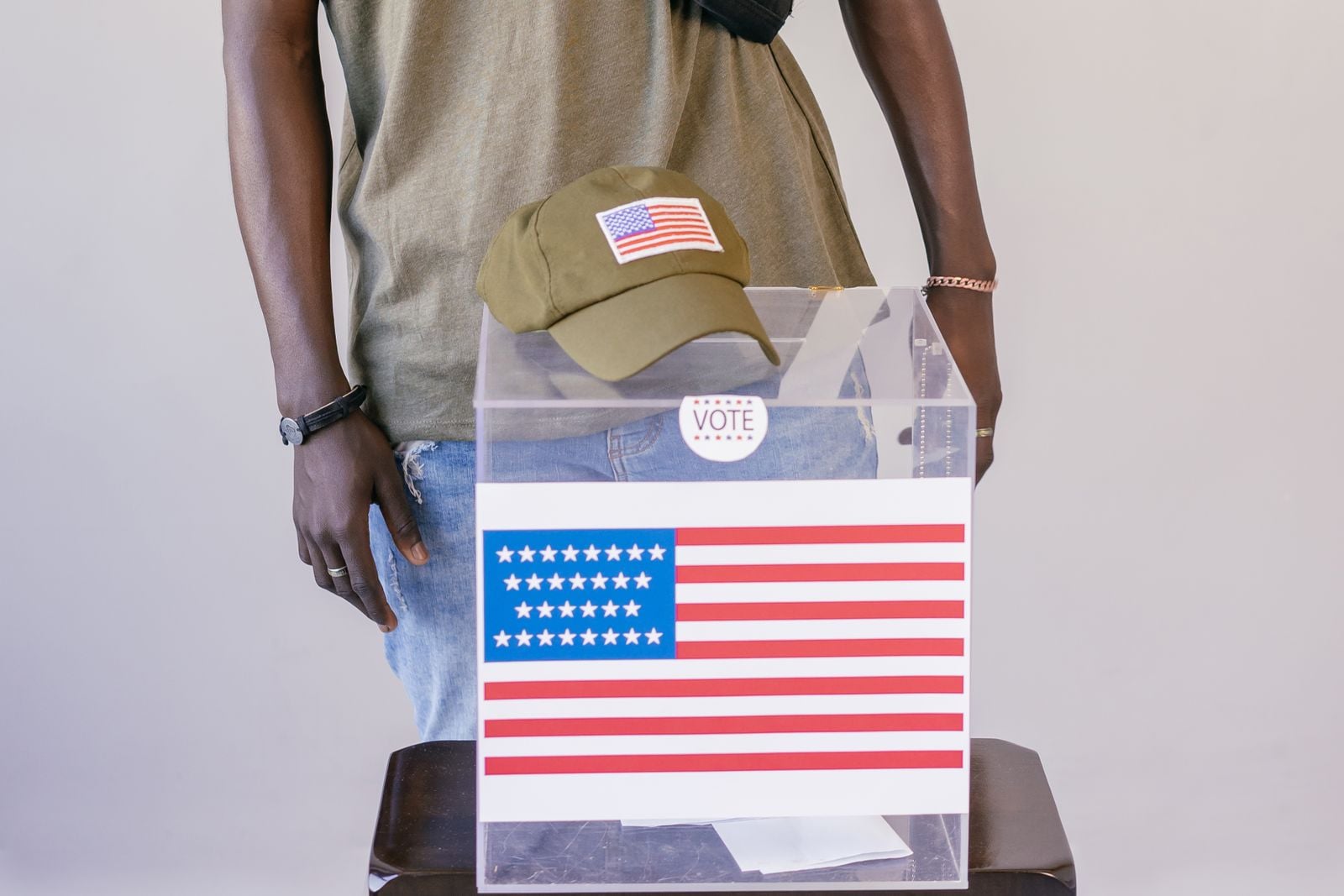
What Amendment 3 attempts is a workaround. If a straight repeal cannot pass, package the repeal with an unrelated cultural issue that polls better, write a summary that leads with the popular part, and hope the bundle carries the whole load across the line. The 47-40 polling result suggests the approach has some purchase.
It also raises a question about what a ballot measure is supposed to be. The initiative process was designed to let voters answer a single, clear question. When a legislature places a compound measure on the ballot — combining a broadly popular restriction with a narrowly unpopular repeal — the voter is no longer choosing between two coherent positions. They are choosing between two positions welded together for tactical reasons.
Representative Raychel Proudie, a Democrat from Ferguson, made a point worth considering: you should not have to do this if what you are planning is righteous and in the best interest of people.
The money is moving accordingly. The Stop the Ban coalition opposing Amendment 3 has raised more than $5 million, including a $1.25 million contribution on August 3 from former New York City Mayor Michael Bloomberg. The pro-repeal side has its own funding infrastructure, largely tied to national anti-abortion networks that have watched ballot measure after ballot measure fail in red and purple states since the fall of Roe.
That national context matters. Since 2022, abortion rights measures have won in Kansas, Kentucky, Ohio, Michigan, Vermont, California, and Missouri itself. Direct democracy has been the one arena where the post-Dobbs politics of abortion have consistently favored access, even in states whose legislatures went the other way. Bundling is the newest counter-move.
A 41-year-old small business owner in Kansas City who was among the 51.6% who voted yes in 2024 now finds herself being asked to defend the same right a second time, on a ballot where the question has been rewritten to make her preferred answer look like an endorsement of something she does not support. The exhaustion is the point.
Repeated ballot fights on settled questions raise the cost of civic participation. Every cycle absorbs more attention, more money, and more voter fatigue. Eventually, the theory goes, one of these attempts catches a low-turnout election or a favorable news cycle, and the shift of 48,000 voters becomes possible.
The strategy is not hidden. It is visible in the polling data the campaigns themselves commissioned, in the ballot summaries the courts keep rewriting, and in the sequencing of measures the legislature places before voters. What Missouri is testing is whether a right approved by a majority of voters can be undone by attaching it to something else.
The vote in November will not resolve the underlying disagreement about abortion. It will answer a narrower question. When a legislature loses at the ballot box, how much creativity is it allowed to bring to the rematch, and how much of that creativity will voters tolerate before they treat the packaging itself as the thing being voted on.