
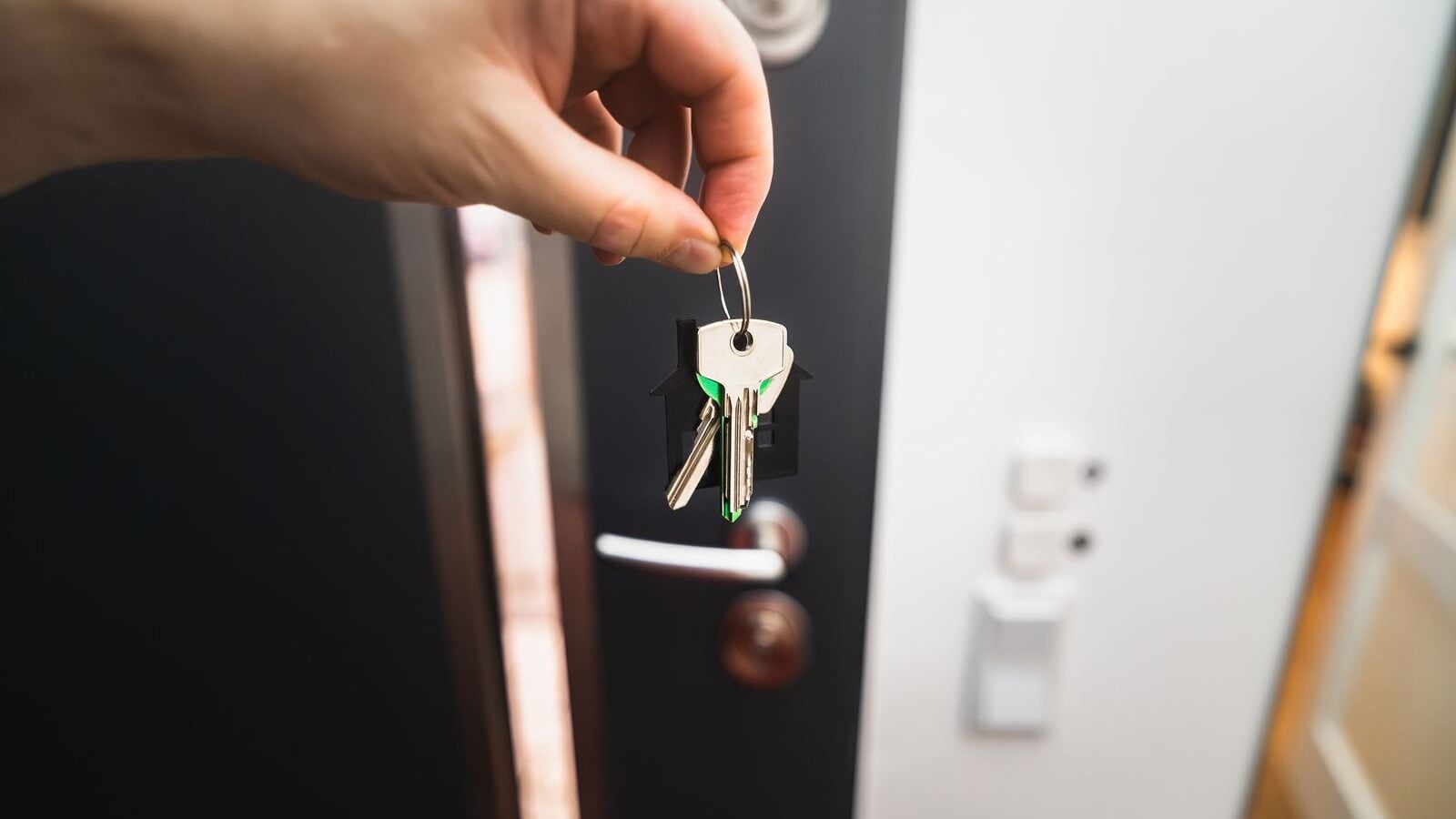
The common wisdom holds that people who circle back to check the front door twice are anxious, controlling, or slightly neurotic — a mild personality quirk to be teased at dinner parties. The more careful reading of the behavior suggests something closer to the opposite. The habitual door-checker is often the person others quietly rely on when things go wrong, the one who notices what the confident have already forgotten.
This is the person colleagues quietly route around when something needs to actually work — the office that never got locked out of a supply closet, the trip that never got derailed by a missing passport. None of it makes headlines. That’s the nature of a prevented disaster: it doesn’t show up in anyone’s story, including the story the double-checker tells about themselves.
What follows is a reading of the research on checking behavior, not medical or psychological advice. There is a genuine clinical form of compulsive checking that causes real suffering, and this piece is not about that end of the spectrum. It is about the far more ordinary version — the everyday double-checker — and what the pattern tends to reveal about how a person is wired.
The first trait is a sharpened sense of personal responsibility. In cognitive-behavioral work on checking, an inflated feeling of responsibility for preventing harm is one of the clearest cognitive signatures of the behavior. The door-checker is not really checking the door. They are checking against a future in which something goes wrong and it could have been prevented. That is a moral posture as much as a behavioral one.
The second trait is a working memory that runs hot. A study in Frontiers in Psychology by Ben Harkin, Hannah Rutherford, and Klaus Kessler found that people with subclinical checking tendencies showed impaired working memory performance specifically when the test stimuli were ecologically valid — everyday objects like kitchen appliances, the kinds of things checkers actually worry about, rather than abstract lab stimuli. Translation: they are holding more variables in mind at once than the person who breezes out the door. That has costs. It also has uses.
The third trait is a distrust of memory itself. Repeated checking paradoxically reduces confidence in memory even when the memory is accurate. The door-checker has learned, sometimes without realizing it, that certainty is a feeling and feelings are unreliable. So they externalize. They test the handle. They look at the stove. They confirm with their eyes what the mind has already told them. This is not a failure of intelligence. It is a preference for evidence over intuition.
The fourth trait is caution as a stable disposition. In the largest genetic study of OCD to date, described by University of Florida psychiatrist Carol Mathews in The Conversation, the research team analyzed the DNA of over 53,000 people with OCD and over two million without. They found lower genetic risk for alcohol dependence and risk-taking behavior among people with OCD-related traits, matching what clinicians describe seeing in practice: this population tends toward caution and away from impulsivity. This is a single body of genetic work, not settled consensus about all door-checkers, and most habitual checkers are nowhere near clinical territory. But the underlying temperament — a preference for the known over the gambled — travels down the spectrum.
The same disposition shows up in unglamorous financial behavior — the person who has never missed a payment, never taken on debt they couldn’t fully explain, and who will turn the car around forty minutes into a road trip rather than carry an unresolved doubt about whether the iron was unplugged. Colleagues call it steady. Family calls it the same thing, usually with a slightly different inflection. Both are accurate.
The fifth trait is a heightened attention to end-states — the imagined outcome of a compulsive concern. People with obsessive-compulsive tendencies devote disproportionate attentional resources to images depicting the completed state of the behavior they feel compelled to perform. The door-checker sees the closed door more vividly than most people see the open one. That is why the walk back is not really about the lock. It is about the mental image of the house being secure, which has to be verified visually because it will not stay steady in the mind.
The sixth trait is a susceptibility to thought suppression that backfires. The classic experiments on the paradoxical effects of trying not to think about something — the white bear studies — showed that suppression tends to make an unwanted thought more insistent, not less. The door-checker often knows this intuitively. Trying to talk themselves out of the worry only strengthens it. So they check. It is the more efficient move.
The seventh trait is a link to lived experience, particularly experience of loss of control. In a striking study published this year by researchers at Hebrew University of Jerusalem and Columbia University, a team led by Prof. Eyal Kalanthroff and Prof. Helen Blair Simpson followed 132 adults, half of them survivors of the October 7th, 2023 attacks in communities in the Gaza envelope. Four to six months later, nearly 40 percent of those directly exposed met criteria for probable OCD, compared with 7 percent of a matched control group. The most common new symptom was compulsive checking — of locks, of windows, of doors. This is one study, focused on survivors of extreme violence, and it should not be over-generalized. But it points to something the research on more ordinary populations has long hinted at: checking often begins where control was taken, and it persists as a way of holding onto a fragile version of it.
The eighth trait is conscientiousness in the broad, unglamorous sense. The double-checker is usually the person who confirms the meeting time, keeps the family passports in the same drawer, and remembers which neighbor is away this week. These are small acts. In aggregate, they are what other people mean when they call someone dependable. A related pattern shows up in people who clean as they cook — the same underlying disposition, aimed at a different domain.
The ninth trait is a quiet ambivalence about the behavior itself. Most habitual checkers know it is slightly excessive. They know the door was locked the first time. They check anyway. This is not irrationality. It is a negotiated peace with a mind that runs hot on responsibility and cool on trust in memory. The checking is the cheapest way to buy quiet.
What the research does not show is that every door-checker has OCD, or that checking behavior is a symptom in search of a diagnosis. The Frontiers researchers were careful to study subclinical checking — the everyday kind — precisely because most of it is not pathological. The clinical form of the disorder is a serious condition that warrants professional care. Ordinary double-checking is something different — a temperament, not a disorder.
The same instinct shows up in a teacher checking a classroom door twice at the end of every day, year after year, never once losing a laptop, a set of keys, or a student’s confidential file — and sleeping fine at night while colleagues borrow the stapler and forget to return it. That is not a person in distress. That is a person who has organized a small, useful ritual around the part of the day they care most about protecting.
The cultural read of the door-checker tends to be uncharitable — controlling, anxious, uptight. The behavioral read is more generous. What looks like anxiety is often the surface expression of a temperament that runs on responsibility, evidence, and caution. Those are not fashionable traits. They are the traits that keep households functioning and organizations from making expensive mistakes.
There is a related pattern in how such people move through the world more broadly. They tend to be the ones who over-explain simple decisions, who prepare more than the meeting requires, who read the fine print. Sometimes this comes from anxious households where certainty had to be manufactured. Sometimes it is temperament from the start. Sometimes, as the October 7th research suggests, it is what remains after an event that taught a person how quickly control can be lost.
What the door-checker knows, and the confident person often forgets, is that most disasters are the accumulation of small unchecked things. The unlocked door. The unattended stove. The unread email. Nobody notices the checker on the day the house doesn’t burn down. Everybody notices the person who left the door open on the day it did.
The behavior looks small because the payoff is invisible. That is the deal the checker has made with the world: absorb the minor tax of the second look in exchange for the quiet knowledge that the preventable version of tomorrow’s problem has already been prevented. It is not the most efficient way to live. It is one of the more considerate ones.