

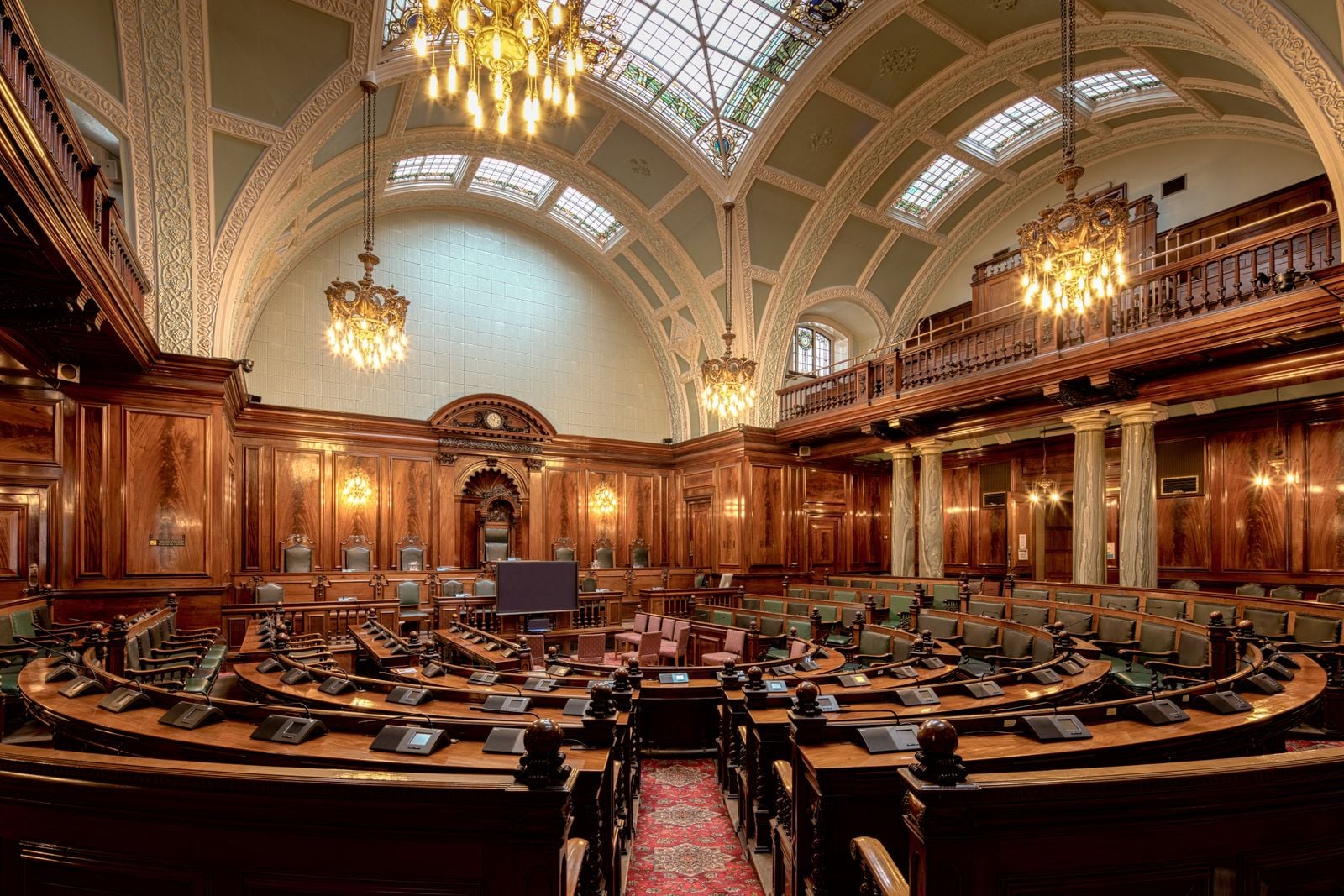
The Tucson City Council voted 6-1 on August 5 to adopt one of the strictest zoning frameworks for hyperscale data centers in the American Southwest, closing a yearlong process that began after the council rejected a major data center proposal in 2025.
The new ordinance, which takes effect September 4, 2026, does not permit data centers anywhere in the city by right. Large facilities must clear a Planned Area Development or Planned Community Development rezoning — the same review reserved for power plants — including a neighborhood meeting, a zoning examiner hearing, and a final vote by the mayor and council.
One council member cast the sole dissenting vote, saying she wanted more time to weigh public testimony before deciding.
What the ordinance actually does
Large-scale data centers must sit at least half a mile from homes and schools, and at required distances from commercial and office districts. The zoning administrator can adjust the separation based on findings in a required Environmental Resource Report.
Operators cannot use potable water for cooling unless they meet specific city water requirements and sign a formal water agreement. Backup generators are limited to power outages and scheduled tests — no running diesel to shift load off the grid during peak pricing. Noise studies are required, and generators must be muffled.
A significant portion of each site must remain as natural open space, or the operator pays to protect equivalent land elsewhere.
City planning officials told the council the framework would make data centers one of the most highly regulated land uses in Tucson’s development code.
Why the council did not ban them outright
City legal staff told the council an outright ban risked conflict with Proposition 207, the Arizona Private Property Rights Protection Act, which allows landowners to sue when a previously legal use is prohibited and their property value drops.
That legal exposure shaped the room. Several council members said on the record that they personally oppose hyperscale data centers, but viewed the ordinance as the strongest defensible position available while state law stands.
One council member put the practical stakes plainly: without the ordinance, a developer could apply under an existing zoning determination with none of the new safeguards. A floor amendment, adopted without objection, directed staff to keep researching a legal pathway toward a full ban.
The Planning Commission had forwarded the ordinance without a formal recommendation. The commission vote fell short of the threshold needed under its rules. Dissenting commissioners believed the proposal over-regulated the industry.
Public testimony ran in the opposite direction.
The residents wanted more
More than a dozen speakers addressed the council. Almost all wanted either an outright ban or terms significantly tighter than the ordinance on the table.
Advocates from the No Desert Data Centers coalition argued the current siting map still leaves large parts of the south side and areas near the Tohono O’odham San Xavier district open to development, and urged the council to study a ban grounded in the public health and safety exception written into Proposition 207.
Tucson residents raised the water question directly, saying the region does not have the supply to spare and warning about pressure on Colorado River basin allocations.
Speakers called for a moratorium until the trajectory of AI-driven demand becomes clearer.
Community organizers told the meeting the city cannot write effective policy for something moving this fast, and that a moratorium was the honest answer. Coalition members told local media that while the city has been responsive, the regulations could not be so friendly to operators that they stopped mattering.
A council member flagged a specific equity concern: the concentration of eligible sites in certain wards, areas already carrying a disproportionate share of heat and legacy environmental contamination. She asked staff to add future requirements for decommissioning plans and site reclamation.
What this means for operators and for the region
For any hyperscaler eyeing Tucson, the practical read is straightforward. There is no by-right path. Every project of consequence goes to a political vote after a neighborhood meeting and a zoning examiner hearing, in a city where organized opposition has now defeated one major proposal and shaped the code that governs the next one.
The water clause is the sharpest constraint. Cooling a hyperscale campus on non-potable sources in the Sonoran Desert is technically possible, but it changes the economics — reclaimed water infrastructure, air cooling with higher power draw, or closed-loop systems all add cost.
The generator restriction closes a workaround the industry has used elsewhere. Running diesel backup during grid peaks — sometimes framed as “grid support” — is off the table in Tucson except during actual outages and scheduled tests.
Regional operators are likely to look at neighboring jurisdictions with weaker frameworks. Proposed sites near the Pima County Fairgrounds and in Marana both sit outside Tucson city limits. A council member raised this pressure directly, floating the idea of eventually allowing small-scale adaptive reuse of vacant buildings near the airport as a way to keep some development, and some control, inside the city.
Tucson is not alone in this posture. The pattern of local governments tightening the screws on data center siting has been building for a year. Elsewhere in the country, jurisdictions have voted to end data center tax breaks and rejected large-scale projects after packed public hearings.
What happens next
The ordinance takes effect September 4, 2026. Staff will return within one year with a review of implementation, though city manager’s staff told the council adjustments could come sooner if needed. The floor amendment keeps the ban question alive — staff are now tasked with looking for a legal pathway that survives Prop 207.
Coalition representatives said after the meeting they were pleased with the council’s decision to explore a total ban, calling it what they had been asking for.
For residents, the shorter answer: no new hyperscale campus can land in Tucson without a public fight the council itself has to decide. That is not a ban. It is the closest thing to one that Arizona property law currently allows a city to build.