
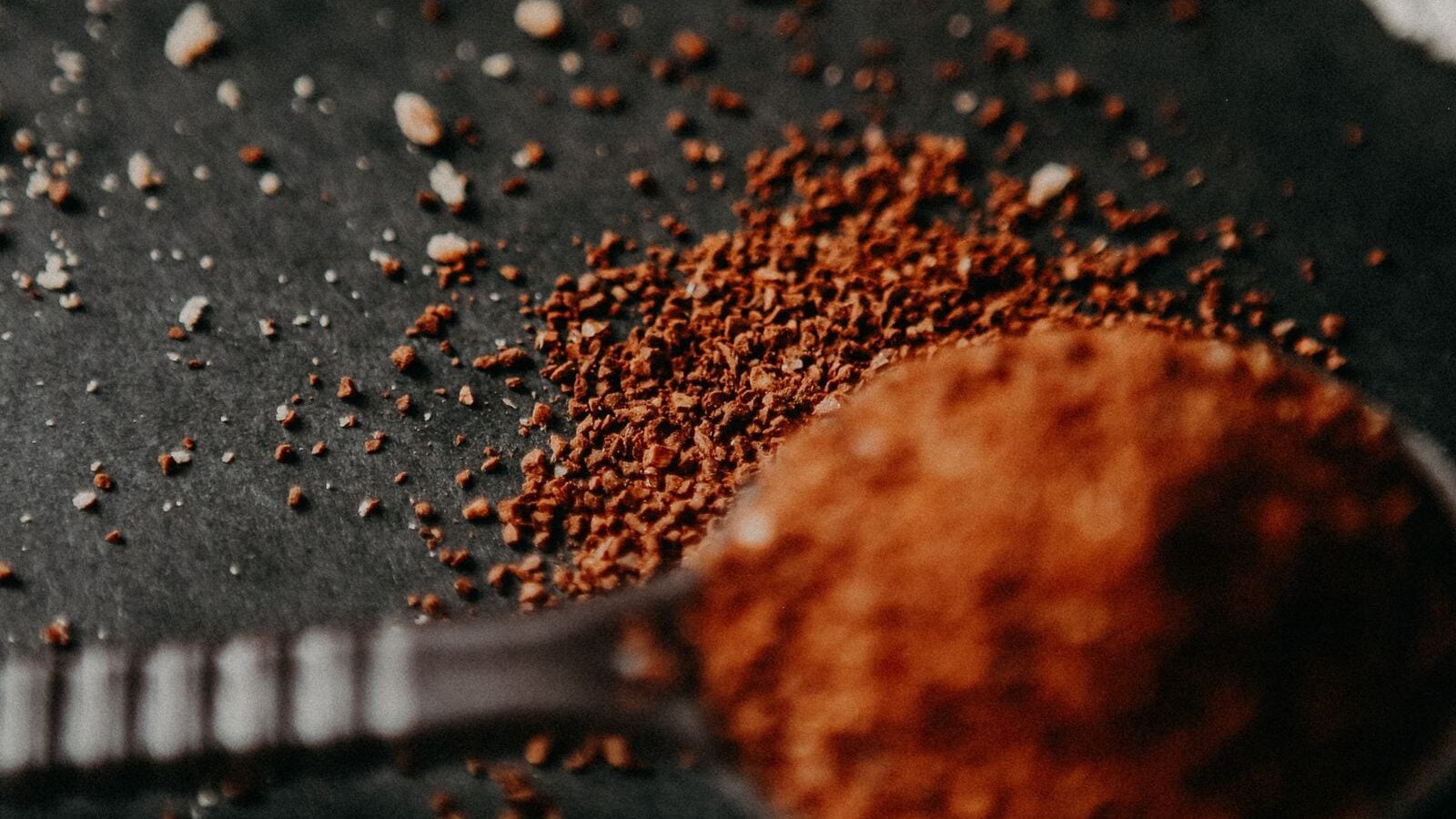
The intuitive assumption about waste is that it is weaker, dirtier, and less capable than the virgin material it replaces. Coffee grounds ought to make concrete crumble, not strengthen it. Yet research at RMIT University in Melbourne has shown the opposite: when charred correctly and used in the right proportion, spent coffee grounds can produce concrete with significantly improved compressive strength compared to conventional mixes.
The default aggregate in structural concrete is river sand. It has always been river sand. The hierarchy feels natural until someone runs the compression test.
The recognition is the interesting part.
Construction runs on a quiet assumption: the mined material is the serious material. Sand pulled from a riverbed has a spec sheet, a supply chain, a price per tonne. Coffee waste has a bin. The hierarchy feels natural until someone runs the compression test.
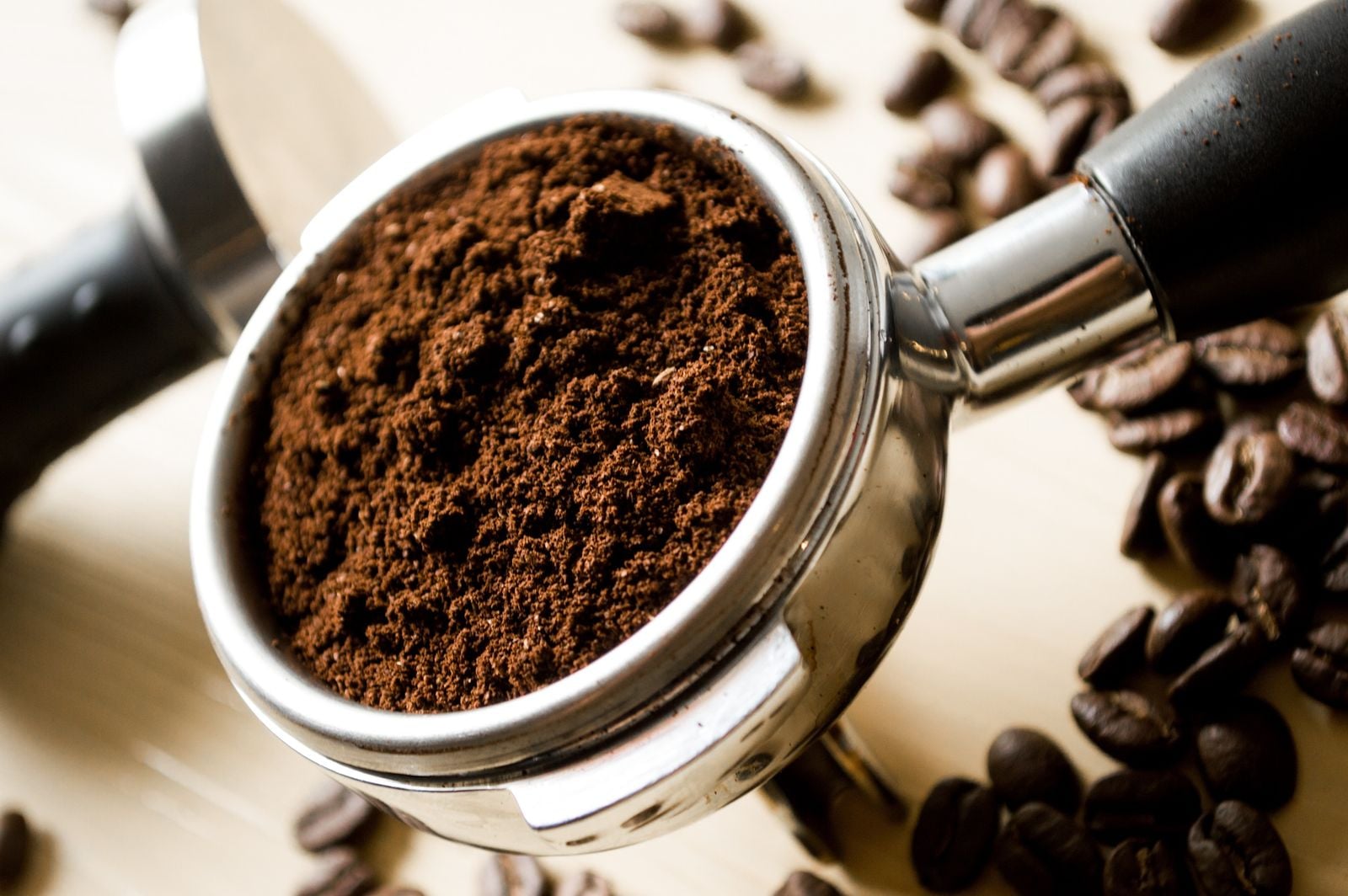
The RMIT team did not just tip used grounds into a cement mixer. Organic matter added directly to concrete leaks chemicals that weaken the bond. So the researchers dried the grounds and heated them in the absence of oxygen, a process called pyrolysis, which breaks organic molecules down into a porous, carbon-rich char called biochar. That biochar then replaced a portion of the natural sand in a Portland cement mix. Samples were poured, vibrated, cured, and tested. The result has continued to attract attention as construction bodies look for lower-impact aggregates.
The temperature matters. The biochar’s effectiveness depends on the pyrolysis conditions. There is a narrow window where the material becomes useful, and outside it, the same waste is just waste.
The scale problem is what makes the finding hard to shrug off. The world produces large quantities of spent coffee grounds every year, most of it landfilled, where it decomposes and releases methane. On the other side of the ledger, construction consumes vast amounts of natural sand annually, most of it dredged from riverbeds and coastlines. Both flows are treated as inevitable. Neither is.
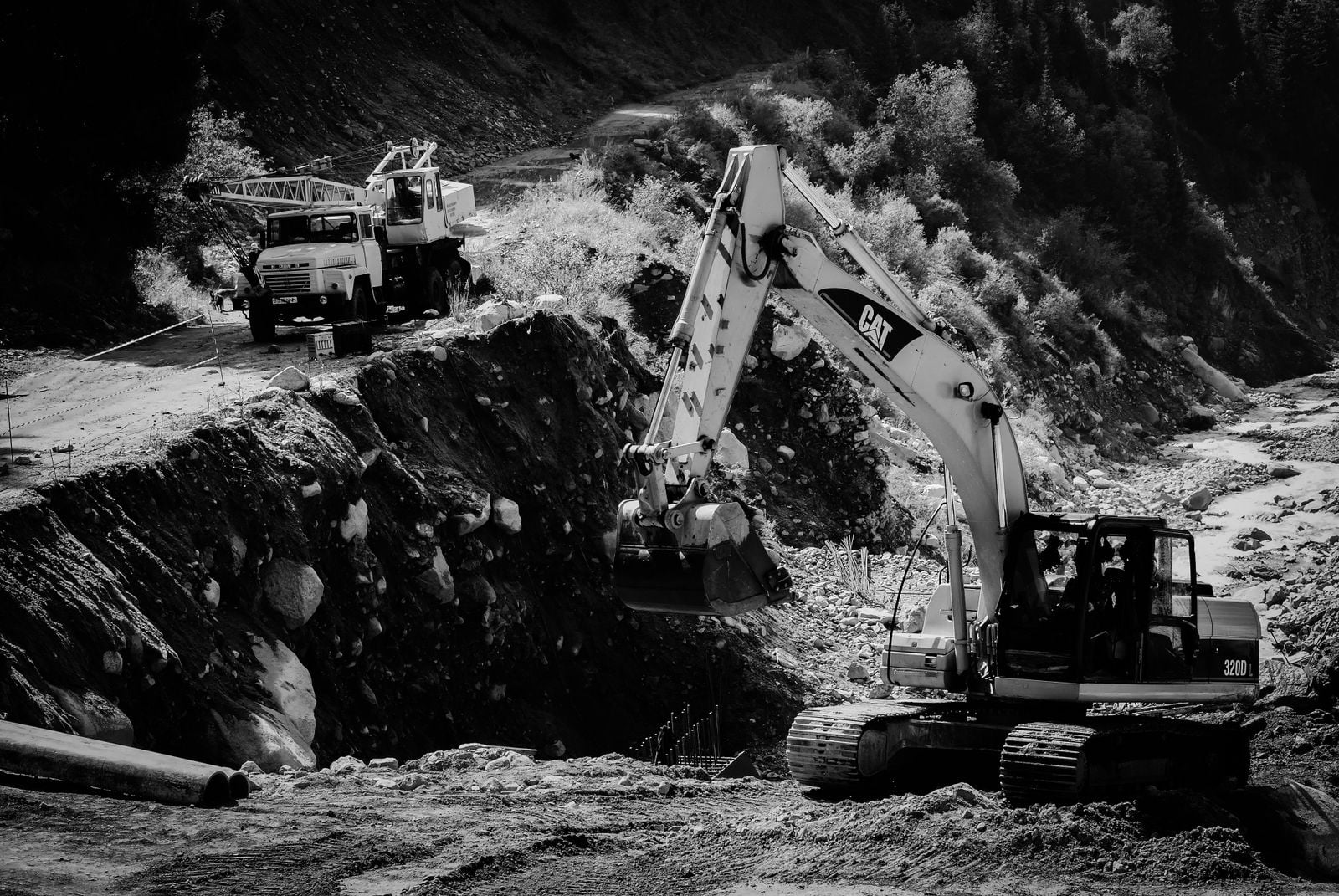
River-sand mining reshapes waterways, undermines bridges, and in some regions has been linked to organized crime. Suppliers are increasingly being asked for provenance documents that did not exist five years ago.
Against that backdrop, the coffee-concrete result is not a novelty. It is a signal.
The signal is that the categories are wrong. “Waste” and “resource” are accounting terms, not physical ones. A material is waste when no one has bothered to find a use for it, and a resource the moment someone does. Pyrolysis is not magic. It is a technique that reveals a property the grounds already had.
This is where the story gets uncomfortable for the industries that depend on the old categories staying stable. If a portion of the sand in a concrete mix can be replaced by a byproduct that would otherwise rot in a landfill, and the resulting concrete shows improved performance, the argument for continuing to dredge rivers at current volumes weakens with every batch tested. The RMIT team has been careful to note the limits: long-term durability under freeze-thaw cycles, water absorption, and abrasion has not yet been established. This is one study, not settled practice. Field trials are the next step, not building codes.
But the direction of travel is visible.
Materials scientists have spent decades working on supplementary cementitious materials — fly ash, slag, silica fume — the industrial byproducts that already partially replace cement in modern concrete. The coffee finding sits inside a much older tradition. The Romans used volcanic ash. Twentieth-century engineers learned to use coal-plant fly ash. The pattern is the same: a material dismissed as leftover turns out, on closer inspection, to be structurally useful.
What has changed is the pressure. Coal plants are closing, which means fly ash is becoming scarcer just as demand for lower-carbon concrete rises. The industry is being forced to look wider, and the search is turning up candidates that would have been laughed out of a lab twenty years ago. Oyster shells. Rice husks. Wood ash. Agricultural waste. The RMIT group has said it is working on biochars from wood, food, and agricultural sources as well.
There is a broader pattern here that shows up in fields far from cement. The capabilities we once treated as uniquely valuable often turn out to be widely distributed once someone bothers to look. Ants perform wound care. Coffee grounds hold up buildings. The default categories were always doing more work than they should have been.
The economics are the piece that will determine whether any of this scales. Right now, sand is cheap because its true environmental cost is not priced in. Coffee waste is free at the point of collection but expensive to gather, dry, and pyrolyze at industrial volumes. The question is not whether the chemistry works. It does. The question is whether the logistics can be built.
Rethinking a category is always harder than rethinking a product. It requires the people inside the system to admit that the way they have been sorting the world was a convenience, not a truth. Concrete producers have sorted materials into aggregates and non-aggregates. Municipal waste managers have sorted them into recyclables and organics. The RMIT result sits awkwardly across both categories, which is why it is interesting and why it will take time to metabolize.
Many of the assumptions in engineering spec sheets are inherited rather than tested. The concrete recipes used in construction are not the strongest possible mixes. They are the mixes that were standard a generation ago, adjusted incrementally. Most of the professional world runs this way. People inherit categories from the generation above them, apply them, and rarely check whether the categories still describe reality.
This is not a failing unique to construction. It is how most industries operate. The contest between countries in emerging technologies often turns less on which lab has the cleverest breakthrough than on which system can absorb a new idea across a whole supply chain. A stronger concrete recipe that never leaves the journal is not a stronger concrete recipe in any meaningful sense.
The RMIT team has been transparent about what the study does not yet show. The compression result is robust within the tested conditions. Durability, weathering, and long-term behavior are open questions. A field trial is a very different thing from a lab cylinder. The pathway from a peer-reviewed finding to a code-approved material can take a decade or more, and many promising materials never complete it.
Still, the finding is not really about coffee. It is about a habit of mind.
The habit is that we assume the mined material is superior because it is expensive, and expensive because it is superior. The circularity holds up until someone runs the test with the free material and finds it does the job better. When that happens, the price signal that seemed to be telling us something about physics turns out to have been telling us something about supply chains, subsidies, and who got to define the category first.
Charred coffee grounds in a concrete mix are a small proof of a large point. The materials we throw away often outperform the ones we extract, not because waste is magical, but because we stopped looking at it the moment we decided it was waste.
The engineers who notice this first will build differently. The ones who do not will keep dredging rivers to make weaker buildings, and calling it the serious option.