
The washing machine sends data back. Consumer Reports tested 12 connected appliances from GE, LG, Maytag, Samsung, and Whirlpool and found that all of them transmitted information to their manufacturers. According to an industry report summarizing the tests, the appliances sent between 3.4MB and 19MB per week even though they were used only once a day.
That is not the same as a washing machine sending 135,000 text messages. It is a measure of data volume across a mixed group of appliances. The finding is still striking because the information can include usage, performance, account, location, and device-linked details.
This is the quiet contract of the algorithmic home. Connected devices can be genuinely useful, and in return they describe parts of household life to their manufacturers. The trade is usually presented as convenience in exchange for connectivity. Its less visible side is the growing number of ordinary moments that become legible to a system.
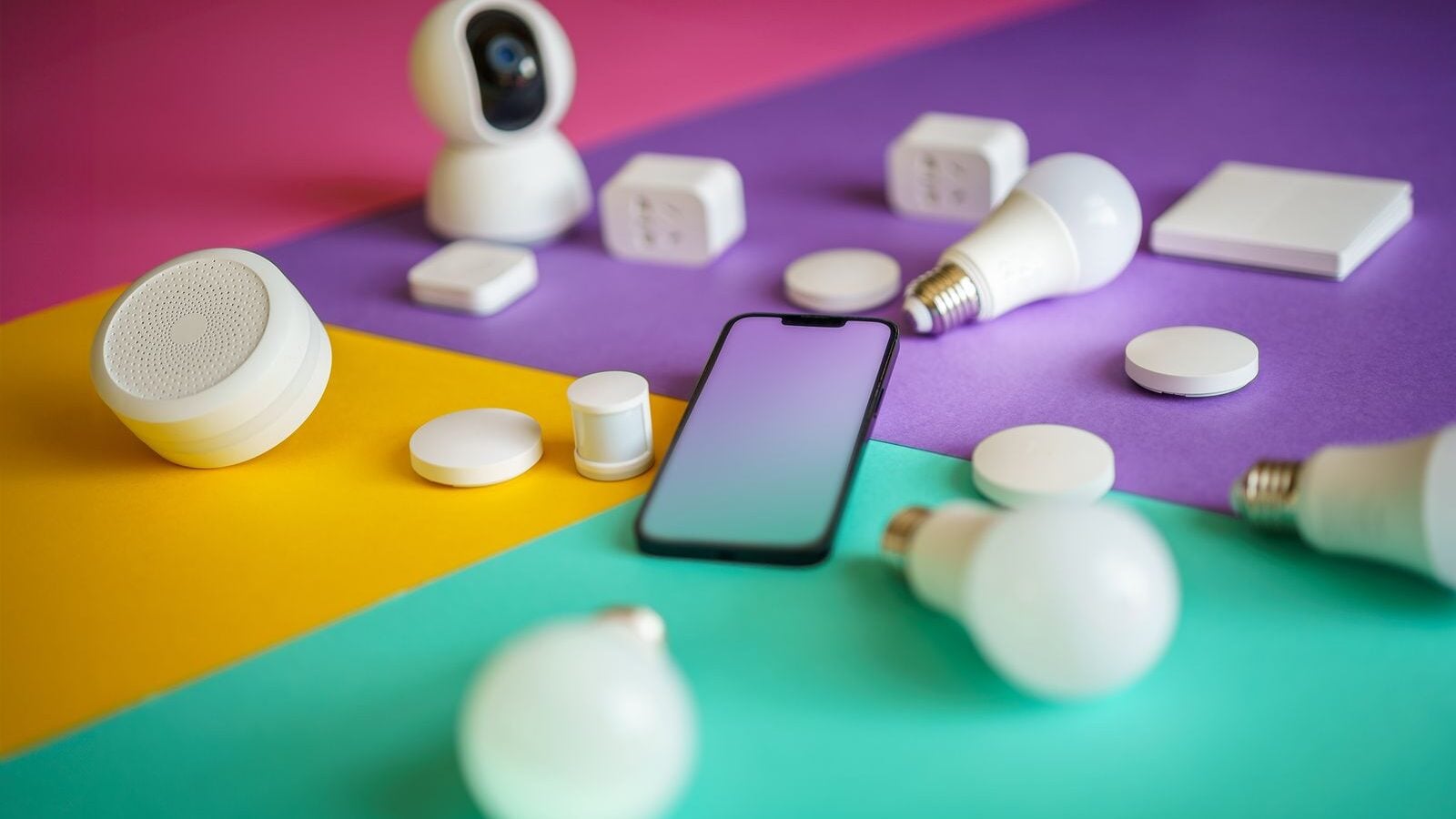
A smart refrigerator may record door activity and temperature information. A robot vacuum can create a map to navigate a home, while a television platform can record app use and viewing activity. A connected thermostat learns schedules and preferences so it can automate heating and cooling. Each device solves a small problem, but the larger pattern only becomes visible when the data streams are viewed together.
The scale is expanding. Juniper Research forecasts that 28 billion IoT devices worldwide will be protected by cybersecurity solutions by 2028, up from 14 billion in 2024. That figure is not a count of household appliances alone, but it shows the breadth of the connected-device environment now developing around people.
The framing matters because some of the most visible political proposals remain focused on the screen in a child’s hand. In June 2026, UK Prime Minister Keir Starmer gave Apple and Google until September to introduce software that blocks explicit images on children’s phones or face legislation, according to the Guardian.
In August, New Zealand Prime Minister Christopher Luxon unveiled a proposed law that would ban children younger than 16 from social media if his government is returned after the November election. The proposal followed Australia’s under-16 ban, which took effect in December 2025, ABC News reported.
These policies address serious harms. They are also structured around phones, platforms, and what children can see. The data leaving connected household appliances sits in a different policy category and receives far less public attention.
That gap is partly intuitive. Parents who install content filters on a teenager’s phone may accept the terms attached to a robot vacuum without examining them. A phone looks like media and communication. An appliance still looks like a chore, even when it includes sensors, an account, an app, and a permanent internet connection.
Security specialists argue that the companies behind connected products must take more responsibility for discovering and fixing weaknesses. Michael Daniel, president and CEO of the Cyber Threat Alliance, has said that companies should proactively search for and remediate vulnerabilities in their products. That principle matters when an appliance may remain in a home far longer than a phone.
Security is only one part of the issue. Donnafay MacDonald, a research director at Info-Tech Research Group, has described IoT as offering organizations value through data, optimization, and cost savings. Info-Tech’s work notes that connected devices can continuously collect information and convert it into business insights, particularly in retail operations.
That does not mean every appliance manufacturer sells personal information or misuses what it gathers. Appliance data can support diagnostics, maintenance, energy management, product development, and warranty analysis. It can also support personalization and marketing, which is why the privacy policy and account settings matter.
There is a second layer to the algorithmic home. Connected systems do not only collect information. Some also use it to make or coordinate decisions.
A 2026 paper in Scientific Reports modelled a residential energy community in which autonomous agents managed photovoltaic generation, battery storage, flexible demand, and peer-to-peer energy exchange. The research was simulation-based, not evidence that ordinary thermostats already run this exact system. It nevertheless shows the direction of development: household energy systems can increasingly coordinate choices about when to use, store, or exchange power.
Televisions are moving in a similar direction. Samsung and LG have integrated smart-home controls into some television software, allowing compatible sets to manage devices and display household information. An overview of the latest smart-hub software describes televisions evolving into interfaces for automation, security systems, lighting, thermostats, and cameras.
Demand-response programs provide a more established example. Smart thermostats can be enrolled in utility programs that adjust temperature set points or pre-condition homes during periods of high demand. A US Department of Energy presentation explains how these programs can control set points while allowing residents to override an event if they become uncomfortable.
This is what living inside an algorithm often looks like. It is not necessarily a dystopia. It is a series of small and frequently beneficial defaults set by systems the resident did not design and may not fully understand.
The child-safety debate exposes the contrast. Professor Nicholas Carah, director of the Centre for Digital Cultures and Societies at the University of Queensland, told ABC News that Australia’s ban was not working in practice, pointing to reports that more than eight in ten Australian teenagers were still using social media three months after it began.
Hannah Storey, Amnesty International’s head of children and young people’s digital rights, argued in the same report that age-verification systems raise privacy concerns without addressing the underlying design choices of social platforms. In the UK, Silkie Carlo, director of Big Brother Watch, warned that the proposed nudity-detection measures could threaten anonymity and internet privacy.
Reasonable people can disagree about those policies. The narrower point is that this prominent debate concerns what children see and how platforms verify users. It says little about what household devices record, how long manufacturers retain the information, or which automated decisions residents can override.
Some appliance data sounds too boring to matter. Door-open events and wash-cycle selections are not dramatic on their own. Combined with location, purchase, viewing, and account information, however, they can help build a more detailed picture of household routines.
The reasonable response is not paranoia. It is proportion. Keep firmware current, use strong and unique passwords, review app permissions, and examine the privacy settings at least once. Before connecting an appliance, ask what useful feature the connection provides and whether the product will still perform its core function without it.
There is also no basis for assuming that every connected appliance will be hacked or that every piece of data will be sold. The Consumer Reports tests summarized by Appliance News found no security vulnerabilities in the 12 products and reported that personal data was encrypted. The concern is not a guaranteed catastrophe. It is the amount of information and control gradually accumulating behind interfaces that most residents rarely open.
The washing machine remains a washing machine. It is also becoming a software-supported service with an account, a data stream, and an update schedule. Whether that is a fair exchange depends on what the connection provides, what the manufacturer collects, and how much control remains with the person standing in the laundry room.
Most people were never invited to consider the trade in those terms.