
Most people wait to feel motivated before they try to reconnect. The people who actually climb out of a lonely, low-energy stretch describe it happening in the reverse order.
Part of why that sequence goes unnoticed is that loneliness carries its own quiet stigma. Researchers at Harvard’s Graduate School of Education have pointed out that talking about loneliness can reduce the shame around it, since few people want to openly admit to feeling disconnected. So instead of naming it, people just start to drift — through their evenings especially.
The evening is where the drift shows up first. Work ends, the apartment goes quiet, and the hours between six and midnight become the space where a person either builds something small for themselves or watches the day dissolve.
Consider Marcus, a 34-year-old software developer in Minneapolis who spent most of 2024 telling himself he was fine. He was not fine. He was working from home, ordering delivery four nights a week, and scrolling until roughly 1 a.m. He did not describe himself as lonely because he had colleagues on Slack and a group chat that fired off memes. What he had lost was the shape of an evening.
The data on people like Marcus is not gentle. A 2025 study in PLOS One, drawing on eight years of CDC survey data from tens of thousands of U.S. adults, found that people who said they always felt lonely had a dramatically higher predicted probability of depression than those who said they never felt lonely, along with roughly twice as many poor mental health days a month. It is one dataset, not a settled consensus. But it maps onto a wider pattern that public-health researchers have been describing for years, and it is worth taking seriously as a description of what unattended evenings can quietly cost.
The question is what actually shifts things. Not what should shift things. What does.
The people who climbed out of the low-motivation, low-connection stretch tend to describe something modest. They did not overhaul their lives. They rearranged the four or five hours after dinner.
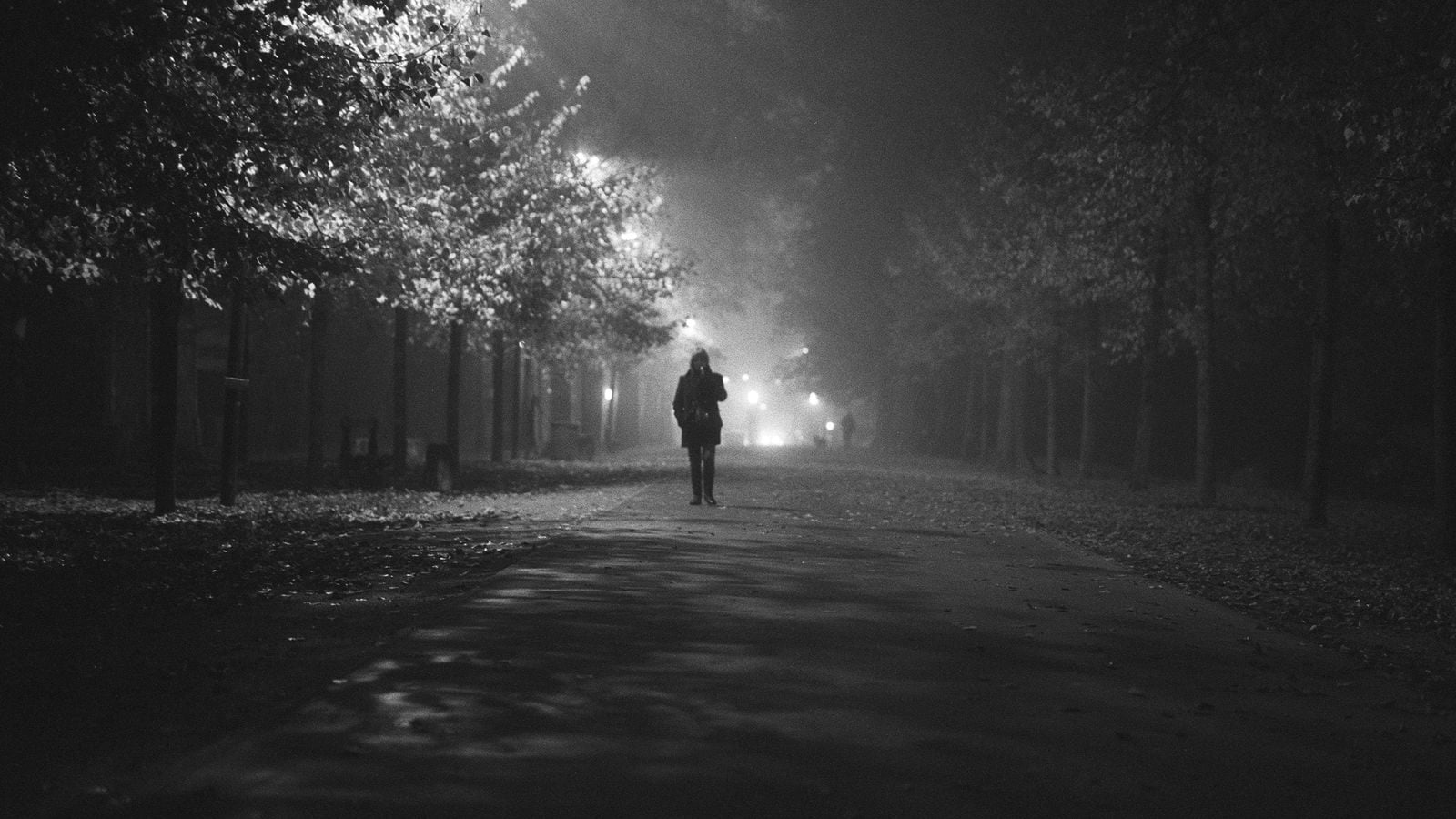
Priya, a 41-year-old hospital administrator in Atlanta, put it in almost boring terms. She started walking around her block at 7 p.m. Not for exercise. For the walk itself, and for the two or three neighbors she began to recognize. Within a few months she knew the names of the couple with the beagle and the older man who tended the roses on the corner. None of these were friendships in any dramatic sense. They were what researchers call weak ties — the ambient social fabric that people underestimate until it is gone.
The weak-tie evening walk is unglamorous. It is also one of the few things people describe as reliably shifting their sense of the day. It does not require a friend to be available. It does not require energy. It requires a door and a pair of shoes.
The second habit that recurs is the one people resist most: a fixed cutoff for the phone. Not a wellness ritual. A cutoff.
James, a 28-year-old paralegal in Chicago, described his old evenings as a slow slide from work email to Instagram to news to a video essay about a video game he does not play. He set a rule at the start of this year — phone in a drawer in the kitchen at 9:30 p.m. He is not disciplined about it. He breaks the rule twice a week. But on the nights he keeps it, he sleeps forty-five minutes earlier and wakes up without the specific flavor of dread that scrolling produces.
A 2024 Stanford Medicine study that tracked nearly 75,000 adults found that staying up late was tied to worse mental health regardless of whether someone was naturally a night owl or a morning lark. The driver appeared to be behavior rather than biology — the choices people make late at night tend to be worse ones. Alcohol, junk food, doomscrolling, and the particular kind of thinking that only happens at 1 a.m.
This matters for the loneliness question because loneliness and late-night scrolling feed each other. A person feels disconnected, reaches for the phone, gets a simulation of connection that leaves them slightly emptier, and stays up later trying to fill the gap. The cutoff breaks the loop.
The third habit is harder to name and easier to dismiss. People call it different things — a wind-down, a reset, a small ritual. What it actually is: one repeatable action that signals to the person that the working part of the day is over and the human part has begun.
For Elena, a 52-year-old accountant in Portland, it was making tea at 8 p.m. She is not a tea person. She started drinking it because she needed a marker. The kettle boiling was the signal. After the tea, she read for thirty minutes. Before the tea, she could do whatever she wanted, including nothing. The point was not the tea. The point was that the day had a hinge.
Predictable structure appears to do something for people that unstructured evenings do not. Consistent daily routines seem to create a baseline stability that makes everything else more manageable.
This is where the story tends to get tangled. There is a cultural narrative that says the answer to loneliness is more connection, more socializing, more effort to reach out. The advice is not wrong. It is just often unusable for the person who feels flattest. Reaching out requires a baseline of energy that the lonely and unmotivated frequently do not have.
What the evening habits do is different. They are not connection strategies. They are floor-raising strategies. They restore the small daily architecture that makes reaching out possible later. The evening version works on the same logic as morning routines that shift energy — both create structure that supports everything else.
There is a broader cultural question sitting underneath this. The U.S. Surgeon General has called loneliness an epidemic, and the solution to widespread disconnection is not clinical. It is social, structural, and habitual. Doctors cannot prescribe a neighbor. They can only prescribe around the edges of what is missing.
The chatbot question complicates this further. Many people are now filling their evenings with a conversational simulation of company. Whether that is a net gain or a net loss is not settled. What is clear is that a chatbot is not the same as the older man tending roses on Priya’s corner.
The fourth habit is the one people describe last, almost sheepishly. Going to bed earlier. Not dramatically earlier. Thirty to sixty minutes earlier than the drift bedtime.
Living against your natural rhythm costs something. The mismatch between a person’s internal clock and the external world appears to exact a toll that shows up in multiple ways over time.
For Marcus, the developer in Minneapolis, this was the change that mattered most. He moved his bedtime from 1 a.m. to 11:30 p.m. He did not become a morning person. He did not start waking at 5 a.m. He just gave himself an extra hour and a half of sleep, and the following weeks were, by his description, the first in a long time when he did not feel like he was operating from behind.
None of these habits are original. None of them are secrets. Anyone who has read a wellness article in the past ten years has encountered some version of them. The interesting question is why they work when they work, and why they fail when they fail.
They work when they are small enough to be repeated on a bad day. A ten-minute walk survives a bad day. A forty-minute run does not. Tea at 8 p.m. survives a bad day. A meditation practice with a specific app and a specific cushion often does not.
They fail when they are framed as self-improvement. The person who takes an evening walk to become a better person tends to stop within a month. The person who takes an evening walk because it is simply what they do at 7 p.m. tends to still be doing it a year later. The frame matters more than the content.
This is the part that gets missed in the discourse around loneliness. The people who climb out of it usually do not describe a moment of insight or a decision to change their life. They describe a slow accumulation of small, repeated evening actions that made the next day slightly more possible. The connection came later, and it came because the floor had been raised.
The honest observation, watching this pattern across enough people, is that motivation is not the input. It is the output. Nobody becomes motivated and then starts walking. They start walking, badly and reluctantly, and motivation shows up three weeks later carrying a bag of groceries.
Loneliness works the same way in reverse. Waiting until you feel like reaching out is waiting for a bus that has been cancelled. The evenings that rebuild a person are the ones where they did the small thing before they felt like it.
That is most of what separates the people who stay stuck from the people who don’t.