
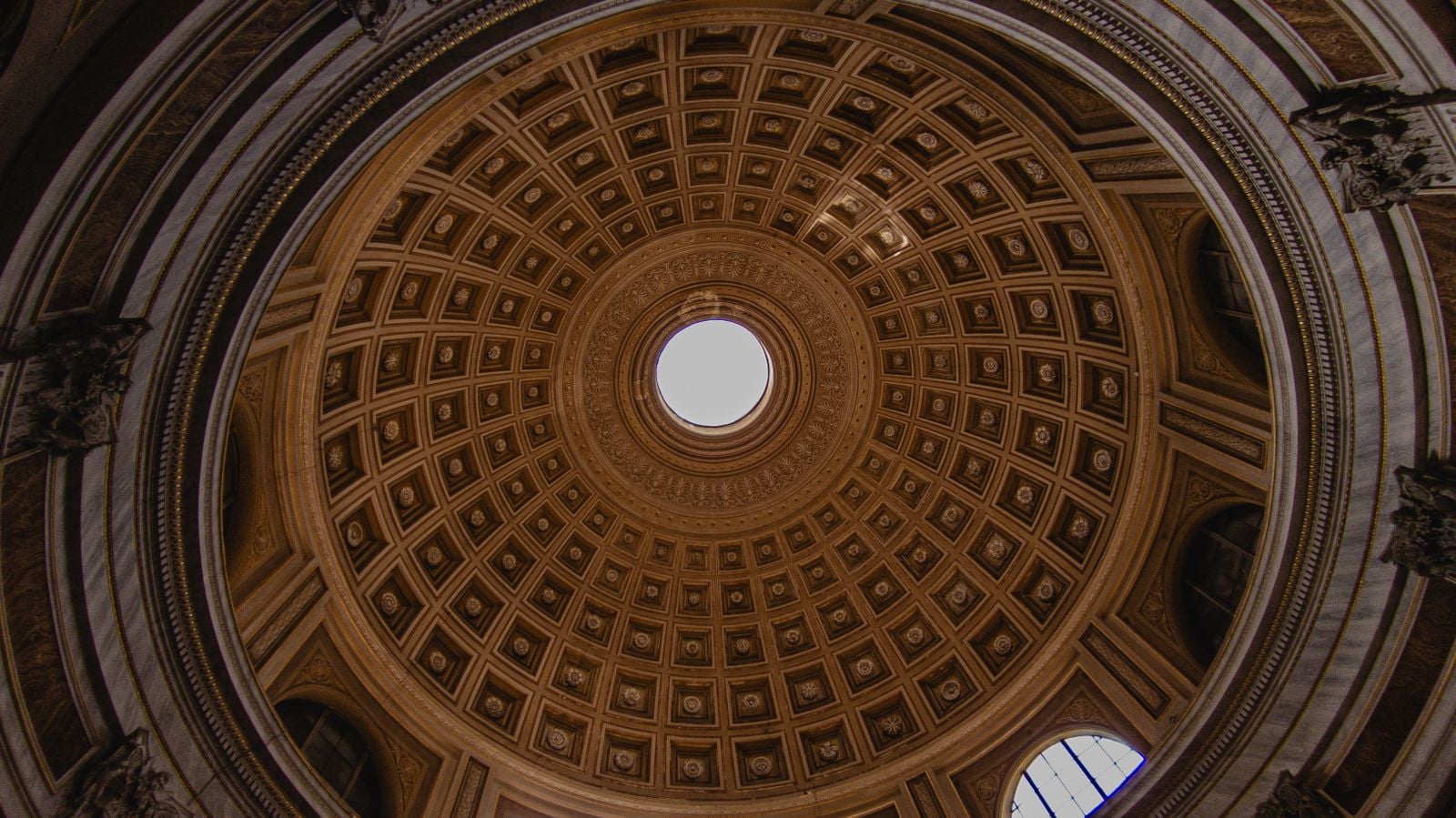
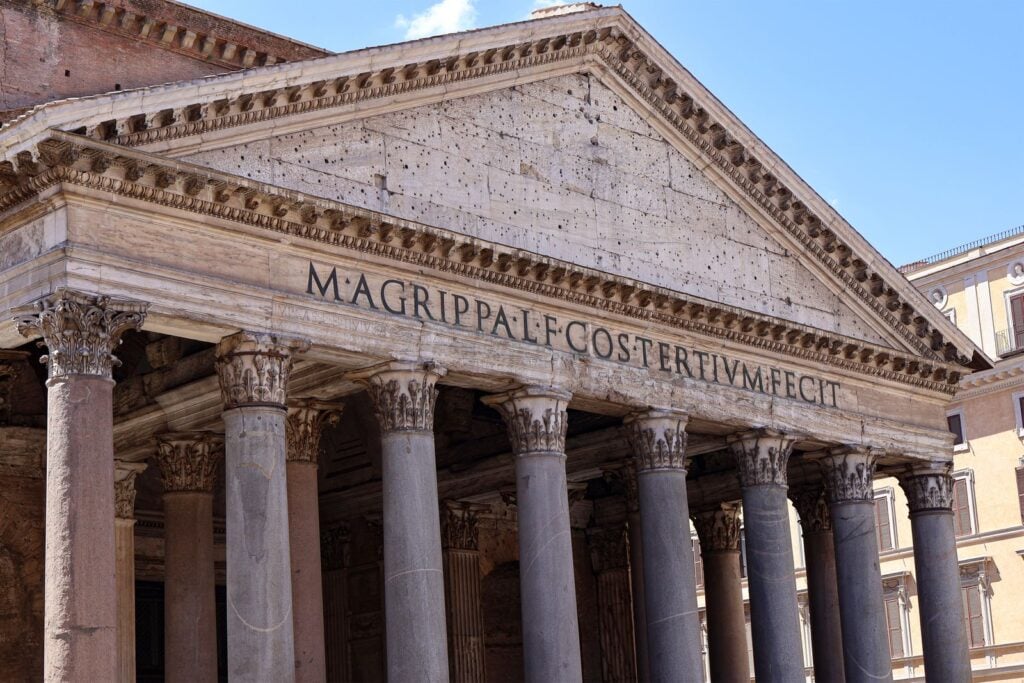
There is a particular kind of humility that comes from standing inside the Pantheon and looking up. Its vast unreinforced concrete dome has survived for nearly nineteen centuries, while the open oculus continues to admit sunlight and rain.
The contrast with deteriorating bridges, parking structures, and coastal defenses is striking, but it needs to be stated precisely. Roman concrete was not one uniform material, and its durability does not come from a single secret recipe.
Modern reinforced concrete also does not simply expire on a fixed date. Its lifespan depends on design, workmanship, environment, and maintenance. In harsh settings, however, water and chlorides can reach the reinforcing steel, causing corrosion that expands inside the concrete and eventually produces cracking and spalling.
One part of the Roman durability story became clearer on December 9, 2025. Smithsonian Magazine reported that researchers had confirmed an earlier hot-mixing hypothesis using material from an unfinished construction site in Pompeii, preserved when Mount Vesuvius erupted in 79 CE.
The Nature Communications paper examined finished walls, walls still under construction, and nearby piles of dry raw materials. Intact quicklime fragments showed that quicklime had been mixed with dry volcanic material before water was added.
That finding matters because it differs from the process described by the Roman architect Vitruvius in De Architectura, written in the first century BCE. Vitruvius described adding water to quicklime first to produce slaked lime, then combining it with other ingredients.
Hot mixing reverses that sequence. Quicklime is blended directly with volcanic ash and other dry ingredients before water is introduced. The resulting exothermic reaction produces heat and leaves small calcium-rich features known as lime clasts distributed through the hardened material.
For years, those white clasts were often interpreted as evidence of poor mixing. Research led by MIT materials scientist Admir Masic supports a different explanation: the clasts can contribute to the material’s ability to repair small cracks.
When a crack reaches a lime clast, water can dissolve some of its calcium. The calcium-rich solution may then recrystallize as calcium carbonate or react with pozzolanic material, filling part of the crack and strengthening the surrounding matrix. The repair is a chemical process rather than a metaphorical description of durability.
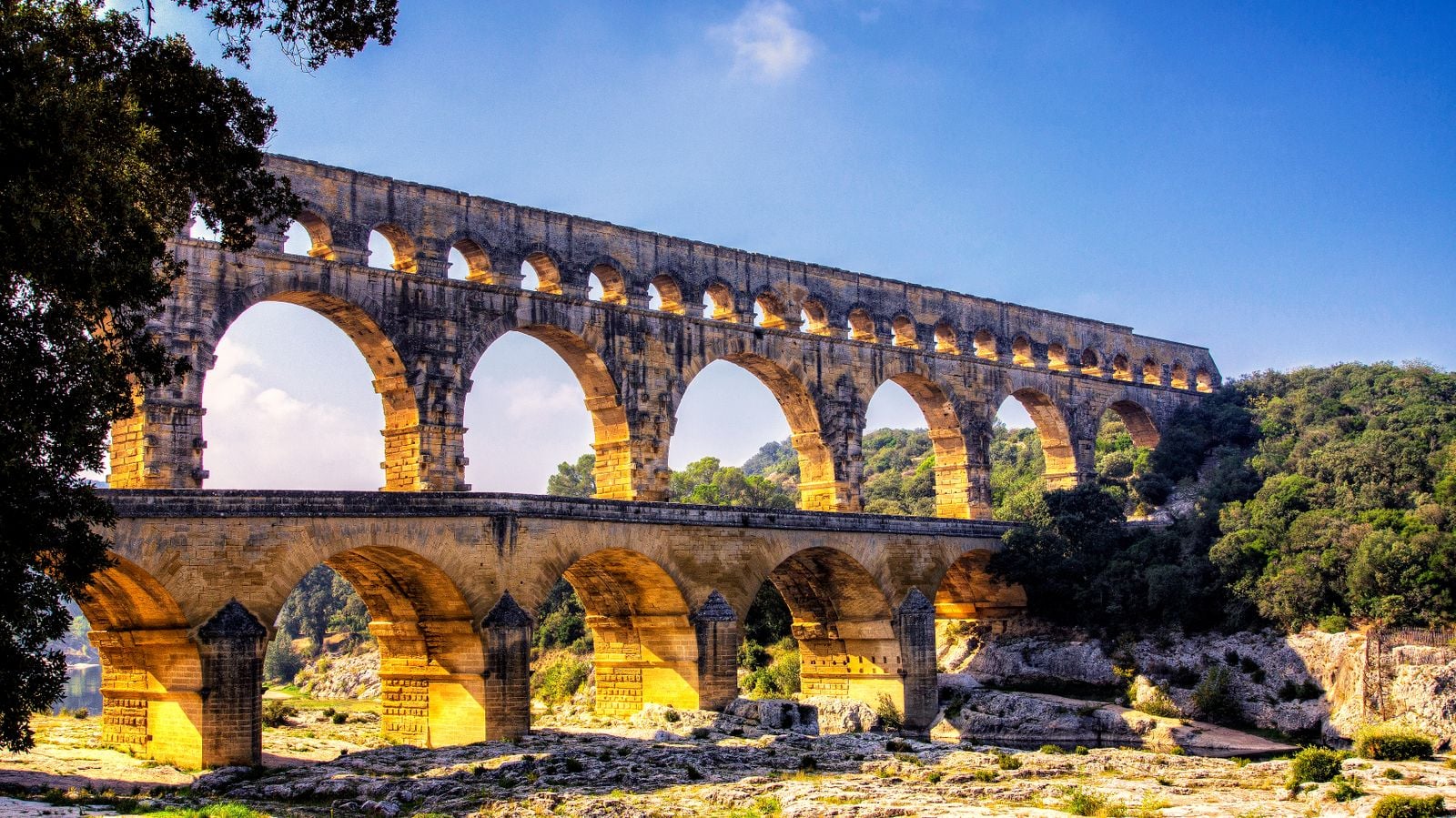
The research at Pompeii concerns hot mixing and lime-clast self-healing. Roman harbour concrete presents a related but distinct durability mechanism.
In marine structures, seawater can move through the porous material and react with volcanic components. Lawrence Berkeley National Laboratory reported that aluminous tobermorite and phillipsite continue forming over very long periods, reinforcing the cementing matrix as seawater passes through it.
That is almost the reverse of what happens in many modern reinforced marine structures. Chloride exposure can promote corrosion of the embedded steel, while the expansion caused by that corrosion can crack the surrounding concrete. TIME’s account of the 2017 marine-concrete research noted that modern cement mixtures tend to erode in seawater and can face serious corrosion within a service life measured in decades.
This does not mean every surviving Roman structure grows stronger indefinitely or that every modern concrete structure quickly fails. It means some Roman marine mixtures supported continuing mineral growth, while hot-mixed Roman concrete on land contained calcium-rich features capable of sealing small cracks.
The temptation is to turn that contrast into a story about ancient wisdom defeating modern arrogance. That framing is too simple. Roman builders did not possess modern chemical theory, but they had access to suitable volcanic materials and refined their working methods through experience.
Modern concrete solves a different set of problems. It can be produced consistently at enormous scale, develops strength quickly, and can be engineered for many environments. Those advantages helped make it the foundation of modern infrastructure, even though some common formulations remain vulnerable to water, salt, corrosion, and cracking.
Masic has emphasized that the goal is not to copy Roman concrete exactly. As Gizmodo reported, the aim is to translate useful principles, including recrystallization and regenerative behavior, into materials compatible with modern construction.
The harder part of that translation may be economic. Construction decisions are shaped by building codes, project budgets, financing, procurement rules, expected service life, and the cost of maintenance. A material that promises greater durability must still satisfy contemporary standards and compete on price.
Some of Rome’s surviving monuments were prestigious public works whose endurance reinforced civic and imperial authority. That does not prove Roman society always planned on a longer horizon, but it shows that durability could be treated as an important feature rather than an incidental benefit.
Modern procurement can pull in another direction. Initial construction cost is visible immediately, while maintenance and replacement costs may fall on different budgets decades later. The result can be a system that rewards a cheaper material today even when a more durable option could perform better over its full life.
The attempt to commercialize these lessons is already underway. MIT News identifies Masic as a co-founder of Dmat, a company established in 2021 to apply principles from Roman concrete research to longer-lasting modern materials.
Whether such products become widely used will depend on more than laboratory performance. They must be affordable, certifiable, scalable, and simple enough to fit into established manufacturing and construction practices.
The most revealing detail in the Pompeii research may be the way the lime clasts were interpreted. What had looked like evidence of careless mixing instead proved consistent with a deliberate production method and a useful self-healing mechanism.
The materials had not changed. The interpretation had.
That is a recurring problem in the study of inherited technology. Older methods are often treated as crude versions of modern ones, even when they were designed around different resources, environments, and priorities. Sometimes modern methods are unquestionably better. Sometimes they optimize a different outcome.
The preserved Pompeii site gives researchers an unusually direct view of the ancient workflow. Raw materials, tools, partially completed walls, finished structural elements, and later repairs remained together, allowing the team to compare what builders prepared with what they produced.
The evidence shows that hot mixing was specific, deliberate, and repeatable at Pompeii in 79 CE. It does not prove that every Roman builder used the same recipe everywhere, but it substantially strengthens the case that lime clasts were functional products of the mixing process rather than universal signs of poor workmanship.
The Pantheon and the ancient harbour structures are not miracles. They are evidence that material choices can preserve the priorities built into them long after the builders are gone.
The chemistry can be studied and adapted. The more difficult challenge is deciding whether durability centuries into the future is valuable enough to influence decisions made today.