
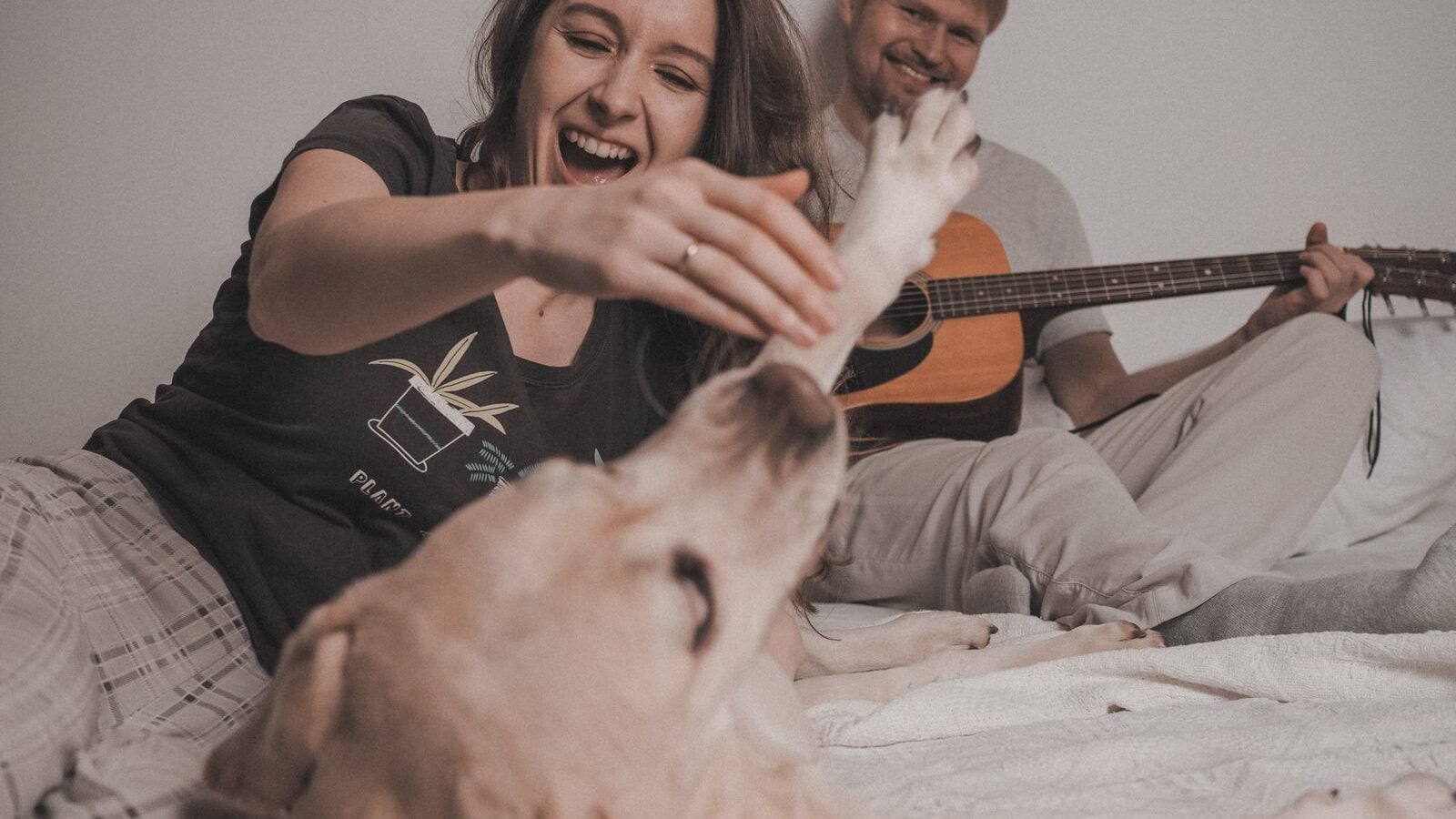
There is a tell.
It shows up in the way someone talks about their dog versus the way they talk about their sister. The dog gets soft eyes, a smile, a story about the way he tilts his head when the kettle boils. The sister gets a sigh. Not cruelty — something quieter than that. A kind of tiredness that has been settling for years.
Loving animals and preferring animals to people are two different emotional states, and they are often confused for each other by the person living inside them. One is warmth, freely given and freely received. The other is what is left when a person has spent decades doing emotional work that never came back, and finally found a relationship where nothing is asked of them beyond presence.
The pattern is common enough that most people have seen a version of it. Someone who has spent thirty years in a caring profession adopts a rescue animal in late middle age and starts saying, half-joking, that the dog is easier than the family. The joke lands because everyone hears it as affection for the dog. It is usually also a report about the family. The animal wants a walk and somewhere warm to sleep. It does not want anything held for it.
The distinction matters because the culture around pet ownership has flattened it. Loving animals is treated as a personality trait, faintly virtuous, faintly quirky. Preferring animals to people is treated as the same trait, only stronger — as if the second is simply a more devoted version of the first. It isn’t. It is often the end point of something that has gone unnamed for a long time.
The unnamed thing does have a name in the research literature, though the literature was built for the workplace rather than the living room. It is called emotional labor: the work of managing your own feelings in order to produce the feeling a situation requires. A 2011 meta-analysis by Ute Hülsheger and Anna Schewe in the Journal of Occupational Health Psychology, pooling 494 correlations from 95 independent studies, found that surface acting — displaying an emotion you do not actually feel — and the dissonance underneath it were “detrimental to both well-being and performance outcomes.” Of everything the researchers measured, surface acting tracked most strongly with emotional exhaustion.
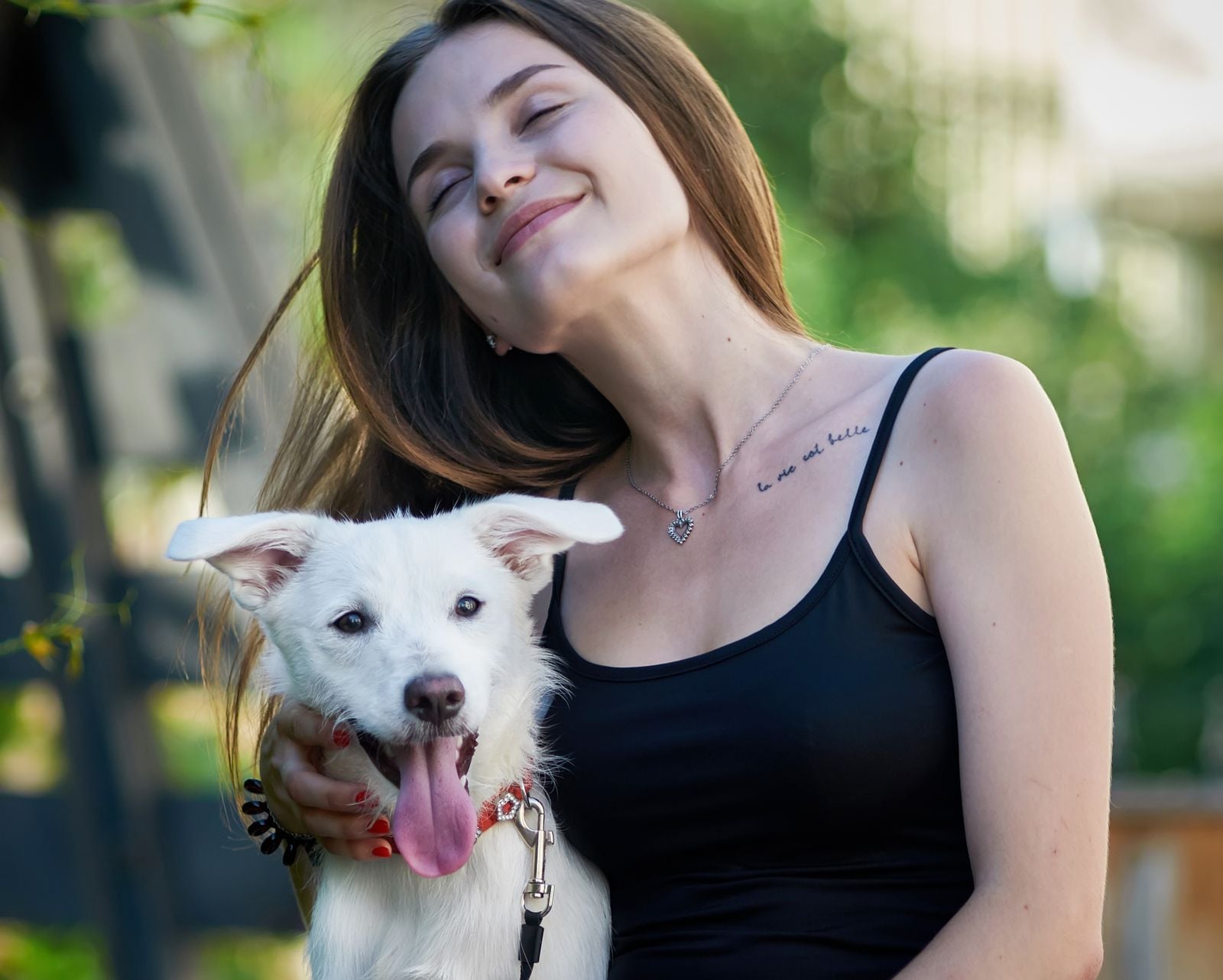
Worth being precise about the limits of that. Those studies were conducted in workplaces, and the meta-analysis deliberately excluded research on emotion regulation inside romantic relationships. Which is close to the whole problem. The same labor happens in families, at greater volume and over longer stretches, and there is no comparable body of evidence waiting to describe it.
What the workplace research does supply is the mechanism. Emotional dissonance is the gap between what a person feels and what they are expected to display. Held long enough, this gap becomes its own kind of injury. It is not that the smiling is hard. It is that the smiling never gets to stop.
Animals close the gap. A dog does not require a face. A cat does not require an explanation. There is no display rule to observe, no mood in the room that has to be tended before you can rest.
There is a version of this in people whose working week is spent managing a room — teachers, nurses, anyone whose job is partly to keep other people steady. By Friday the patience is gone. On Saturday, at a stable or on a walk, it comes back. The explanation people give is that animals do not lie to them. What they often mean is that animals do not require them to perform reassurance, or enthusiasm, or authority. They require only quiet and consistency, which is what these people actually are when nobody is asking them to be anything else.
This is the piece the culture keeps missing. Preferring animals to people is not usually misanthropy. It is often the residue of a lifetime spent as the person who holds the room together — frequently beginning with a childhood in which being the calm one was a job rather than a temperament.
Those children grow up and become the friend everyone calls in a crisis. The manager who runs interference for the team. The daughter who visits the parent nobody else can face. The wife who translates her husband’s silences for the children. By the time they are fifty, they have a lot of skills. Letting somebody else carry the mood for an evening is not one of them, because it was never on offer.
Then they get a dog. And the dog wants a walk.
The relief is enormous. It is also easily misread as love — love for animals, love that eclipses love for people. But the underlying feeling is closer to rest.
Writing in Psychology Today, the therapist Megan Ashley Smith describes emotional labor as the work of “soothing, anticipating needs, managing conflict” and absorbing whatever intensity other people bring, and argues that it falls unevenly and is routinely mistaken for a personal failing rather than an unshared load. This is not a claim about women’s psychology. It is a description of a division of labor that has been treated as natural for so long it has become invisible even to the people performing it.
Writing in The Conversation, Nadia Clarke Cordick, a doctoral researcher at Lakehead University developing a qualitative study with Black women educators in Ontario, described how the same work operates in schools: cultural translation, mentoring frightened colleagues, absorbing microaggressions, none of it compensated and most of it unnamed. Generic wellness programming tends to fail, she argues, because it treats the exhaustion as a problem inside the individual. Emotional exhaustion, in her framing, is not a personal failure but “a predictable outcome of systems that extract care without offering care in return.”
That is the phrase worth sitting with. Care extracted, none returned.
A dog does not work that way.
You can see it in the person who has hosted every family Christmas for two decades, who remembers which relative went dairy-free and in which year, who buys thoughtful gifts for people who have never once bought her a thoughtful gift back — and who then rescues a cat and finds herself saying, not entirely as a joke, that the cat is the only member of the household who needs nothing from her except that she sit down.
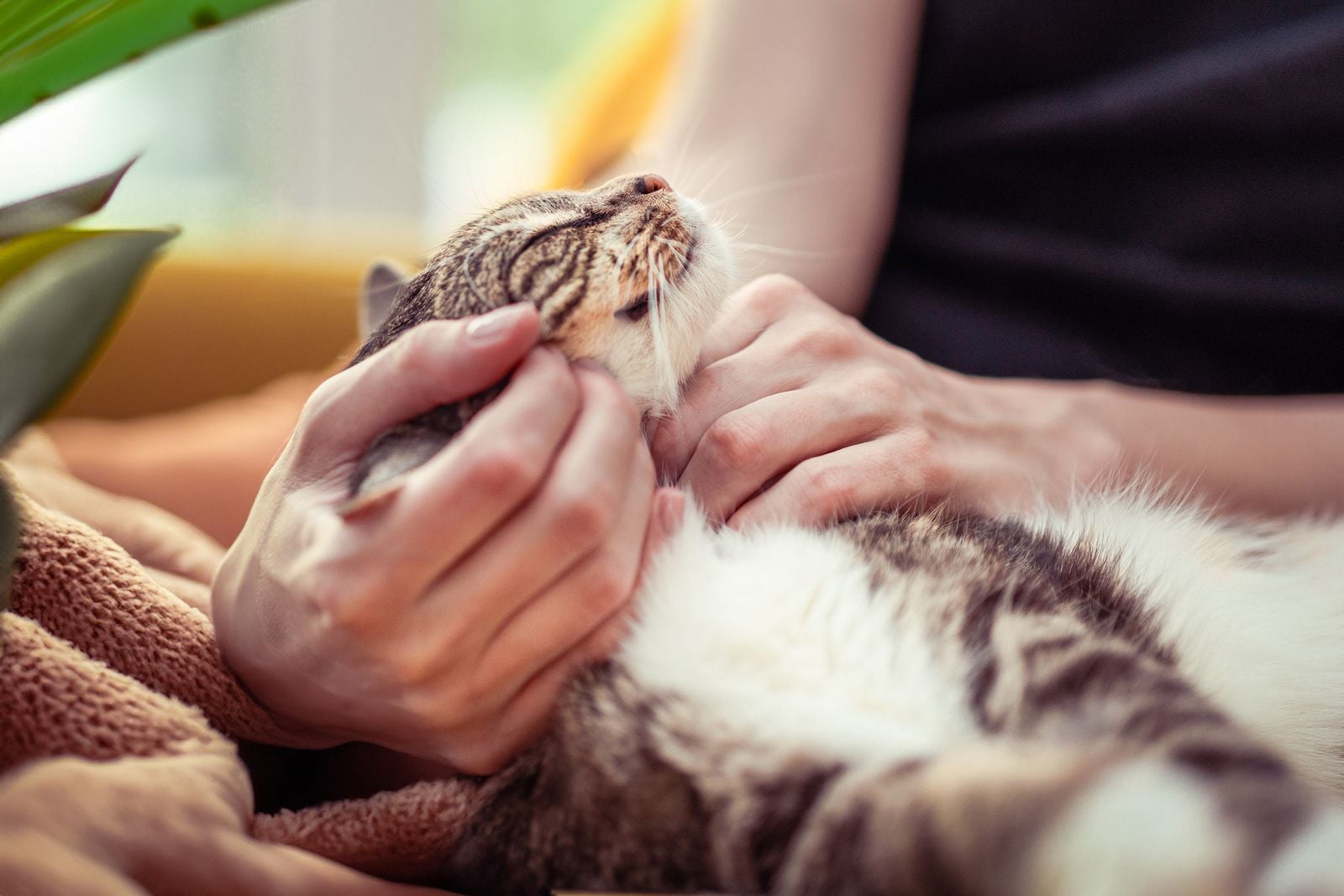
The word burnout has expanded in ordinary speech to cover almost every form of tiredness. Its formal definition is narrower, and pointedly so. When the World Health Organization added burn-out to the ICD-11 in May 2019, it classified the term as an occupational phenomenon rather than a medical condition, and stated that it “should not be applied to describe experiences in other areas of life.” The older clinical measure behind it — Christina Maslach’s three-part model of emotional exhaustion, depersonalization and a reduced sense of accomplishment — was likewise designed for paid work.
Which is, in its way, the point. The most precise vocabulary anyone has for this kind of depletion was written for jobs. There is no equivalent term for the version that runs for forty years inside a family, on nobody’s payroll, in nobody’s job description.
The pet becomes a form of repair. Which is fine. Nobody needs a study to know that the company of an animal can be restorative.
What is worth noticing is when the pet stops being a source of warmth alongside human relationships and starts being a replacement for them. That shift usually says something less about the animal and more about what has been happening in the person’s other relationships for a long time.
The same shape turns up elsewhere. In retirement, where the work of keeping a family in contact tends to land on one person and stay there. In friendships where one party does all the remembering. The common thread is that the person doing the work often does not know they are doing it, because they have been doing it since they were small.
And in the retired professional who calls himself a hermit and plainly isn’t one. He still goes to the pub. He still has friends. What he no longer does is host, arrange, initiate, or check in. He did all of that for forty years and buried a marriage doing it. The dogs are not a substitute for people. The dogs are a substitute for a version of himself he no longer wants to be.
This is where the distinction becomes clarifying rather than judgmental. There is nothing wrong with any of these people. There is nothing wrong with preferring the company of an animal for a stretch of your life, or a decade of it, or the rest of it. The question is only whether the person understands what they are actually preferring — and what they are actually resting from.
Because if the exhaustion goes unnamed, it does not stop. It only relocates. The person who left a draining marriage will find themselves nine years later doing all the emotional work in a friendship group. The person who set limits with one parent will discover they have inherited the same pattern with a partner. The dog helps. The dog does not solve.
The honest reading of this is not that people who prefer animals to people have failed at human relationships. It is that many of them have succeeded, for decades, at the specific human relationships that ask them to give more than they receive. And they are tired. Not tired in a way a weekend fixes. Tired in the way a person gets when they have spent thirty years being the reliable one and nobody ever asked whether they had anywhere to put down what they were carrying.
The warmth people feel toward animals is real. The preference is often something else underneath it — grief, quiet and long-standing, for the reciprocity they did not get from the humans they loved.
Naming that does not require leaving the dog. It only requires being honest about what the dog is doing for you, and what it might mean that no person in your life has ever done the same.