
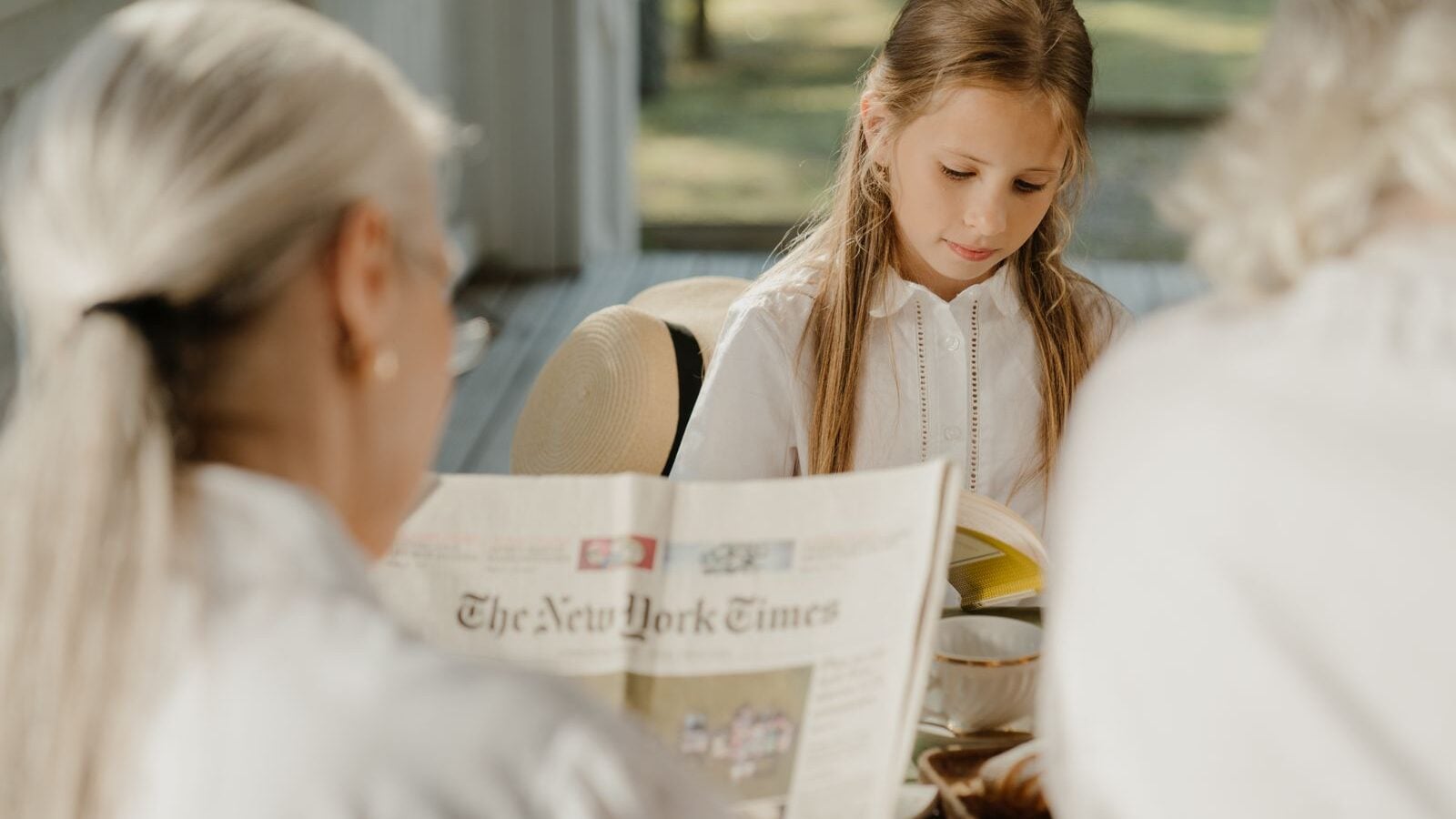
The common wisdom about grandparents runs something like this: the best ones spoil the grandkids, sneak them extra dessert, break a few parental rules, and let the magic happen. The bond, in this version of the story, comes from being the fun one. Psychology points toward something quieter and more durable: attentive presence.
Psychologist Brett A. Biller, Mental Health Director at Hackensack University Medical Center, described the pattern in a July 2025 interview with Parade. His examples include spending focused time with grandchildren, listening carefully, respecting the boundaries established by parents, sharing life experiences honestly, remaining consistent, and modeling healthy emotional expression.
These behaviors do not guarantee that a family will never experience conflict or separation. An “unbreakable” bond is better understood as one with enough trust and accumulated attention to withstand ordinary changes, distance, and the passing of time. It is built through what happens repeatedly, not through one dramatic gesture.
Focused attention is one of the clearest elements in Biller’s account. A grandparent who attends a game or performance but remains absorbed in a phone is physically present without being fully available. A grandparent who watches, asks about the experience afterward, and remembers the answer communicates something more powerful: what matters to the child matters to them too.
Listening works in the same way. Children notice when an adult is waiting for a turn to speak, and they notice when an adult follows the details of their world. Remembering the name of a friend, the book they are reading, or the small worry they mentioned last week turns a conversation into evidence of continuing interest.
Biller also argues that emotional support works best as a partnership between grandparents and a child’s primary caregivers. Grandparents may have fewer daily parenting pressures, but that freedom does not place them above the family’s rules. Respecting those rules helps prevent the child from being pulled into a conflict between adults.
This support can benefit both generations. A child gains another reliable adult who listens and offers perspective, while a grandparent gains an active role that requires attention, flexibility, memory, and engagement with another person’s developing world.
A 2026 study published in Psychology and Aging and summarized by the American Psychological Association examined data from 2,887 grandparents who participated in the English Longitudinal Study of Ageing. Grandparents who provided care performed better on tests of memory and verbal fluency than those who did not, even after the researchers accounted for age, health, and other factors.
The association was especially noticeable among grandmothers, with caregiving grandmothers showing less cognitive decline over time than non-caregiving grandmothers. The frequency and type of care did not appear to explain the difference as strongly as whether the grandparent was involved at all.
That finding does not prove that caring for grandchildren directly caused the cognitive differences. The researchers also noted that family circumstances matter, including whether the caregiving is voluntary and supported or feels stressful and burdensome. Still, the result supports the idea that grandparenting can be an active, mutually engaging relationship rather than a one-way act of giving.
That engagement often changes the texture of a grandparent’s week. Time with a child can involve answering unexpected questions, inventing games, revisiting old stories, or giving sustained attention to a subject the adult would never have encountered alone. The ordinary work of attending may be more important than the activity itself.
None of this contradicts the affectionate clichés surrounding grandparenting. It simply shifts where the value comes from. The candy is not necessarily the mechanism. The conversation over the candy may be.
Geography affects how easily those repeated moments can happen. A 2025 study in Demographic Research by Olivia Healy of Elon University and Rachel Dunifon of Cornell University found that 47 percent of U.S. households with grandchildren lived within 10 miles of a grandparent. Thirteen percent lived within one mile, and approximately one-third lived within five miles.
The researchers also found that just as many grandchildren lived within one mile of a grandparent as lived at least 500 miles away. Families living closer were more likely to exchange practical help, and the amount of time spent helping generally declined as distance increased. Grandparents provided more total hours of help to their adult children and grandchildren than they received in return.
The study does not measure the emotional quality of those relationships, so proximity should not be treated as proof of closeness. What it changes is opportunity. Living nearby makes an unplanned meal, a school pickup, or an hour of conversation easier to repeat.
The harder question is what happens when the distance is measured not in miles across town but in countries and continents.
A South African study discussed in The Conversation examined how emigration reshaped relationships between grandparents in South Africa and grandchildren living abroad. Researcher Sulette Ferreira drew on a broader research program that included in-depth interviews and qualitative surveys, with the article based on the experiences of 44 participants.
Place of birth emerged as an important factor. Grandchildren born in South Africa before moving abroad often had an early period of everyday contact with their grandparents. Those born abroad began the relationship through screens, photographs, recorded messages, and planned visits rather than through spontaneous physical presence.
The research describes the separation through the concept of ambiguous loss, meaning loss without a clean ending or resolution. Grandparents may remain deeply involved while still grieving the ordinary physical role they expected to have. They are present in the family, but unable to participate in many of its daily rhythms.
The grandparents were not simply giving up. Participants described weekly Zoom story times, recorded readings, and parcels containing letters, recipes, or handmade crafts. Visits, however, could be limited by money, health, logistics, visas, and the condition of the relationship between grandparents and the child’s parents.
This is where the indulgent-grandparent fantasy meets a less glamorous truth. Bonds grow through small, repeated acts of attention. Reading the same book again, remembering what happened at school, asking a follow-up question, or maintaining a regular call can give a distant relationship rhythm and continuity.
Distance therefore changes the method of showing up without necessarily eliminating the possibility. A scheduled video call does not reproduce an afternoon spent in the same room, but consistency can still tell a child that the relationship has a stable place in the grandparent’s life.
Respecting the middle generation remains essential. Grandparents who override parental rules in the name of love can place a child inside a disagreement they did not create. What feels indulgent in the moment may become confusing if the child is expected to navigate competing loyalties.
A November 2025 Council on Contemporary Families reprint of an analysis by psychologist Joshua Coleman describes grandchildren as frequent casualties of unresolved conflict between grandparents and their adult children. The analysis also illustrates how disagreements about boundaries can contribute to family estrangement.
That does not mean every cutoff is unjustified or that every conflict can be solved by greater flexibility from one side. Some families limit contact for serious reasons. The relevant point for this article is narrower: a grandparent’s relationship with a grandchild is partly sustained through cooperation with the adults responsible for raising that child.
Grandparents also contribute through the stories they carry. Biller describes emotionally supportive grandparents as family historians who explain traditions, values, heritage, and the experiences of earlier generations. A family recipe or a story about why an ancestor left one country for another gives a child context that cannot be supplied by a generic internet search.
These stories work best when they are offered with honesty and humility rather than as lectures. A grandparent who explains why an experience mattered, including the parts that were difficult or embarrassing, gives the child something more useful than a polished family legend. The story becomes a way of understanding how people change, make mistakes, and continue.
Emotional modeling matters for the same reason. Children learn from how adults behave during frustration, disappointment, affection, and disagreement. A grandparent who can acknowledge a feeling without making the child responsible for it offers a practical example of emotional steadiness.
Across the psychology interview and the research, the common behaviors are not especially dramatic. Attentive grandparents listen, remember, remain consistent, respect parental boundaries, share family history, and keep finding workable ways to stay present. They treat the relationship as something maintained through action rather than guaranteed by the family title.
Long after the gifts and special outings blur together, the quieter pattern may remain. A child remembers that an older person looked at them without hurry, asked what they thought, and stayed long enough to hear the answer.
That is how the bond is built: not through one grand gesture, but through the repeated experience of being taken seriously by someone who keeps showing up.