
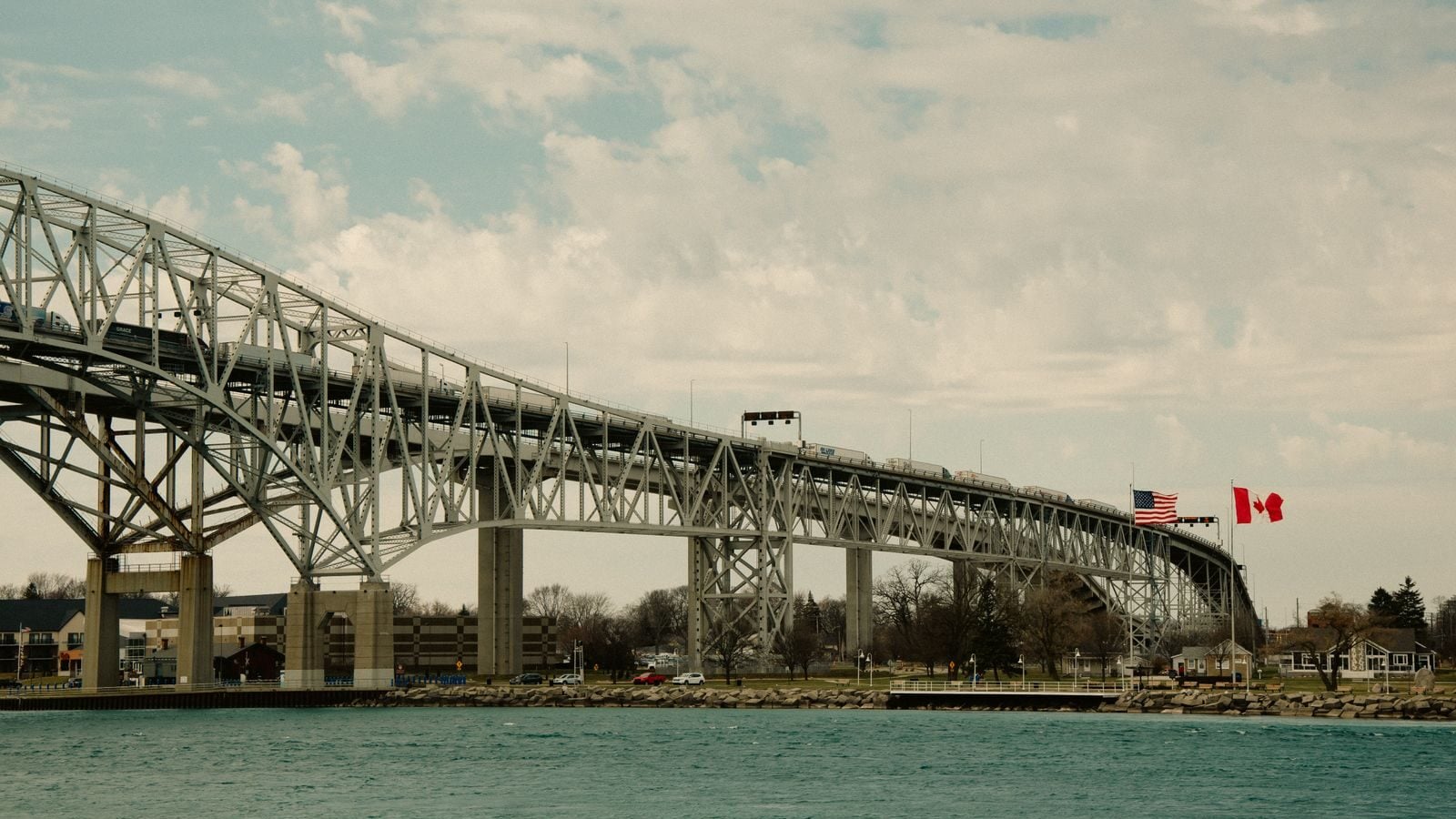
Most readers assume trade fights between allies follow a script: tariffs, threats, a summit, a deal. What has happened between Washington and Ottawa over the past several months breaks that script, and the break itself is the story. A tariff dispute has metastasized into a diplomatic rupture in which the President of the United States speaks more warmly of Kim Jong Un than of the Prime Minister of Canada.
The oddness is not incidental. It is the mechanism.
On Washington Week with The Atlantic, moderator and Atlantic editor in chief Jeffrey Goldberg opened the broadcast by reaching for an unlikely reference point: the 1999 South Park film, whose creators were nominated for an Academy Award for the song Blame Canada. South Park, of course, is caustic and anarchic satire,
Goldberg said. But today, somehow, it’s become real.
What started as a fight over trade, he said, has gone dangerously, ridiculously sideways.
The satire has outlived its own joke. The joke is now policy.
Consider what that means for the people who have to work inside it.
That is the first thing to understand about the current dispute. The economic content is real, but the volatility is being driven by something upstream of economics.
The pattern Goldberg identifies — warmth toward adversaries, contempt toward allies — is not new to this administration, but its application to Canada has surprised even seasoned observers. Canada is the United States’ largest trading partner by some measures, its longest undefended border, a NATO founding member, and a country whose intelligence services are woven into the Five Eyes arrangement so tightly that separating them would take years. None of that has insulated the relationship from a contrast the same broadcast put on tape. Asked about the dispute, Trump told reporters: Canadian officials have treated us very badly. They’re nasty people. Kim Jong-un has always treated me with great respect.
Goldberg’s on-air reaction was blunt: Sometimes in the day-to-day of our jobs, we forget how phantasmagorically bizarre this is.
Ridiculous is the operative word. And it is doing real work.

The diplomatic content of the fight is easier to describe than to explain. Tariffs on Canadian goods have escalated. Ottawa has retaliated. Personal exchanges between the White House and the Prime Minister’s Office have moved from strained to openly hostile. What began as a trade posture has expanded to include commentary on Canadian sovereignty itself, the kind of rhetoric that in any previous administration would have triggered emergency phone calls between capitals. In this one, it triggers another social media post.
Meanwhile, the President’s public treatment of North Korea has grown notably softer. This is the contrast Goldberg draws, and it is the contrast that keeps European foreign ministries awake. If the incentive structure now rewards adversaries with respect and allies with humiliation, the rational move for a mid-sized NATO country is to reassess how much it wants to bet on Washington’s word.
That reassessment is already happening. Quietly, in defense procurement meetings. Loudly, in European commentary that has begun asking the same question in public.
The domestic American view is different, and worth naming honestly. A significant portion of the President’s base sees the confrontation with Canada as evidence that he is willing to fight for American workers regardless of who is on the other side of the table. From that vantage point, the diplomatic damage is a feature. The question of whether short-term leverage against a friendly neighbor produces long-term American advantage is a debate on which reasonable people disagree, and the answer will not be settled by any single quarter’s trade data.
What is not in serious dispute is the volatility itself.
Manufacturers across North America are adjusting to a new reality: the assumption of predictable North American logistics — the assumption on which USMCA, and NAFTA before it, was built — can no longer be treated as a planning constant. Companies are not choosing sides politically. They are pricing in a risk premium that did not exist two years ago. That premium shows up in inventory decisions, in warehouse siting, in the quiet reshoring conversations that do not make the news but do move capital.
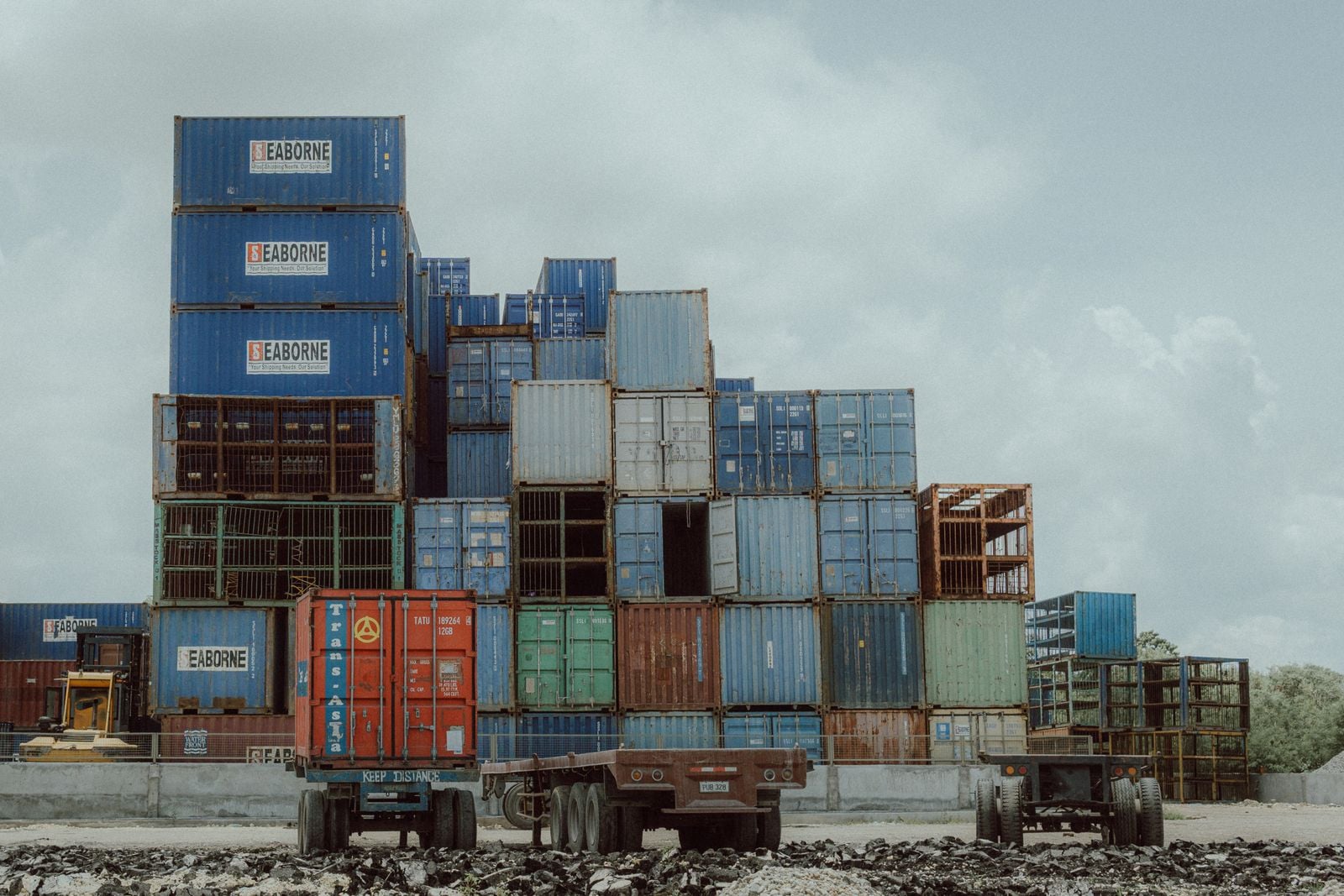
The parallel with other volatile foreign policy episodes is instructive. The Canada dispute reveals a pattern in which rhetorical escalation is cheap, and its cheapness is what makes it attractive to a White House that wants to demonstrate movement without committing to a coherent long-range plan. The costs land later, and they land on people who did not participate in the rhetoric.
There is a temptation, on both sides of the border, to treat the current moment as an aberration that will correct itself. It might. American-Canadian relations have survived worse than tariff spats, and the underlying economic and cultural integration is deep enough that a full rupture is difficult to imagine. But the assumption that the relationship will simply revert to its previous baseline once the current administration ends is doing a lot of work, and it is not clear that work is warranted.
Institutional memory is longer than electoral cycles. Canadian voters, Canadian ministers, and Canadian business leaders are forming views right now about how much the American security and trade umbrella can be trusted. Those views will not evaporate the day the rhetoric softens. The same Washington Week broadcast touched on this durability problem directly: the diplomatic muscle memory of an alliance is built over decades, and it can be strained faster than it can be rebuilt.
The satire-becoming-reality frame that Goldberg reaches for is more than a rhetorical flourish. It captures something structurally true about the current moment. When the actual behavior of a government begins to mirror what its harshest satirists once staged as absurdity, the space for serious diplomatic engagement narrows. Foreign counterparts do not know whether to respond to the substance or the performance, because the two have collapsed into each other.
For businesses navigating this uncertainty, that collapse is not a theoretical problem. It is the reason commercial insurance renewals now include political risk language brokers did not use two years ago. For students of international relations, it is the reason the definition of an ally is now an open question in undergraduate seminars. For defense policy analysts in Brussels, it is the reason contingency planning that used to sit on a shelf is now on the desk.
The trade fight will resolve, in some form, on some timeline. Tariffs will be adjusted, deals will be struck, and photo opportunities will follow. What is harder to resolve is the question the fight has raised in every allied capital that has been watching: on what basis, exactly, does anyone rely on American consistency now?
That question does not have a diplomatic answer. It has an institutional one, and institutions take a long time to answer anything.
The strangeness of watching a satirical song about blaming Canada become a rough approximation of official posture is the surface. Underneath it is a slower shift, in which countries that spent seventy years building their strategies around American reliability are quietly building new strategies that no longer assume it. Whether that shift proves temporary or permanent will not be decided by the next round of trade talks. It will be decided by whether the pattern the current dispute reveals is treated, in Washington, as a mistake worth correcting or a style worth keeping.