
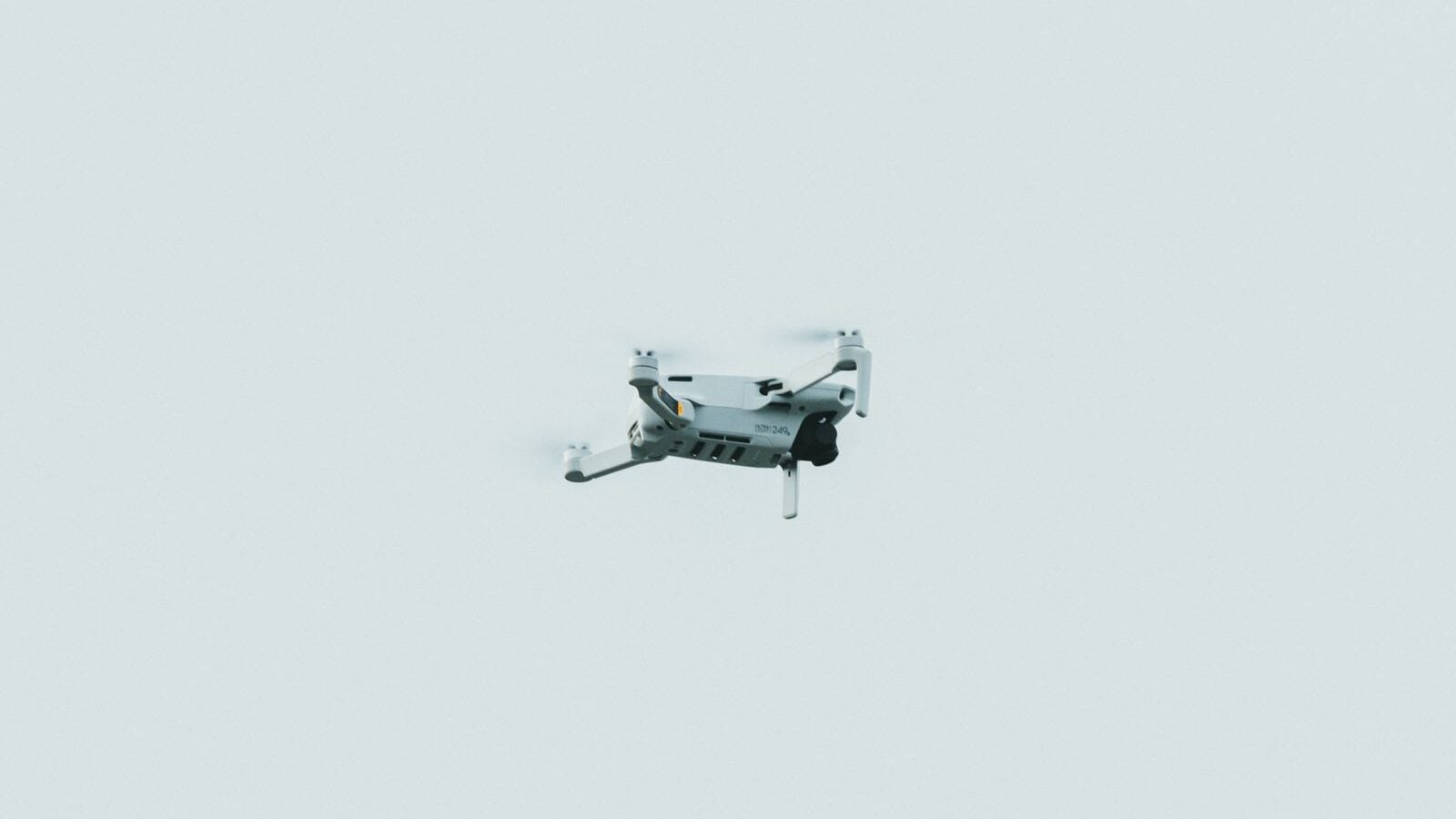
There is a version of this story that reads as a thriller: a thousand drones over Moscow, guidance software designed to function through jamming, and a defense minister removed after preparations had advanced. The imagery is compelling, but it can also hide the uncertainty at the center of the story. The operation has been described by anonymous sources, while an official representative of President Volodymyr Zelensky’s office denied that it existed.
The Atlantic reported that two people familiar with the matter described an operation codenamed “M&Ms.” According to those sources, Ukraine considered sending up to 1,000 inexpensive, AI-guided drones toward Moscow’s airports each night. The aim was not to destroy terminals or runways, but to keep civilian airspace closed long enough to pressure the Russian elites who rely on international travel.
The same report said Zelensky allowed preparations to continue despite fearing that a drone could hit a passenger aircraft or kill people around an airport. His office challenged the entire account, with a representative calling it “complete nonsense.” That denial is not a minor footnote. It means the plan cannot be presented as an officially confirmed Ukrainian operation, even though The Atlantic’s sources described its organization, financing, and proposed technology in considerable detail.
Those sources identified then-defense minister Mykhailo Fedorov as a central organizer who helped assemble programmers and obtain European financing. Zelensky removed Fedorov in July, and Ukraine’s parliament approved Yevhen Khmara as defense minister on August 19. One source told The Atlantic that rebuilding the project under a new team could take about three months.
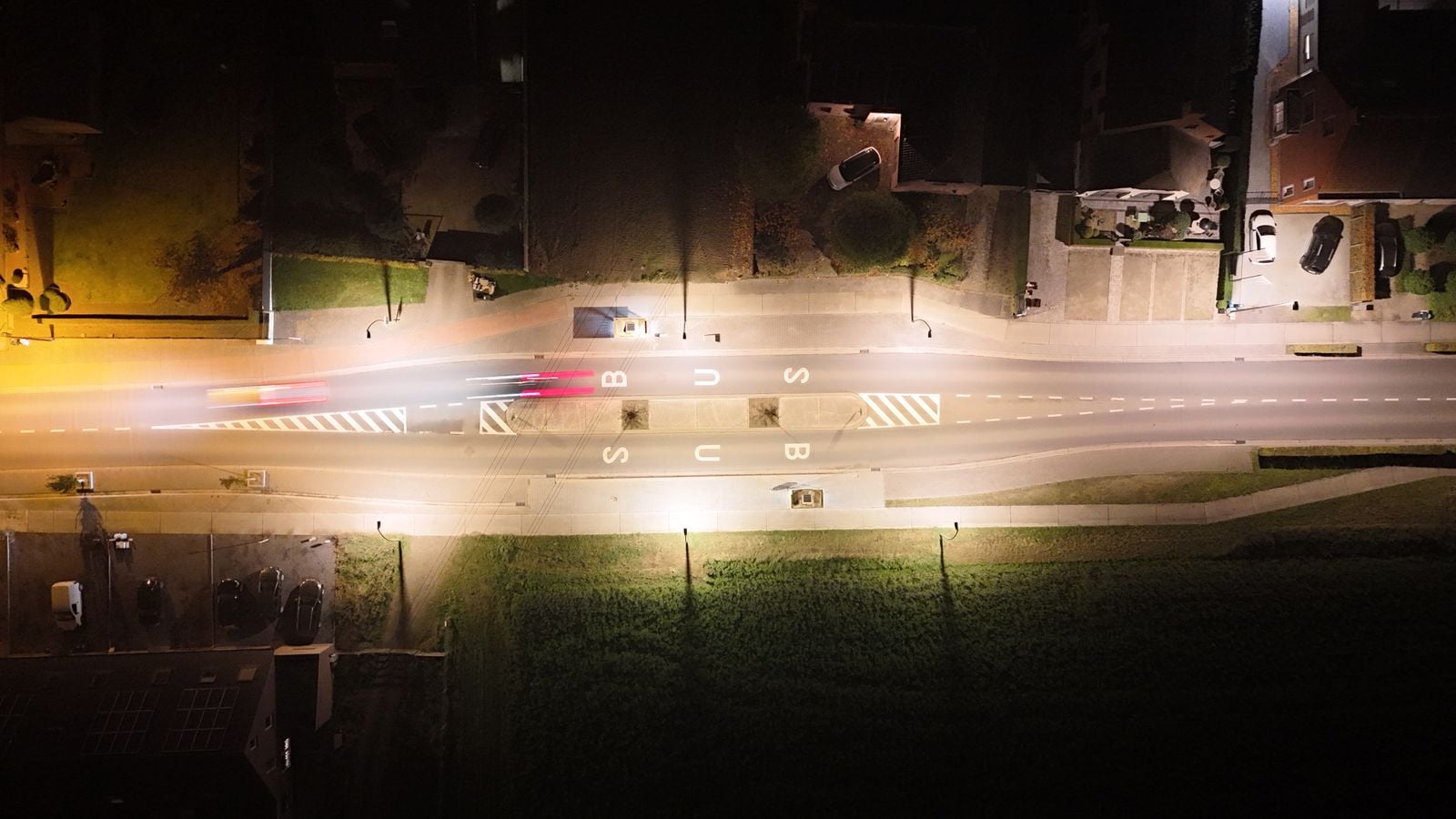
The technology requires careful description. Russian electronic warfare can sever the radio link between a drone and its operator, so Ukrainian developers have pursued systems that can continue navigating after communications are lost. The Atlantic described “map matching,” in which software compares the drone’s camera view with stored imagery and calculates a final route toward an assigned area.
That is not automatically the same as allowing software to select a target. The International Committee of the Red Cross distinguishes autonomous navigation or locking onto a predefined target from autonomous selection and engagement. The public account of “M&Ms” does not provide enough technical information to establish how much discretion the proposed drones would have possessed once they reached Moscow.
The scale, however, is plausible in the context of the war’s rapidly expanding drone campaigns. Russian authorities told the Associated Press that air defenses intercepted 791 Ukrainian drones during one night in August 2026, with more than 600 reportedly flying toward the Moscow region. Those figures came from Russian officials and should be treated as claims rather than independently verified totals.
Russian airports have also faced repeated temporary restrictions. A Russian-language report citing the Association of Tour Operators of Russia said restrictions were imposed 290 times in April 2026 alone. It placed the total since the beginning of the year at more than 450. The original version of this article incorrectly placed the 290 incidents in the first quarter.
Ukraine has therefore already shown that drone attacks can disrupt Moscow’s airspace. What “M&Ms” reportedly proposed was a sustained attempt to industrialize that disruption, using mass and software-guided navigation to make normal airport operations difficult or impossible. The distinction matters because the plan’s strategic purpose was coercive rather than simply destructive.
The theory was that repeated closures would reach the officials, executives, and wealthy travelers most insulated from the war. “People in the elites might come to Putin and say: We have a problem here,” a source familiar with the plan told The Atlantic. Whether inconvenience would create pressure on Vladimir Putin or harden Russian public opinion is an empirical question the paused operation never answered.
The legal questions are related but separate. International humanitarian law requires parties to distinguish military objectives from civilians and civilian objects, avoid disproportionate attacks, and take feasible precautions to reduce civilian harm. Those duties remain with human planners, commanders, and operators even when a weapon contains autonomous functions.
Software therefore does not inherit legal responsibility from the people who deploy it. The harder accountability problem concerns whether commanders can reasonably predict a system’s behavior, understand why it acted as it did, and demonstrate that the planned attack complied with the law. Those questions become especially difficult around functioning civilian airports, where the environment can change from one moment to the next.
Zelensky’s reported hesitation deserves attention for that reason. According to The Atlantic’s sources, he did not immediately reject the concept, but worried that civilian deaths could make the operation look like “piracy.” That concern was strategic as well as legal. Ukraine depends heavily on international support, and an operation perceived as deliberately endangering civilian aviation could damage the legitimacy on which that support rests.
Fedorov’s dismissal prevents any simple explanation for why the preparations stopped. No public evidence establishes that he was removed because of “M&Ms,” and broader tensions inside Ukraine’s wartime leadership were already visible. Simon Shuster’s book The Showman provides useful background on Zelensky’s wartime inner circle, but a book published before the 2026 reshuffle cannot establish the reason for Fedorov’s removal.
What The Atlantic’s sources described was a pause tied to the loss of the project’s organizer and team, not a permanent cancellation. “You can revive this project with a new team, but it would take, in my view, around three months,” one source said. The appointment of a new defense minister could therefore close the project, reshape it, or allow some version of it to return.
The precedent extends beyond Ukraine, but it should be described accurately. Autonomous functions are already present in weapons used by numerous militaries, and navigation autonomy is not itself a new legal category. The more consequential development would be the deliberate use of large numbers of software-guided weapons around civilian transport infrastructure as a sustained form of political pressure.
There is also a moral argument about parity. Ukrainian civilians have lived under Russian missile and drone attacks since the full-scale invasion began in February 2022, while Moscow’s professional class has experienced the war more indirectly. Shifting disruption toward the Russian capital may look proportionate to many Ukrainians, but that does not remove the obligation to protect civilian aircraft, airport workers, passengers, and nearby residents.
The available evidence leaves two realities in tension. The Atlantic’s sources offered a detailed account of an advanced operation, while Ukraine’s Presidential Office denied that the operation existed at all. The safest conclusion is not that software was about to take complete control of target selection, but that Ukrainian officials reportedly came close to testing how far mass, autonomous navigation, and pressure on civilian air travel could be combined.
The project may remain shelved, return under a different team, or never be independently confirmed. The technical and legal pressure behind it will remain. Drone warfare is advancing through thousands of smaller choices about guidance, jamming, scale, and human control, and each choice narrows the distance to the next threshold.