
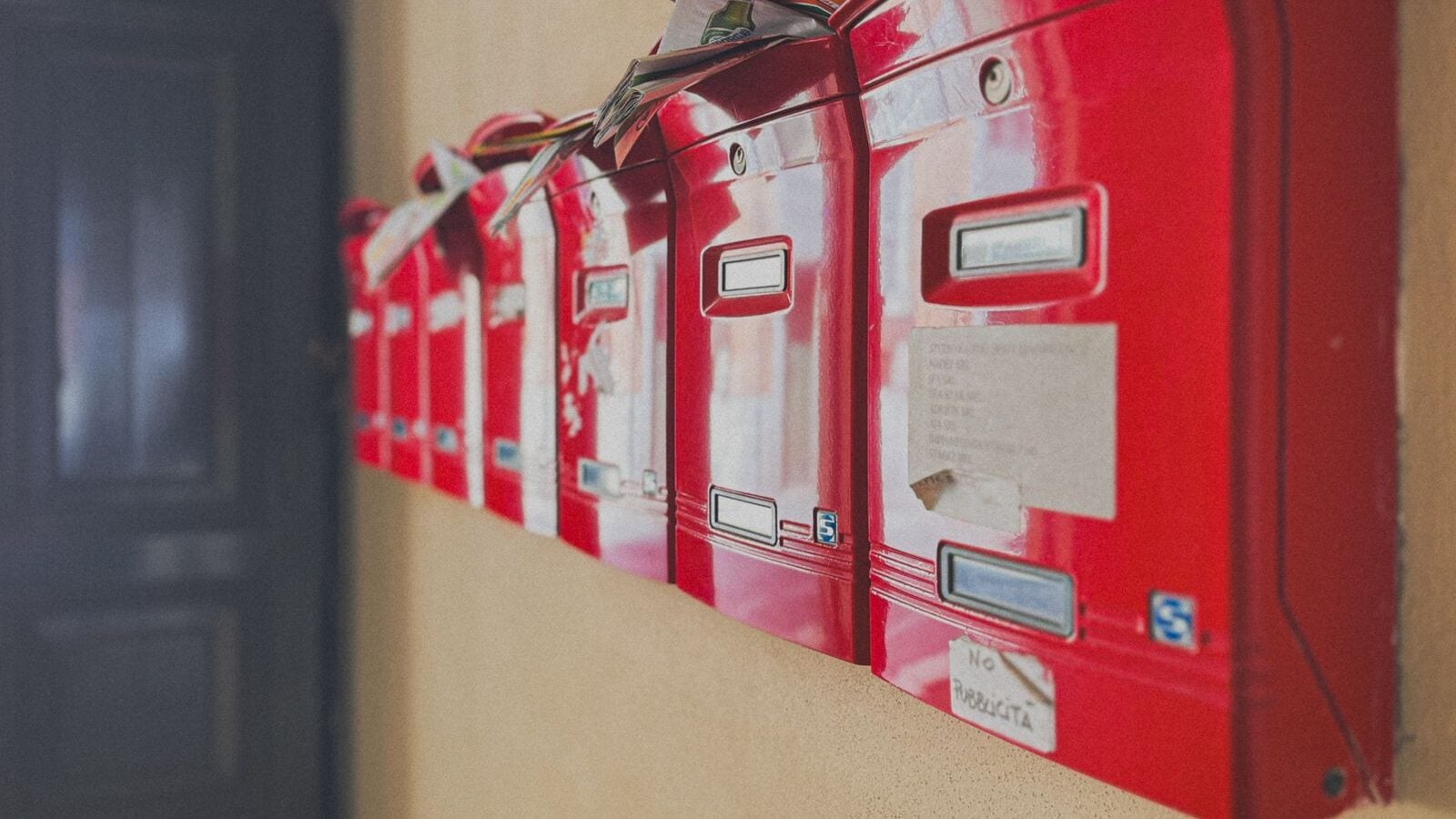
On July 12 the price of a first-class stamp rose from 78 cents to 82, with the domestic postcard rate moving from 61 cents to 65 and metered letters to 78. The channel that engagement marketers were told to abandon a decade ago got more expensive again — and it is still on the plan at organisations that could have dropped it years ago.
The old channel is not supposed to be working this well.
That is the observation worth sitting with. Not because it settles the argument about mail versus digital — it does not — but because it describes a working environment in which the physical envelope has become the piece that makes the rest of the stack land.
The tension inside engagement marketing in 2026 is not between old and new. It is between saturated and scarce. Digital inboxes are saturated. Physical mailboxes are not. Attention flows to whichever surface is currently less crowded, and for most consumer categories the crowded surface is now the screen.
Consider the arithmetic a working marketer actually faces. At 82 cents, a single-piece stamped letter is the top of the postage range; volume mailers presorting into bulk classes pay considerably less, and a postcard is cheaper again at 65 cents. Add list acquisition, design, print and copy, and the per-touch cost of mail still dwarfs the per-touch cost of email by an order of magnitude or more. On a pure cost-per-impression basis, the case looks indefensible. On a cost-per-response basis, in high-intent sectors, the case is at least arguable.
The point is not that mail beats email. The point is that mail, deployed as a trigger inside a sequence, changes what email and text can then do.
It is worth being precise about the evidence here, because most of it is self-reported. The benchmark marketers reach for is the ANA’s Response Rate Report, which has for years shown mail responding at a multiple of email’s rate. That comparison is real but it is not clean: the two channels are measured differently, and much of the supporting material circulating in 2026 comes from vendors with a commercial interest in the answer. The useful reading is directional, not decimal.
The sector patterns are easier to observe than the response numbers. Healthcare and pharmaceutical marketers have stayed attached to traditional channels including linear TV and direct mail, for reasons that are structural rather than sentimental: regulated messaging needs more space than a push notification allows, compliance review favours a fixed artefact over a live-edited digital asset, and the patient populations that matter most skew older than the average retargeting audience.
The story is not a comeback. It is a rebalancing.
Real-estate agents describe the same pattern anecdotally: prospects who let months of email drip campaigns pass unopened will answer a mailed property valuation letter with a hand-signed cover note. What agents say distinguishes the pieces that work is that they read as correspondence rather than as collateral. That is a claim about craft, not a measured lift, and it should be treated as one.
The mechanic is worth naming. Mail, when it works, does not work because paper is inherently persuasive. It works because the physical envelope carries a signal a well-designed email cannot: someone chose to spend money to reach one person. The recipient reads that spend as intention. Intention, in a saturated attention economy, is the scarce good.
None of this makes mail a standalone play. The deployments worth copying trigger mail off digital behaviour and vice versa — a text that lands the day before the envelope does, or an abandoned online form that fires a postcard forty-eight hours later. That is the operational bar. The question a marketer should ask is not whether to add direct mail. It is whether the current stack can trigger a physical piece off a digital signal inside a defined window, and whether the digital sequence knows the piece has landed.
A Distribution Strategy Group survey of distributors, published by Supply House Times, is a useful corrective here. Digital commerce revenue among plumbing distributors climbed from 9.3% of total sales in 2023 to 12.2% in 2025 — real growth, still under 15%. Field sales representatives remained the most effective demand generation vehicle at 55%, with SEO at 23%, email marketing at 11% and marketing automation at 10%. Direct mail, notably, sits in the single digits in that same ranking. The survey does not say mail is winning. It says human, relational contact still governs demand generation in a complex-purchase category, and that digital marketing enables the transaction rather than driving it. Mail’s claim is to sit inside that logic, as a physical artefact carrying a relational signal — not to outrank the sales rep.
Which brings the question back to what engagement marketing is actually trying to do in 2026.
The lifecycle application is the one most teams have not built yet: a physical piece fired at the moment digital retention curves flatten, typically somewhere around the ninety-day mark, against a matched holdout receiving the same offer by email alone. That is a testable design, and the holdout is the part that makes it testable. Most of the impressive reactivation numbers circulating in the category were produced without one.
The underlying reason is not mystical. It is the same reason the brands earning durable loyalty have stopped competing at the moment of purchase and started competing in everything the customer does with the product afterward. Engagement is not a channel problem. It is a presence problem. Mail is presence a phone cannot dismiss with a swipe.
There is a caution embedded in the enthusiasm, and it deserves to be named. Reported mail-read behaviour and mechanically measured email opens are not measuring the same thing. Response lift in specific patient populations, where mailed correspondence from a physician carries unusual weight, should not be extrapolated to every use case.
What holds is more modest and more useful: mail is currently one of the least crowded surfaces available to a marketer, and its costs make it a targeting problem rather than a scale problem. That framing shifts the design brief. The right question is not how many pieces can we send? It is which few thousand people, at which moment in their cycle, will read a physical letter as the signal that finally causes them to act?
On timing, Michael Della Penna, chief strategy officer at the location-data firm InMarket, writing in a Forbes Business Development Council post, puts the window of maximum receptivity at the 24 to 48 hours before a shopping occasion. Mail, unlike email, arrives on a physical schedule a marketer can predict: a postcard dropped Monday lands midweek. That predictability, paired with digital signals about when a customer is likely to buy, gives mail an operational role pure inbox marketing cannot claim. The closer the trigger sits to the moment of intent, the more each piece earns.
Marketers who treat mail as nostalgia are misreading what it does. Marketers who treat it as a channel line item are underusing it. The teams pulling multiples out of it are treating it as a signal — the physical artefact that says this one is worth the investment of intention — and building their digital sequence around the moment it lands on the mat.
The mailbox got quiet while everyone was fighting for the inbox. That is the whole story. Whoever notices first wins the next cycle of engagement.