
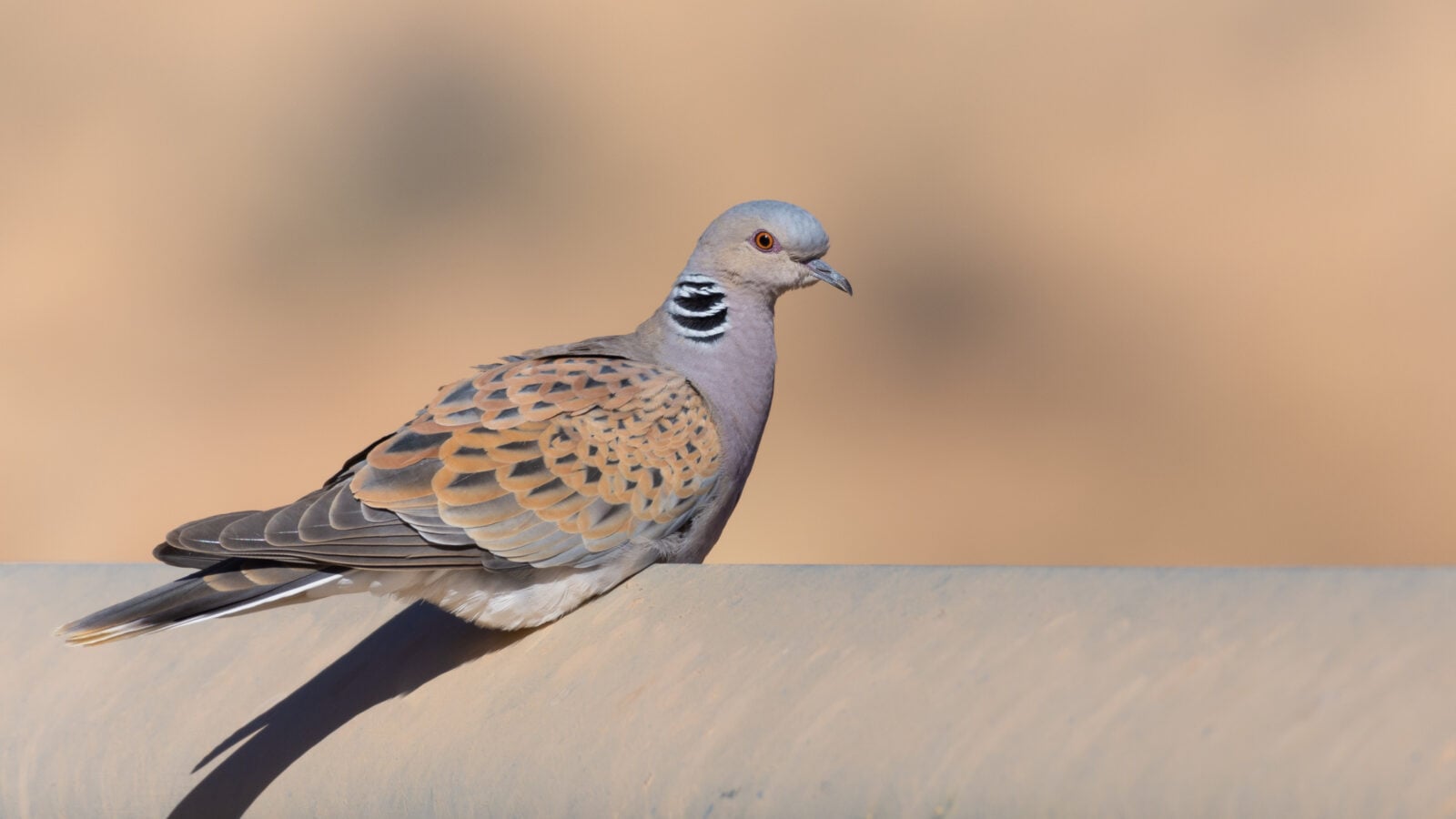
The UK’s turtle dove population fell by about 98% between the late 1960s and 2023, according to RSPB framing reported by BBC News on 7 September 2026. Against that backdrop, the South Downs National Park Authority released 30 captive-bred turtle doves in the Selborne area of Hampshire in spring 2026, inside the national park. About 100 more birds are being prepared for a further release next spring, in 2027.
The BBC headline described the release as “more than two dozen” birds. That is the same 30 birds, not a separate or larger figure. It matters because scale is the whole difficulty here: the number released is small, the decline it sits against is very large, and the distance between those two facts is the story rather than an inconvenient detail to be smoothed over.
What a 98% decline means before you count a single released bird
The turtle dove, Streptopelia turtur, sits on the UK red list under Birds of Conservation Concern, meaning it is judged to be at high risk of extinction in the UK. The RSPB, as reported by the BBC, describes it as the country’s fastest declining bird species, with numbers plummeting by about 98% in the UK between the late 1960s and 2023.
A 98% loss is easy to read past because percentages flatten. Practically, it means that for every hundred turtle doves present in Britain when the decline began, roughly two remain. It means a bird that was once an ordinary feature of English farmland summers became something most people in the UK have never heard, let alone seen. It means the baseline for any restoration work is not a healthy population needing a boost, but a remnant.
That framing changes how a 30-bird release should be read. Thirty is not a recovery number. It is a starting number, and it is being deployed into a landscape where the pressures that produced the decline are not automatically resolved by the arrival of new birds. Park ranger Paul Bushell, quoted by the BBC, noted the contrast between the bird’s familiarity in the festive carol and its scarcity in reality, and described urgent efforts to change the trajectory. Urgency is the operative word. It describes intent, not outcome.
Selborne: birds, plants, ponds, and a second cohort
The release near Selborne was not birds alone. The authority carried out habitat work alongside it, planting suitable vegetation including weedy wildflowers such as fumitory and vetch, which provide the kind of seed supply turtle doves feed on. Seven ponds were restored to give the birds places to drink and bathe close to nesting sites.
This is the part of the program most likely to be underweighted in a short news cycle, and it is arguably the more consequential half. Releasing captive-bred birds into a landscape that lacks food and water sources reproduces the conditions that emptied it. Planting seed-bearing wildflowers and restoring drinking water is an attempt to make the ground capable of holding birds, whether those birds arrive from an enclosure or under their own power. Small numbers of turtle doves are still living in the national park, according to Bushell via the BBC, so the habitat work is not solely for the released cohort.
The plan for about 100 more birds in spring 2027 should be read as continuation rather than escalation on the back of proven results. It is a second stage in a program designed with more than one release in it. Nothing reported establishes that the 2026 cohort has produced a measurable population effect, and no survival rate or return rate has been published. What exists is a first release, habitat groundwork, and a stated intention to release more.
Migration, one clutch of eggs, and the limits of a good spring
Turtle doves are, per the BBC, Europe’s only migratory dove species. The released birds were expected to fly roughly 3,000 miles, about 4,800 kilometers, to sub-Saharan Africa over the autumn, with the hope that they return in spring 2027. That journey is the point at which optimism becomes untestable for months. Migration exposes birds to hunting pressure, habitat loss along the route, and ordinary attrition. Until spring 2027 arrives, return numbers are unknown, and it would be wrong to project them.
The most quotable detail from the release period is also the one that needs the firmest handling. Bushell told the BBC the birds “seem really happy” and that one female came back into the enclosure to lay some eggs, which he called “incredibly encouraging.” That is an encouraging anecdote and it is worth reporting. It is not evidence of wild breeding success, and it is not a recovery milestone. A single female laying in an enclosure tells you the bird was in condition to lay and chose a familiar site. It does not tell you what the cohort will do across a landscape, or across a migration, or across years.
Bushell also expressed hope that the South Downs could become a stronghold for the species. A hope is a legitimate thing for a ranger to voice. What one spring cannot do is convert it into a claim.
What is fact-locked here is narrow and worth stating plainly: about a 98% UK decline between the late 1960s and 2023, red-list status, 30 captive-bred birds released near Selborne in spring 2026, habitat work including fumitory, vetch and seven restored ponds, and about 100 more birds planned for spring 2027. A release program is under way. A population rebound has not been demonstrated.