
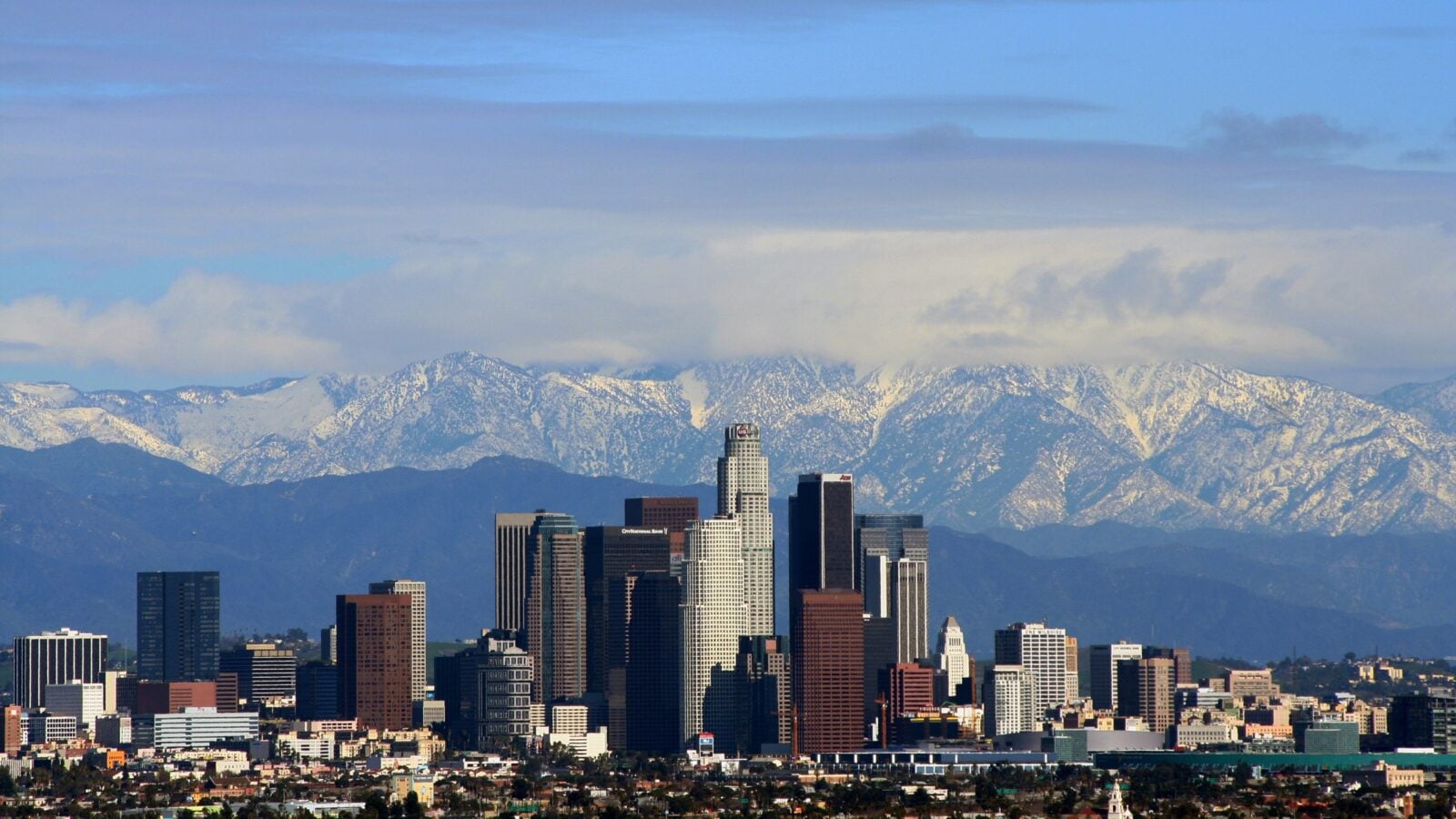
I used to live in Los Angeles. I live in Singapore now, and LA is still an amazing city to me. On 5 Oct President Donald Trump told a rally in Grand Island, Nebraska, “Let them take out Los Angeles. Let them take out San Diego,” and called it “a very small price to pay.”
Governor Gavin Newsom has directed California’s State Threat Assessment Center to monitor for foreign threats. His 6 Oct statement said the centre would “actively monitor the situation in the event that foreign actors interpret the President’s remarks as an invitation to target California.”
On 6 Oct the three agencies that run it, the Governor’s Office of Emergency Services, the state Department of Justice and the Highway Patrol, said there were no confirmed threats by Iran and that they were remaining vigilant.
Trump was defending the Iran war when the line came. FactCheck.org reads the passage as being about gas prices, and transcripts of the C-SPAN video differ on a few words around it. This piece quotes only the parts every version agrees on: “Let them take out Los Angeles. Let them take out San Diego” and, a sentence later, “a very small price to pay.”
He had said versions of it before. On 28 Sep in the Oval Office he said “let them take out a city with a nuclear weapon” and “let them hit us with a nuclear weapon.” In March, on oil prices, he said “a very small price to pay.” On the day of the Nebraska rally he told a local outlet that fuel costs were “a relatively small price to pay for keeping nuclear weapons out of the hands of a lunatic nation.”
Then the words started to move.
Newsom’s own post on X kept Trump’s verb: Trump “is now saying our foreign enemies should ‘take out’ Los Angeles and San Diego.” His press office then posted that “The President is advocating for an attack on 10+ million U.S. residents.” Senator Bernie Sanders wrote that “the annihilation of two major American cities” was “not a ‘small price to pay’.”
The state’s Democratic congressional delegation, led by Zoe Lofgren with Alex Padilla, Adam Schiff and 40 House members, said Trump “appeared, incredibly, to invite Iran to destroy two American cities” and asked him to apologise to more than 16 million people. By 7 Oct Newsom was writing about “the bombing of over 16 million Americans.” “Bombing” is not in the Grand Island transcript.
The White House moved the words the other way. On 6 Oct Trump waved off a reporter’s question on the White House lawn without answering. The White House explanation had already come, earlier that day, from his communications director, Steven Cheung, on X: “He was clearly stating U.S. cities would have been threatened if a nuclear Iran hadn’t been stopped.” That “would have been” is not in the Grand Island transcript either. FactCheck.org, for its part, reached a similar reading, calling it “a more plausible interpretation” of what he meant. A White House spokesperson pointed FactCheck.org to Cheung’s post.
On 7 Oct in San Antonio, Trump came back to it himself: “Let them hit a missile into San Diego or Los Angeles on the way … We’re not going to let that happen. We protect our cities.” The two sentences after the ellipsis were new. He did not retract the Nebraska line or apologise for it.
To me it is a crazy thing for a sitting president to say, whichever reading you take. What I am sick and tired of is what happens next, the woke-versus-whatever framing where each camp’s retelling becomes the story. Lay the posts out in order and you can see both sides adding words to the same 30 seconds. You don’t have to pick a team to see it.
That leaves the order itself. The State Threat Assessment Center is California’s main state centre for sharing threat information among police and emergency agencies. It was opened after the September 11 attacks and its three partners signed a formal agreement in 2009. The Highway Patrol has day-to-day command.
It works alongside regional centres in Sacramento, San Francisco, Los Angeles, Orange County and San Diego. Newsom’s instruction asks it to watch for anyone who might treat the president’s words as an opening. It is not a finding that anyone has.
On the question of whether Iran could reach either city, the Center for Strategic and International Studies’ missile tracker says “Iran has not yet tested or deployed a missile capable of striking the United States.” Its Khorramshahr reaches 2,000 to 3,000 km, and the Simorgh used as a ballistic missile about 4,000 km, which CSIS calls “still too short to reach the continental United States.” The most recent public US intelligence judgements on Iran’s missile reach, from DIA in 2025 and ODNI earlier this year, were written before most of the seven months of strikes, and as of this writing nobody has published an updated public estimate.
Tehran to Los Angeles is about 12,190 km in a straight line. Tehran to San Diego is about 12,320 km.
Sources
- Governor of California, 6 Oct 2026
- Cal OES State Threat Assessment Center page
- ABC10 via Yahoo, 6 Oct 2026 (7 Oct 01:50 UTC)
- C-SPAN, Grand Island rally, 5 Oct 2026
- FactCheck.org, 6 Oct 2026 (updated 8 Oct)
- Patch, California delegation statement, 7 Oct 2026
- The Hill, California delegation statement, 7 Oct 2026
- NBC News, San Antonio rally, 7 Oct 2026
- Gavin Newsom on X, 7 Oct 2026 (8 Oct 03:26 UTC)
- CSIS Missile Threat, Iran