Most media is now organized around us versus them. Algorithms reward the posts that make people angry, readers reward the outlets that feed their tribe, and a publisher that holds a careful line on every story has a hard time making it pay. The people saying something worth hearing are still out there, all through the ecosystem. They are just buried under the angrier posts.
None of this is new. We live in an age of culture wars, but the machinery behind them is more than a century old. Each era found a new way to sell the story with a side to cheer, and each one made the thing underneath harder to see. This is how the noise was built.
1890s
Outrage sells
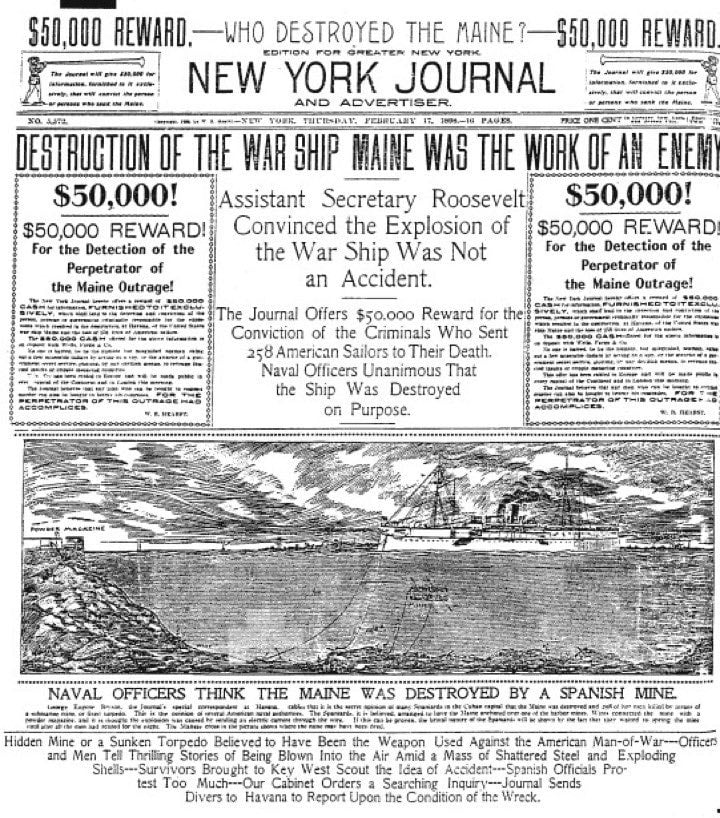
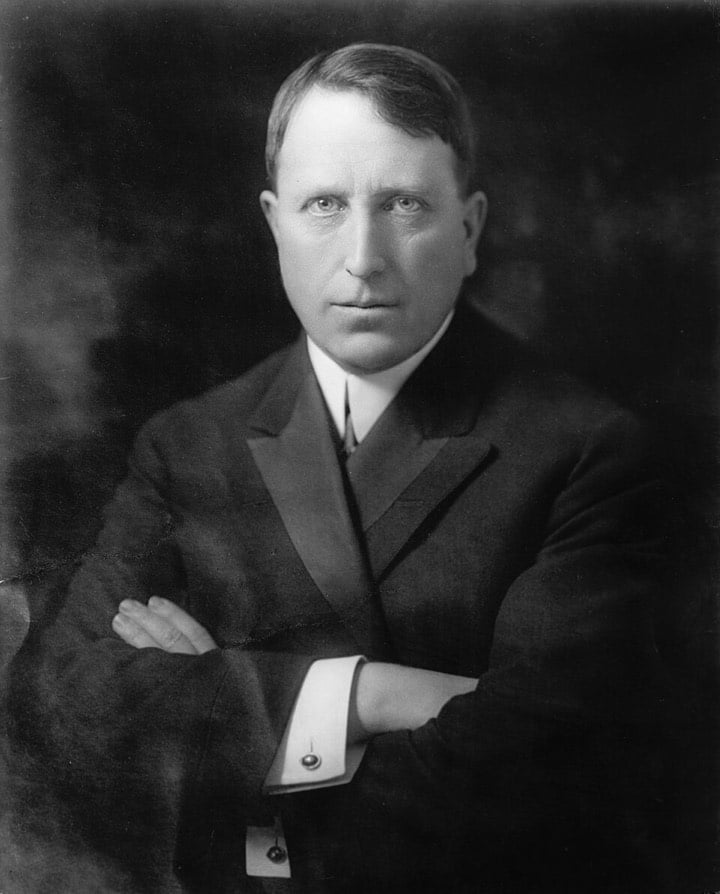
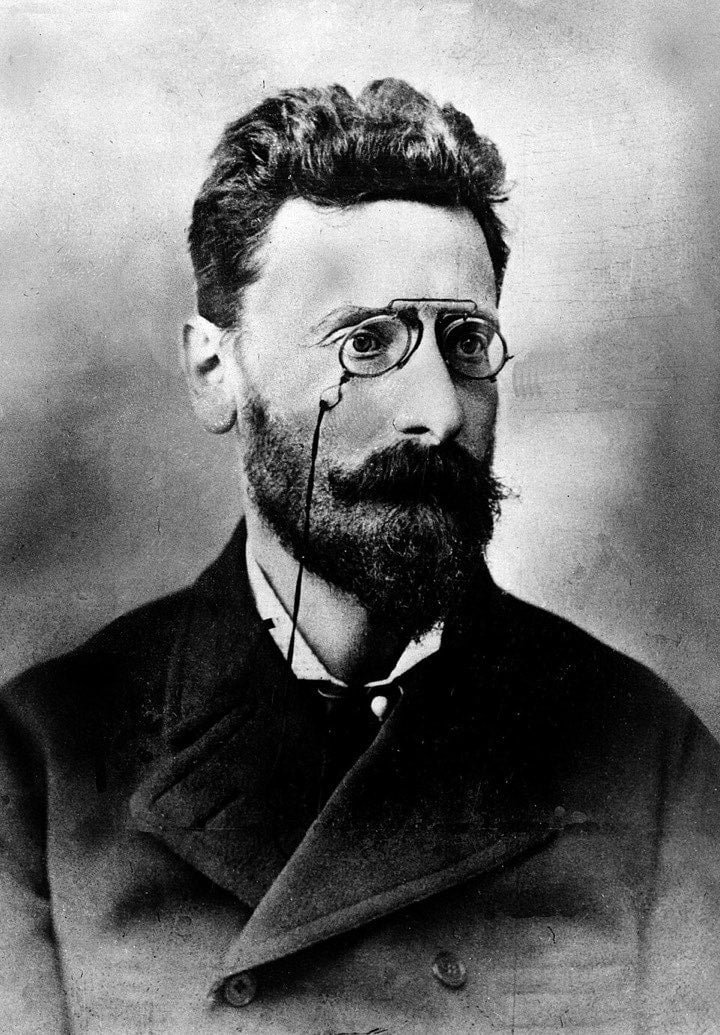
Hearst and Pulitzer fought for New York’s readers with screaming headlines, crusades and invented villains. They discovered the rule every era since has relearned: a story that makes people angry sells more than one that makes them think.
New York Journal, 17 February 1898Two days after the USS Maine exploded in Havana harbour, William Randolph Hearst’s paper told readers it was “the work of an enemy” and offered a $50,000 reward. Nobody knew what had happened. The cause is still disputed. The United States was at war with Spain two months later.New York Journal, 1898. Public domain, via Wikimedia Commons.William Randolph HearstBuilt America’s biggest newspaper chain on scare headlines and crusades. His circulation war with Joseph Pulitzer gave the style its name: yellow journalism.Harris & Ewing, Library of Congress. Public domain.Joseph PulitzerOwner of the New York World and Hearst’s great rival. His will later funded the journalism school and the prizes that carry his name.Public domain, via Wikimedia Commons.
1896–1910s
News for millions
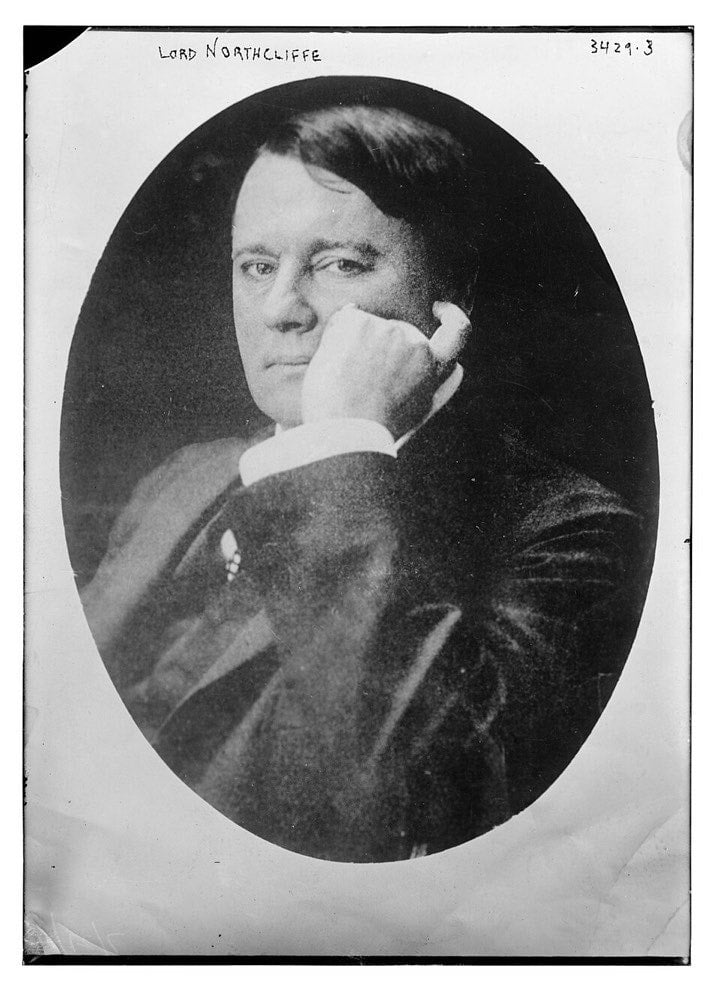
Cheap papers and mass literacy turned news into a product. In London, Alfred Harmsworth, later Lord Northcliffe, sold the Daily Mail for half the price of its rivals and found an audience in the millions. The owner of the paper became a political force in his own right.
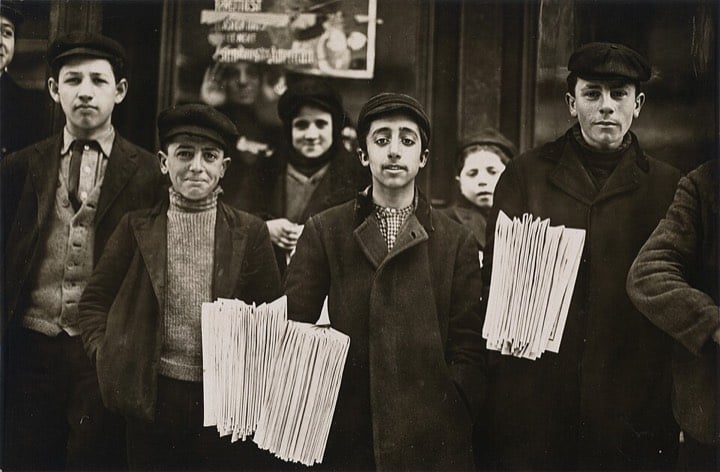
Lord NorthcliffeFounded the Daily Mail in 1896 as a cheap paper for millions of new readers, and later owned The Times. The first press baron to use his papers to run his own political campaigns.Bain News Service, Library of Congress. Public domain.Newsboys, Hartford, 1909The news as a product, sold by the shout on every street corner. The loudest headline sold the most papers.Lewis Hine, 1909. Public domain.
1948
Wrong on the front page
Papers printed what they expected to be true. Sometimes the expectation was the story.
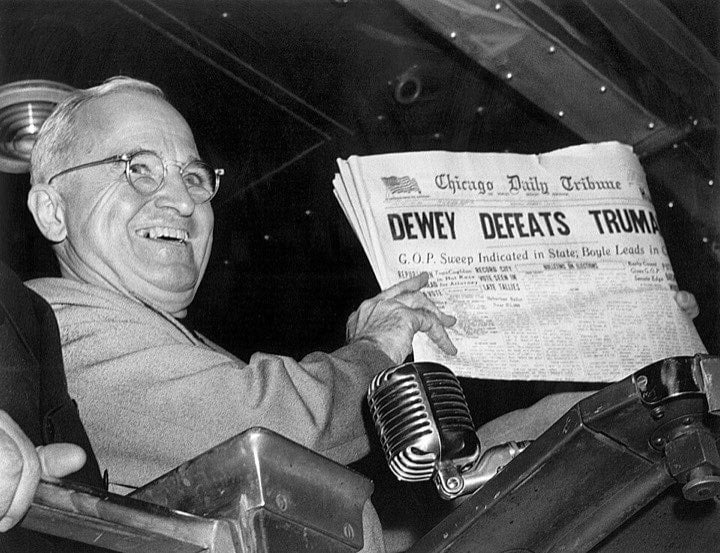
Chicago Daily Tribune, 3 November 1948The paper went to press before the votes were counted, on the strength of the polls and its own expectations. Truman won, and held up the front page for the cameras. Every publication gets things wrong. What counts is what it does next.Byron H. Rollins. Public domain.
1960–1980
One screen, one story
Television gathered the country in front of the same few broadcasts. People disagreed about what the news meant, but most of them had seen the same news.
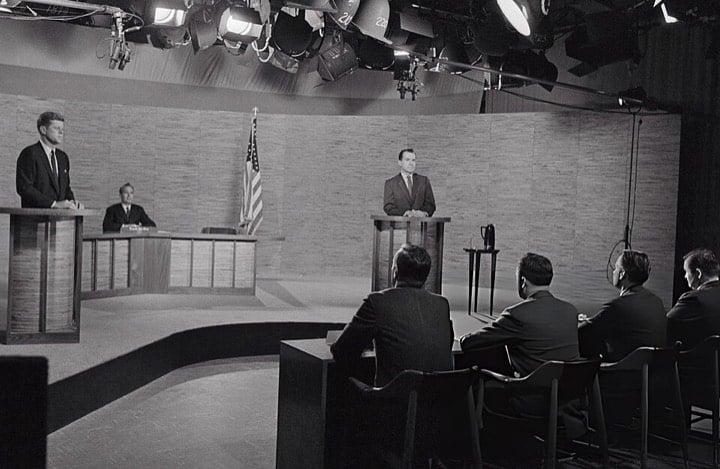
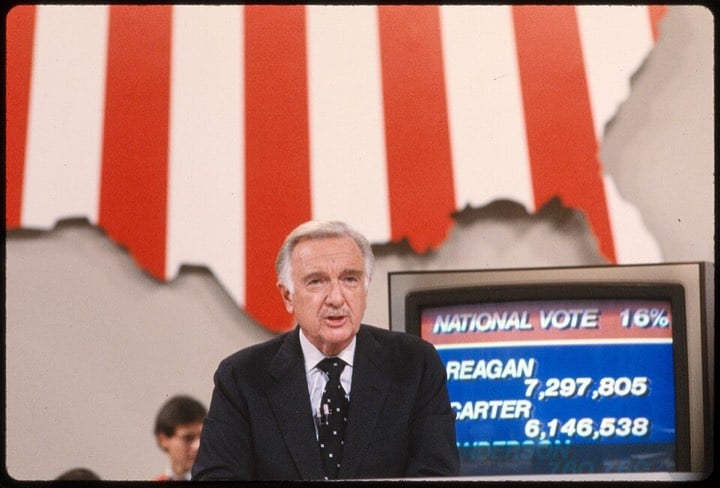
Kennedy and Nixon, 26 September 1960The first televised presidential debate. From then on, how a message looked mattered as much as what it said.United Press International. Public domain.Walter Cronkite, CBS NewsFor two decades a few evening broadcasts gave most Americans a shared set of facts. In 1968 Cronkite told viewers the Vietnam war seemed “mired in stalemate”, and said plainly that this was his opinion. A position, clearly labelled and signed.Bernard Gotfryd, Library of Congress. Public domain.
1969–1990s
The tabloid turn
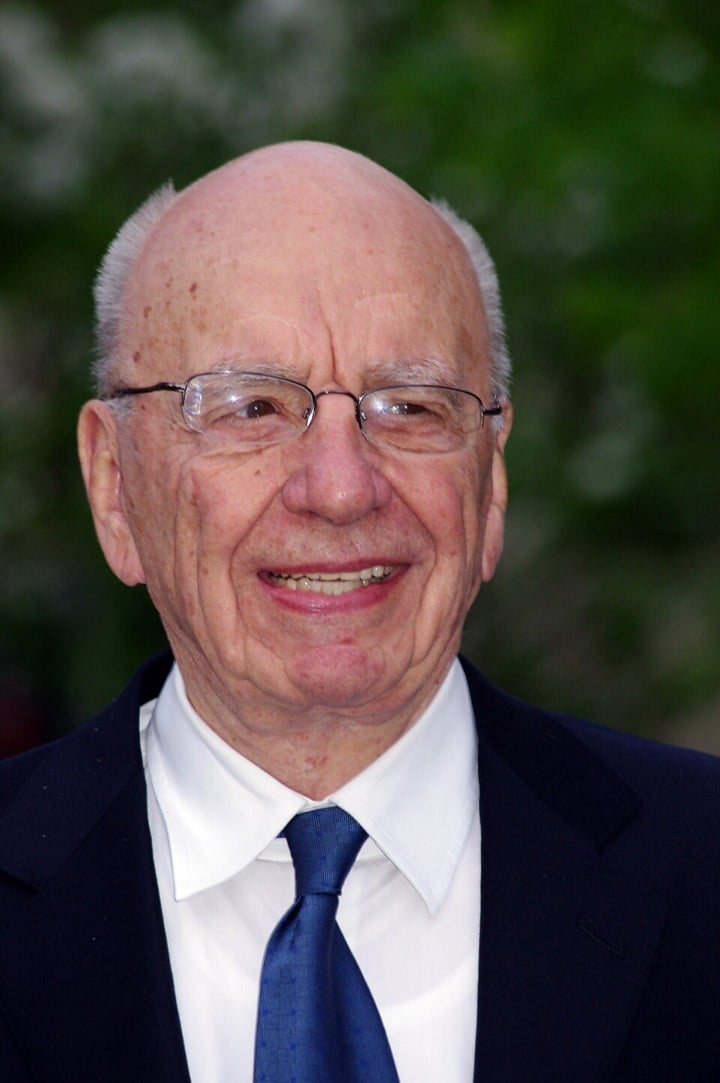
Rupert Murdoch bought The Sun in 1969 and turned it into a tabloid. The formula was loud, funny, cruel and partisan, and it worked. Politics became a story with a side to cheer, told in headlines people still quote decades later.
Rupert MurdochBought The Sun in 1969 and made it the tabloid that set the tone of British politics for a generation: news as entertainment, politics as a side to cheer. In America he went on to buy the New York Post and launch Fox News.David Shankbone, 2011. CC BY 2.0.
The Sun · 4 May 1982GotchaOn the sinking of the Argentine cruiser General Belgrano. More than 300 sailors died.New York Post · 15 April 1983Headless body in topless barMurdoch had bought the Post in 1976.The Sun · 13 March 1986Freddie Starr ate my hamsterIt never happened. The publicist behind it later said he made it up.The Sun · 11 April 1992It’s The Sun wot won itThe day after John Major’s surprise election win.
1987–1996
Pick a side
In 1987 the US Federal Communications Commission scrapped the Fairness Doctrine, which had required broadcasters to air contrasting views on controversial issues. In 1996 Fox News and MSNBC launched. Cable news learned that loyalty pays better than balance.
August 1987The Fairness Doctrine is abolished.
2009–now
The feed
In 2009 Facebook added the Like button and Twitter added the retweet. The audience became the editor, and the stories that travel furthest are the ones that provoke us. In 2016 Oxford Dictionaries chose its word of the year: post-truth.
Word of the year, 2016post-truth
Daily Mail · 4 November 2016Enemies of the peopleAbout three High Court judges who ruled that Parliament must vote on starting Brexit.
Now
Underneath the noise
Every era made the noise louder and the thing underneath it harder to see.
DMNews began in 1979 as Direct Marketing News, the trade paper of reaching people directly. For most of its life, “direct” referred to how a message got to a buyer: mail, then email, then everything that followed. Today the word means something else to us. We still care about messages that reach people directly. Now we look for the one underneath the noise: the thing every side has to hear.
That is what Direct Message News is for. Every week we take one of the stories that divide us apart, and go looking for what sits underneath it.