
If you’re an American looking to spend your golden years somewhere exciting—and where your Social Security check can stretch a lot farther—Europe might be calling your name. Despite Europe’s reputation for ancient castles and chic, modern cities, there are plenty of places where the cost of living is surprisingly friendly on a modest budget.
From sunny Mediterranean towns to historic Eastern European gems, you might be amazed at just how comfortably you can live as an American retiree on Social Security alone.
Below, we’ll explore four European cities that offer a wonderful quality of life while still being accessible for those relying on Social Security.
1. Valencia, Spain
Overview:
Valencia is Spain’s third-largest city and is known for its laid-back lifestyle, fabulous beaches, and world-famous paella. It sits on the southeastern coast of the Iberian Peninsula, which means it boasts mild winters and warm summers.
Even though it’s a metropolitan area with more than 750,000 people, Valencia never feels as hectic as Madrid or Barcelona. It offers a superb balance between big-city amenities and the slower rhythm of traditional Spanish life.
Cost of Living:
For an American retiree on Social Security, Valencia is a tempting option. While it’s more expensive than some smaller Spanish towns, it’s still more affordable compared to many major U.S. cities. A one-bedroom apartment in a decent neighborhood might range from $600 to $900 a month.
Utilities, groceries, and local transportation are also relatively inexpensive by American standards. Public healthcare in Spain is highly regarded, and while you might consider private coverage as a foreign resident, it’s still more affordable than health insurance in the U.S.
Lifestyle and Culture:
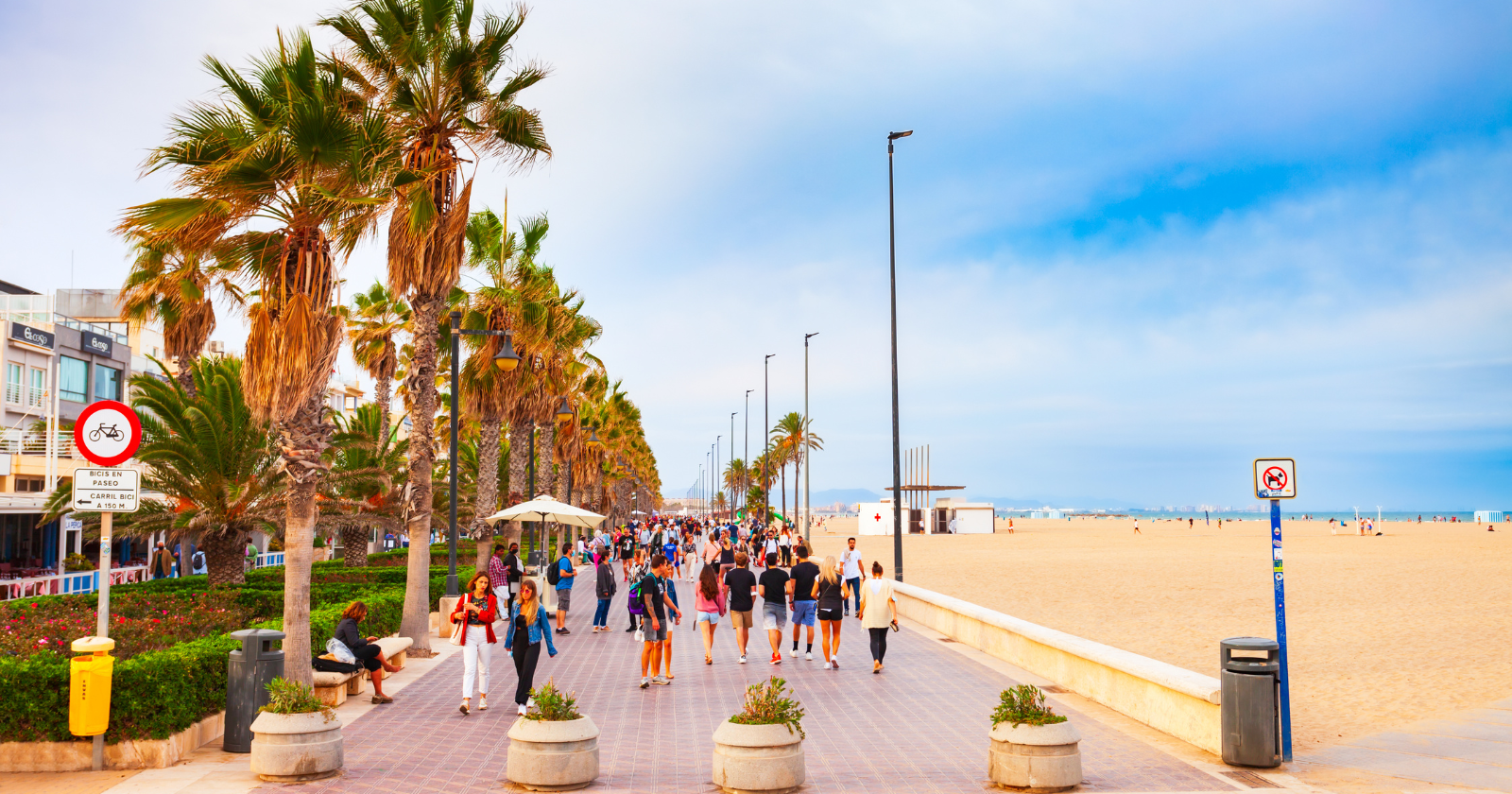
Valencia offers the best of many worlds. You can stroll along the Turia Gardens, a massive park in a former riverbed that circles the city center. Explore the futuristic architectural marvels at the City of Arts and Sciences, or spend lazy afternoons by the Mediterranean Sea at Malvarrosa Beach.
The local food scene is a delight: try authentic paella (Valencia is the birthplace of this iconic dish) or sample a glass of refreshing horchata (a sweet drink made from tiger nuts).
The city’s vibe is vibrant yet relaxed. Traditional festivals like Las Fallas add a cultural flair that’s unique to this region. It’s not unusual to see older folks out strolling after dinner (the “paseo”) and enjoying Valencia’s famously mild climate. Social Security can often cover your basic expenses comfortably here, leaving enough wiggle room to indulge in the local tapas scene once in a while.
2. Porto, Portugal
Overview:
Portugal has been skyrocketing in popularity for expats, and it’s easy to see why. It has a pleasant climate, affordable property prices, and a warm, welcoming population.
While Lisbon gets a lot of attention as the capital, Porto in the north of Portugal has its own unique charm. It’s famous for the Douro River and the iconic Dom Luís I Bridge, postcard-worthy views, and of course, port wine. With colorful houses lining narrow cobbled streets, this city’s old-world charm might win your heart from day one.
Cost of Living:
Compared to major U.S. cities, Porto is a bargain. Rent for a one-bedroom apartment in a central location could be around $700 to $1,000 per month. If you choose to live slightly outside the city center, costs drop significantly. Groceries, transportation, and dining out also remain quite affordable.
Many retirees living in Porto mention that their monthly expenses easily stay below $2,000, which can be manageable on Social Security, depending on your benefit amount. Portugal also offers a special tax regime for foreign residents, potentially benefiting retirees who plan carefully.
Lifestyle and Culture:
Life in Porto moves at a gentler pace. The Portuguese concept of “saudade” (a word that roughly translates to nostalgic longing or yearning) infuses daily life with a sense of warmth and depth. Locals are known for their friendliness and hospitality. You’ll find plenty of cafes serving coffee and pastries (like the famous pastel de nata) that you could enjoy every morning.
Along the riverfront in the Ribeira district, you’ll see a truly enchanting side of Porto—people chatting, musicians playing, and ferry boats crossing the Douro. There’s also a decent expat community here, making it easier to find English speakers and settle into a social circle.
If you’re a wine lover, the local port cellars across the river in Vila Nova de Gaia are a paradise. Plus, getting around is easy. Porto’s public transportation system is well-developed and inexpensive compared to U.S. standards.
3. Split, Croatia
Overview:
Croatia’s stunning Adriatic coastline is dotted with towns that combine historic charm with modern amenities. One of the most enticing of these is Split, the second-largest city in the country.
Situated on a peninsula surrounded by the crystalline sea, Split is full of Roman-era ruins, palm-lined promenades, and a comfortable Mediterranean climate. Whether you’re relaxing at a café along the Riva waterfront or exploring the maze-like streets of the Old Town, Split has a magical vibe that’s hard to resist.
Cost of Living:
Despite Croatia’s growing popularity as a tourist destination, Split remains relatively affordable for retirees. Rent for a one-bedroom apartment in the city center ranges from approximately $500 to $800 per month, and living outside the center can reduce that further.
Groceries and dining out are noticeably cheaper than in most American cities. Croatia joined the European Union in 2013 and adopted the euro in 2023, which has simplified financial matters for expats. Healthcare costs are also significantly lower than in the U.S., though retirees should research private insurance options to ensure comprehensive coverage.
Lifestyle and Culture:
Split’s crown jewel is Diocletian’s Palace, a UNESCO World Heritage Site that dates back to the 4th century. But the city is far from being a museum piece—it’s a living, breathing community where ancient history blends seamlessly with modern cafés, restaurants, and nightlife.
The pace of life here is wonderfully slow. Locals take their time over coffee, and the waterfront promenade comes alive each evening with people of all ages socializing and enjoying the sunset over the Adriatic. The surrounding islands—Brač, Hvar, and Vis—are easily accessible by ferry for weekend getaways.
For American retirees, Split offers an appealing combination of affordability, natural beauty, and rich history that’s hard to match elsewhere in Europe.
4. Budapest, Hungary
Overview:
Budapest, Hungary’s capital, is often called the “Paris of the East” for its stunning architecture, grand boulevards, and vibrant cultural scene. Straddling the Danube River, the city is actually two historic cities—Buda on the hilly west bank and Pest on the flat east bank—connected by a series of beautiful bridges.
With its famous thermal baths, world-class museums, and thriving food scene, Budapest offers a remarkably rich lifestyle at a fraction of the cost of Western European capitals.
Cost of Living:
Budapest is one of the most affordable major cities in Europe. A one-bedroom apartment in a central neighborhood can be rented for $500 to $800 per month, and costs drop further in less central areas. Groceries, public transportation, and dining out are all significantly cheaper than in the U.S.
A comfortable monthly budget in Budapest—including rent, food, transportation, and entertainment—can often come in under $1,500 to $1,800, making it very manageable on a typical Social Security benefit. Hungary’s healthcare system also offers affordable options for foreign residents, including reasonably priced private insurance plans.
Lifestyle and Culture:
Budapest is a city that rewards exploration. From the Buda Castle district and Fisherman’s Bastion to the ruin bars of the Jewish Quarter, there’s always something new to discover. The city’s famous thermal baths—including Széchenyi and Gellért—offer a uniquely Hungarian way to relax and socialize.
The culinary scene is excellent, with traditional Hungarian dishes like goulash, chicken paprikash, and chimney cake available at very reasonable prices. The city also has a thriving arts and music scene, with opera performances and concerts that are far more affordable than their equivalents in Western Europe or the U.S.
Budapest has a growing expat community, and many locals—especially younger Hungarians—speak English well. The city’s excellent public transportation system, including its historic metro line, makes getting around easy and inexpensive.
Final thoughts
Retiring abroad on Social Security might sound like a pipe dream, but for many American retirees, it’s a realistic and rewarding option. Cities like Valencia, Porto, Split, and Budapest offer a combination of affordability, culture, and quality of life that can be hard to find back home.
The key is doing your research, understanding visa requirements and tax implications, and being open to a new way of life. With thoughtful planning, your Social Security check could go much further than you ever imagined—and you might just find yourself living like royalty in one of Europe’s most enchanting cities.