
To learn more about our editorial approach, explore The Direct Message methodology.
At twenty, independence meant needing no one. That was the whole definition, and I was proud of it. It meant being able to leave — and I did leave, all the way across the world from where I grew up — carrying the private conviction that the strongest version of a person was the one who required nothing from anybody. Asking for help was a small defeat. Leaning was for people who could not stand on their own. Freedom, as far as I understood it then, was the distance between me and any obligation.
I do not think twenty-year-old me was entirely wrong, but she misread the assignment. What I called independence was at least partly armor. Needing no one is not the same as being strong; quite often it is a way of making sure no one can let you down, which is really a way of being a little afraid. There is a particular loneliness to that kind of self-sufficiency, and you can mistake it for freedom for years, because it does feel light. It is only later that you notice how much of that lightness was just the absence of anyone close enough to weigh on you.
I can still feel the appeal of it. At twenty I crossed oceans on the strength of that belief, landing in places where I knew almost no one and treating that as a kind of accomplishment — look how little I require. I turned down help I could have used. I under-called home. I read my own loneliness as evidence of strength rather than the cost of a theory I had not yet examined. It took years to notice that needing no one had quietly become its own small prison, just with a nicer view.
At thirty — where I am writing from now — the definition has quietly flipped. Independence is no longer about needing no one. It is about getting to choose, carefully, whom I let need me. That is a completely different thing, and it took me most of a decade to feel the difference. I married. I had a child, with another arriving any moment. I deliberately wove myself into a small set of lives that now depend on me, and that I depend on in turn — and none of it feels like the loss of freedom that my twenty-year-old self would have feared. It feels like the point.
What changed is where the freedom actually lives. At twenty, the prized scarcity was independence itself — how few people I needed. At thirty, the scarce and valuable thing is discernment: whom to let in, whom to take responsibility for, whose call I will always pick up. I cannot be infinitely available; nobody can. So the grown-up version of independence is not refusing all ties. It is choosing my ties on purpose, and then honoring them — which, it turns out, takes far more strength than keeping everyone at arm’s length ever did.
In practice this looks almost ordinary. It looks like a standing weekly evening with my husband that we guard against everything else trying to claim it. It looks like the short list of people who can call at any hour and get a yes. It looks like deciding, with some care, who gets that kind of access to me and my time, and then giving it fully and without resentment. I have fewer open doors than I did at twenty, and far warmer rooms behind the ones still open.
There is a quiet irony buried in this that the research on aging makes explicit. We treat independence and dependence as opposites, but as one Northwestern Medicine discussion of the subject puts it, the more accurate word for how people actually live is interdependence: “No one is truly independent.” The most secure, capable people are not the ones who need nobody; they are the ones secure enough to both lean and be leaned on without it threatening their sense of self. The independence I was so proud of at twenty was, in that light, a slightly anxious half-version of the real thing.
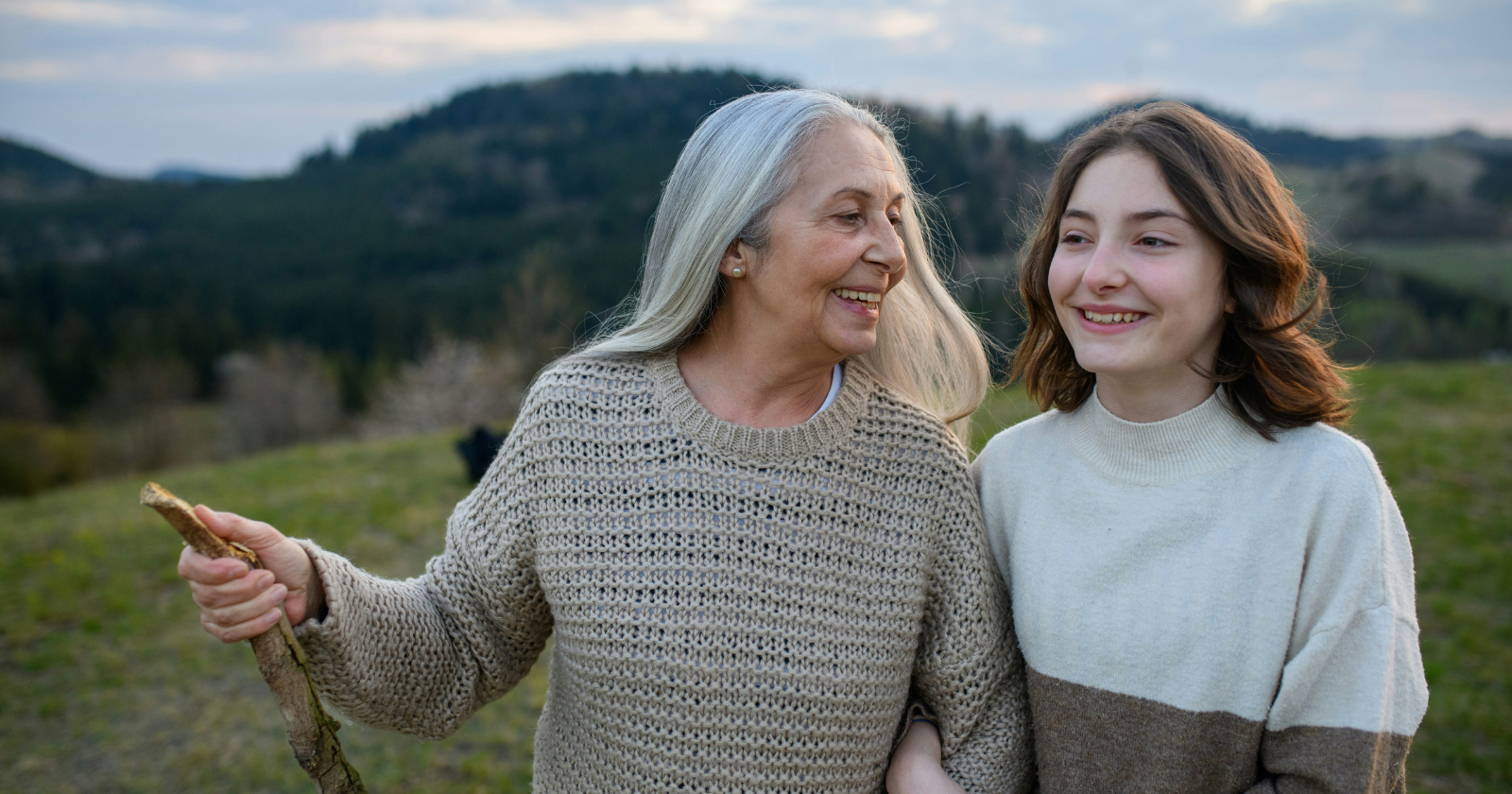
And I suspect it changes again. I cannot speak for sixty — I have not been there, and I am wary of pretending I can see around that corner. But I have a guess, watching the generation ahead of me. I suspect that at sixty, or seventy, independence quietly turns back toward something twenty-year-old me would have hated: letting yourself be needed less and cared for more, allowing the people you spent decades holding up to begin, gently, to hold you. To accept help without reading it as decline. To let your grown children worry about you the way you once worried about them. That may be the hardest version of all — not the independence of needing no one, but the security of being able to be needed and to need, in turn, without shame.
When needing no one turns out to be its own small prison
The most secure, capable people are not the ones who need nobody — they are the ones secure enough to both lean and be leaned on without it threatening their sense of self. The independence worth having is not the absence of ties. It is the confidence to choose them.
If there is a thread running through all three stages, it is that independence was never really about the number of people you need. That was the rookie mistake — counting. It is about whether your ties are chosen or merely defaulted into, whether you are bound to people freely or out of fear of being alone, and whether you can let the connection run in both directions without feeling diminished. At twenty I thought the goal was to need as little as possible. I think now the goal is to need and be needed well — by the right people, on purpose, with your eyes open.
So I hold this decade’s definition a little loosely, the way I wish I had held the last one. The twenty-year-old who needed no one was not free; she was just unencumbered, which is a thinner and lonelier thing. The thirty-year-old choosing her dependencies is closer to the truth. And whoever I become at sixty will, I hope, revise it again — because the fact that the definition keeps changing is not a sign I keep getting it wrong. It is a sign I am still growing into it.