

A new national data analysis makes a troubling pattern visible without settling its cause. A September 9, 2026, ProPublica analysis of CDC records found that almost 200 women died after an ectopic pregnancy from 2020 through 2025. About 100 such deaths were recorded during the preceding six years.
The reporters used the CDC WONDER multiple-cause-of-death database, identifying records that included the ICD-10 code for ectopic pregnancy. Because the annual totals were small, they grouped the results into multiyear periods to reduce year-to-year volatility and remain above the database’s suppression thresholds.
The increase appeared nationwide, but the climb was steeper in states that had enforced abortion bans beginning at six weeks or earlier for a significant period after the Supreme Court’s 2022 Dobbs decision. ProPublica compared those states with jurisdictions that never enacted a post-Dobbs ban and excluded six states whose restrictions began later or were in effect only briefly.
That comparison establishes an association, not causation. It does, however, create a clear question for public-health agencies: why did the increase persist, and why did it become more pronounced in the strict-ban group?
An ectopic pregnancy occurs outside the uterine cavity, most commonly in a fallopian tube. According to the American College of Obstetricians and Gynecologists’ practice bulletin, cases detected early can generally be treated with methotrexate or minimally invasive surgery. A ruptured tubal pregnancy can cause severe internal bleeding and requires urgent surgical treatment.
The legal picture is less uniform than the original headline suggested. A 2024 KFF review of state abortion bans found that every ban then in effect contained an exception intended to prevent the death of the pregnant patient. However, only some state statutes specifically stated that ectopic-pregnancy care was not criminalized.
The practical dispute is therefore not whether a ruptured ectopic pregnancy may be treated. The more difficult question arises earlier, when a patient has pain, bleeding and a positive pregnancy test, but an ultrasound cannot yet show where the pregnancy has implanted.

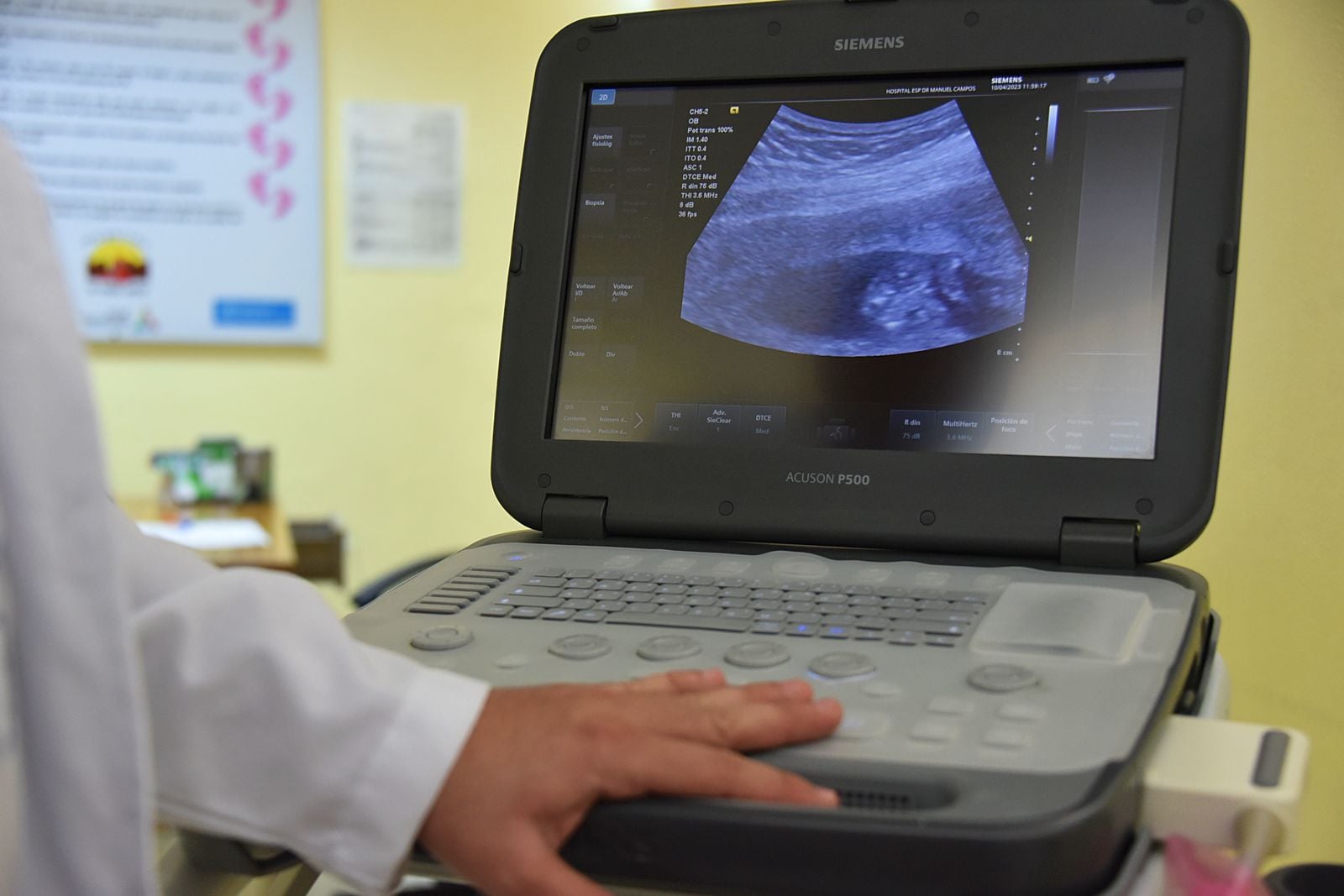
Early in pregnancy, the absence of a visible gestational sac does not by itself confirm an ectopic pregnancy. It may indicate an ectopic pregnancy, a miscarriage or an intrauterine pregnancy that is still too early to see. Clinicians may need repeated blood tests and ultrasounds to establish what is happening.
ProPublica’s reporting found that this diagnostic interval can become a legal pressure point. In a state without an abortion ban, a patient may decide with a clinician that the risk of waiting is unacceptable. In a strict-ban state, clinicians may seek stronger diagnostic certainty before ending the pregnancy because they are concerned that their judgment could later be challenged.
That does not mean every physician delays treatment or that every delay results from abortion law. It means the law can alter the risk calculation during a period when medical certainty may take time. KFF’s review similarly found that vague or non-clinical exception language can expose physicians to prosecution, imprisonment, fines and professional-license consequences if authorities later reject their judgment.
Two documented cases illustrate how that uncertainty can affect care. Kyleigh Thurman sought emergency treatment in Texas in 2023 and was sent home by two emergency departments before her right fallopian tube ruptured. She ultimately required surgery to remove it.
Federal regulators found in 2025 that Ascension Seton Williamson failed to screen Thurman properly for a suspected ectopic pregnancy and did not call an OB-GYN, violating hospital policy and federal emergency-care requirements. Thurman has an ongoing malpractice lawsuit against Ascension Seton Williamson and Ascension Seton Highland Lakes. The hospitals have denied her allegations and said their clinicians provide medically indicated treatment for serious or life-threatening pregnancy conditions.
In a separate case reported by ProPublica, federal regulators cited Mercy Hospital in Fort Smith, Arkansas, for failing to provide care during the eight hours a patient waited to be seen. The patient had visited hospitals in Arkansas and Oklahoma while experiencing worsening pain and bleeding before eventually receiving methotrexate in Kansas. Mercy declined to comment on the case and said it provides medically indicated treatment in urgent, life-threatening situations.
Two regulatory cases cannot establish a national trend. Their significance is that they show the type of delay maternal-health specialists warned could occur when strict abortion penalties met the uncertainty of early-pregnancy diagnosis.
The demographic pattern also needs restraint. Ectopic pregnancy is more common among older women, but ProPublica found that the recent increase in deaths was more pronounced among younger women. The data does not explain why. Access to specialists, insurance coverage and emergency-department capacity deserve study, but the current analysis cannot assign the age pattern to any of those factors.
The pandemic is another important complication. Disruption to hospitals and emergency care probably contributed to at least some deaths beginning in 2020. States that later enacted strict bans also tended to have weaker maternal-health outcomes before Dobbs, making it difficult to isolate the effect of abortion policy from Medicaid coverage, hospital access and other structural differences.
Maternal-health experts consulted by ProPublica therefore stopped short of saying abortion bans caused the national increase. They said the documented treatment delays and the steeper rise in strict-ban states make the laws an important factor to investigate. That distinction matters: uncertainty about cause is not a reason to ignore a serious pattern, but it is a reason not to overstate what the data proves.
The federal response remains limited. ProPublica reported that no federal agency had publicly addressed the increase, despite the underlying death records being available through the CDC. The United States also does not conduct national reviews of individual maternal deaths, leaving much of that work to state and local committees that may encounter ectopic deaths too infrequently to recognize a broader pattern.
Political arguments, including state ballot fights such as Missouri’s Amendment 3, usually focus on elective abortion and the legal status of viable pregnancies. Ectopic care exposes a different problem: even when lawmakers, physicians and advocates agree that treatment should be permitted, uncertainty about how the law will be enforced can still shape what happens in an emergency department.
Written exceptions remain important, but their existence is not the final measure of whether a law works. The meaningful test is whether a patient with a suspected ectopic pregnancy can receive appropriate care before a tube ruptures, rather than only after the danger becomes undeniable.
The current evidence cannot attribute every additional death to an abortion ban. It can establish that deaths involving ectopic pregnancy have risen sharply, that the increase has been steeper in strict-ban states and that serious treatment delays have been documented. That is enough to justify closer federal review, clearer state guidance and systematic tracking of outcomes before more cases disappear into isolated hospital files.