

Here’s something that doesn’t quite make sense on the surface: a 34-year-old attorney in Chicago — let’s call her Diane — speaks conversational Korean, wakes up at 3 a.m. to watch a livestream of seven men eating dinner in Seoul, and has cried harder over a K-pop member’s enlistment letter than she did over her own divorce. She knows this sounds unreasonable. She’ll tell you so herself, laughing, before explaining — with startling precision — exactly why the bond she feels isn’t what you think it is.
I’ve been turning this over for a while now. Not because K-pop fandom is new — it isn’t — but because the dismissal of it is so reflexive and so wrong. The standard narrative treats these attachments as parasocial delusion, teenage hysteria dressed up in streaming numbers. But the psychological architecture underneath K-pop fandom is genuinely different from anything Western pop music has produced. And the people inside it know something the people outside it keep missing.
The difference isn’t intensity. Deadheads were intense. Beliebers were intense. Swifties are intense right now. Intensity is the baseline requirement for any fandom worth its name. What makes K-pop bonds structurally different is something I’d call reciprocal intimacy infrastructure — an ecosystem deliberately engineered to simulate, and in some cases genuinely produce, bidirectional emotional investment between artist and fan.
Consider what Marcus, a 27-year-old software developer in Atlanta, described to me about his experience as an ARMY. “It’s not like being a fan of a band,” he said. “It’s like being in a relationship where the other person actually shows up.” He was talking about V-Lives, Weverse posts, behind-the-scenes content that runs into thousands of hours — the constant, ambient presence of artists sharing meals, worries, creative struggles, and inside jokes. Western artists post curated content. K-pop artists — or rather, the systems surrounding them — create what feels like cohabitation.
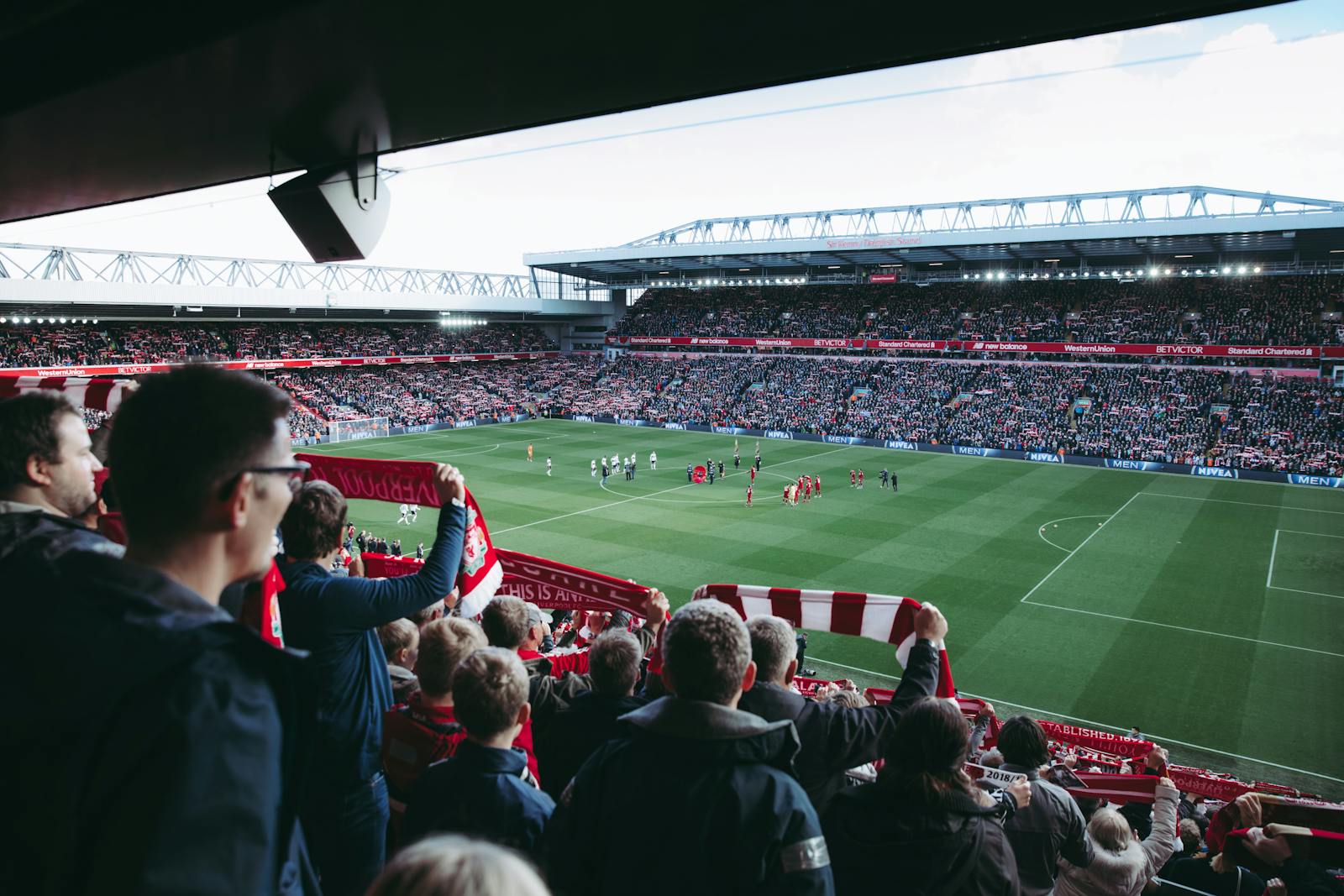
This isn’t accidental. The K-pop industry understood something about human attachment long before Western entertainment caught on: that emotional bonds deepen not through spectacle but through mundanity. Psychologist Robert Zajonc’s mere exposure effect — the finding that repeated, low-stakes exposure to a stimulus increases affection for it — is the invisible engine of the entire idol system. You don’t fall deeply for someone because of their concert. You fall for them because you watched them burn scrambled eggs on a Tuesday morning livestream and laugh about it. As we explored in a piece on why ARMY won’t let go even during BTS’s hiatus, this bond doesn’t evaporate when the music stops — because the music was never the whole point.
Research published in Psychology of Popular Media found that parasocial relationships with media figures activate the same neural pathways as real-world social bonds — including the same attachment systems triggered by close friendships and romantic partners (Liebers & Schramm, 2019). K-pop doesn’t just accidentally trigger these pathways. It architects for them. The content cadence — daily posts, weekly variety shows, monthly behind-the-scenes documentaries, comeback teasers dripped out over weeks — mirrors the rhythm of an actual relationship. There is always something happening. There is always a reason to check in.
But here’s where it gets more interesting — and more uncomfortable for people who want to pathologize this. The bonds aren’t just between fan and idol. They’re between fan and fan.
Sonia, a 41-year-old nurse in Manchester, England, told me she found her “truest community” not through her church, not through her neighborhood association, but through a SEVENTEEN fan group. “I’ve been to hospital appointments with people I met because we both loved Woozi’s production work,” she said. “My fandom friends sent me flowers when my mum died. The people I’ve known since school sent a text.”
This is the part Western cultural commentary keeps getting wrong. The assumption is that fandom is a poor substitute for real connection — that these are lonely people filling a void. The reality, documented in a 2022 study in Frontiers in Psychology, is that fandom participation frequently generates genuine social capital — real friendships, mutual aid networks, and identity-affirming communities that function with more consistency than many traditional social structures (Groarke & Hogan, 2022). K-pop fandoms, with their organized streaming parties, charity drives, and coordinated social media campaigns, operationalize this at a scale other fandoms rarely achieve. We’ve covered how BTS ARMY functions more like a global movement than a fanbase, and that framing isn’t hyperbole — it’s structural description.
There’s a concept in social psychology called identity fusion — the point at which group membership becomes indistinguishable from personal identity. It’s been studied primarily in the context of military units, religious communities, and nationalist movements. K-pop fandoms hit that threshold. When ARMY trends a hashtag, it’s not marketing. It’s an act of collective self-expression. When BLINK mobilizes to defend BLACKPINK, it doesn’t feel like consumer advocacy — it feels like protecting family.
And the industry knows this. It cultivates it with extraordinary precision.

Take the concept of “fan lore” — the elaborate, collaboratively constructed narratives that fandoms build around their artists. Aespa has leaned into this more explicitly than most, building an entire science-fiction universe around their music. As industry insiders revealed in our coverage of Aespa’s risky comeback strategy, these worldbuilding choices aren’t just creative flourishes — they’re engagement architecture. When fans decode lore, theorize connections between music videos, and argue about narrative timelines, they’re doing something psychologically powerful: they’re co-authoring meaning. The story belongs to them too. That shared authorship creates the kind of investment that passive consumption never can.
I keep coming back to a conversation I had with James, a 38-year-old high school teacher in Toronto, who described his progression from casual listener to dedicated Stray Kids fan as something that “snuck up on me like grief in reverse.” He meant it started with curiosity and ended somewhere that felt like love. “I didn’t choose to care this much,” he said. “The caring just accumulated.”
That accumulation is the key mechanism. Western pop fandom tends to operate on peaks — album drops, tours, award shows, scandals. K-pop fandom operates on continuity. The emotional texture isn’t a series of spikes. It’s a slow, steady layering — what attachment theorists would recognize as the building of a secure base. You learn an idol’s habits, their speech patterns, the way they interact with their members. You develop what feels like genuine knowledge of another person. And because that knowledge is shared with thousands of others who’ve accumulated the same intimate details, you’re simultaneously building a knowledge community — a group bonded not just by shared taste but by shared understanding.
This has a shadow side, obviously. The intensity that makes these bonds meaningful also makes them vulnerable to exploitation. There’s a reason the K-pop industry has faced criticism for overworking artists, manufacturing vulnerability, and strategically deploying emotional confessions during comeback cycles. When you build an economy on intimacy, the incentive to commodify that intimacy is enormous. The “demon hunters” discourse that periodically surfaces in K-pop spaces — fans who position themselves as protectors of their idols against industry exploitation, toxic fans, or cultural misrepresentation — reflects a community that has internalized both the depth of the bond and the awareness that the bond exists within a commercial system designed to profit from it.
There’s something in that tension that reminds me of a pattern we’ve written about before — people who were told their sensitivity was a problem, only to discover that their capacity for deep feeling was actually a kind of intelligence the world didn’t know how to value. K-pop fans hear the same dismissal. It’s just music. It’s not real. You care too much. And like those sensitive children grown into perceptive adults, they carry the double awareness of knowing the feeling is real and knowing the world doesn’t believe them.
So here’s the direct message — the thing I think most people outside these fandoms can’t see, and most people inside them already know but rarely hear articulated.
K-pop fans don’t form deeper bonds despite the parasocial nature of the relationship. They form deeper bonds because they’ve figured out something the rest of us pretend isn’t true: that emotional investment doesn’t require perfect reciprocity to be real. That caring for someone you’ll never meet — learning their language, defending their art, building community around shared devotion — isn’t delusion. It’s a form of love that our culture doesn’t have a respectable category for.
Western individualism insists that authentic connection requires direct, mutual, verifiable exchange. I know you, you know me, we both confirm it, and only then does the bond count. K-pop fandom operates on a different emotional logic — one closer to what theologians call agape, or what psychologists studying collective effervescence describe as the genuine emotional transcendence that occurs when individuals merge into something larger than themselves. The bond is real not because the idol knows your name, but because the act of caring — consistently, communally, with intention — changes you.
Diane, the attorney in Chicago, put it better than any research paper could. “People ask me why I care so much about people who don’t know I exist,” she said. “But they do know I exist. Not me specifically — but the fact of me. The fact of all of us. And we know the fact of each other. That’s not nothing. That’s actually more than most people have.”
She’s right. And the reason it makes people uncomfortable isn’t that it’s irrational. It’s that it suggests the rest of us might be under-invested in the things we claim to love — settling for shallow allegiance while calling it maturity. As we noted in exploring why ARMY might be the most loyal fanbase in pop history, loyalty like this doesn’t emerge from obligation or habit. It emerges from meaning.
K-pop fans aren’t confused about the nature of their attachment. They’re ahead of the rest of us in understanding that connection — real, transformative, identity-shaping connection — doesn’t always look the way we were taught it should. And the bonds they’ve built, messy and commodified and occasionally overwhelming as they are, might be more honest than the polite, arm’s-length relationships most adults have learned to call enough.
That’s not a fandom problem. That’s a loneliness problem wearing a different mask. And K-pop fans, for all the ridicule they absorb, are among the few groups actively refusing to wear it.
Feature image by Rahul Pandit on Pexels