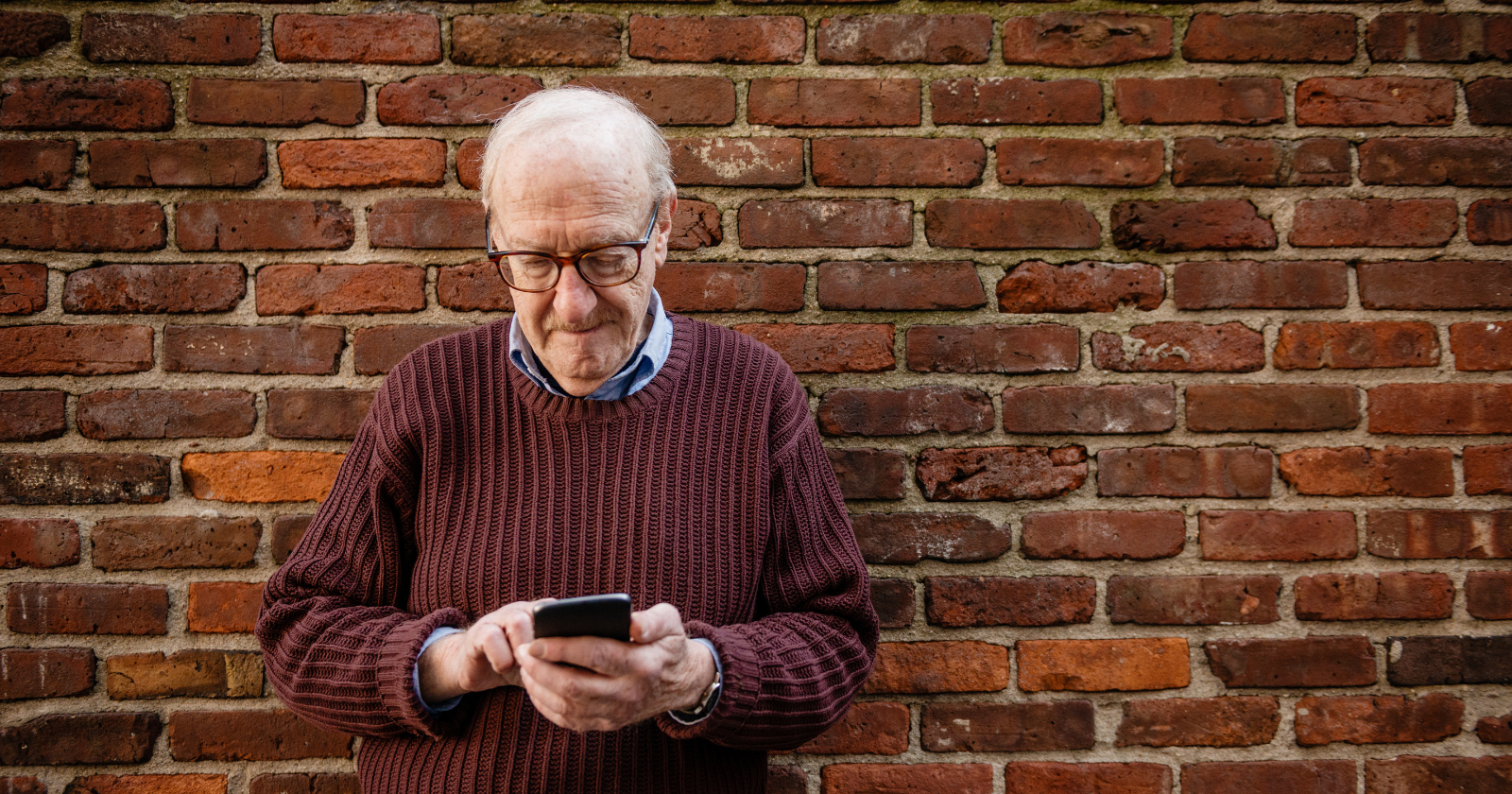

- Tension: We expect older adults to struggle with technology, yet many boomers over 70 have built daily iPad rituals that are more intentional and psychologically healthy than how most younger people use their devices.
- Noise: Media coverage of older adults and technology overwhelmingly frames the story as a gap to be closed — helpless grandparents who need to be taught — while ignoring what their generation gets right about digital life.
- Direct Message: The way boomers over 70 use their iPads isn’t behind the times — it’s a quiet demonstration of the boundaried, purposeful relationship with technology the rest of us are desperately trying to relearn.
To learn more about our editorial approach, explore The Direct Message methodology.
There’s a woman in a flat in Dulwich who wakes up every morning at 6:40, makes a cup of tea, and sits in the same armchair with her iPad propped against a stack of cookbooks. She checks the weather. She reads the Guardian’s front page. She plays exactly two games of Wordle. Then she FaceTimes her daughter in Edinburgh, who is usually trying to get a toddler into a coat. By 7:30, the iPad goes back against the cookbooks, and she gets on with her day.
She’s 74. And her relationship with that tablet is, in almost every measurable way, healthier than mine.
I’ve spent years analyzing how technology shapes our inner lives, and the longer I do this work, the more I notice a pattern that rarely makes it into the discourse: the generation we’ve spent two decades worrying about getting “left behind” by digital technology has, in many cases, arrived at a relationship with their devices that the rest of us are only now trying to build. They use technology with purpose, within boundaries, and with a kind of unselfconscious contentment that younger users — myself included — find both baffling and oddly moving.
According to AARP’s 2026 Tech Trends report, adults 50 and older now own an average of seven tech devices and use them daily. Smartphone ownership among this demographic has soared from 55% in 2016 to 90% in 2025. And here’s a detail that challenges the standard narrative: adults aged 70 to 79 actually surpass those aged 50 to 69 in tablet ownership. The iPad isn’t a device this generation struggles with. It’s the device they’ve chosen.
Here are eight things they do with it every day — and why their grandchildren find it oddly, genuinely wholesome.
The Gap Between What We Expect and What’s Actually Happening
The expectation-reality gap here is striking. We expect boomers over 70 to be reluctant digital adopters — fumbling with passwords, accidentally video-calling people, opening twelve Safari tabs they don’t know exist. And those moments happen, of course. But they’ve become the dominant story, the only story, obscuring something more interesting: a generation that came to digital technology late enough to approach it with the one thing early adopters almost never have — perspective on what it’s for.
1. They read the news — one source, all the way through. Where younger users graze headlines across ten apps and absorb news through algorithm-curated fragments, boomers over 70 tend to open a single news app or website and read it like a newspaper. Front to back. Section by section. There’s no doom-scrolling, because the behavior predates the scroll. They learned to consume information in complete units, and they brought that structure to the tablet. The effect, psychologically, is significant: they finish reading feeling informed rather than anxious, because they’ve reached the end of something rather than wading through an infinite feed.
2. They play one or two games with absolute devotion. Wordle, Sudoku, a crossword, or a jigsaw puzzle app. Not a library of games. Not an ever-rotating selection. One or two games, played at the same time each day, with the same quiet focus a person might bring to a physical newspaper puzzle. This isn’t resistance to variety. It’s the digital expression of something cognitive scientists value deeply: routine-based engagement that provides predictable cognitive stimulation without the overstimulation of novelty-seeking behavior.
3. They FaceTime family members at scheduled times. Not spontaneous, not reactive, not because someone posted something. They call on Tuesdays and Saturdays, or every morning at 7, or every Sunday after church. The video call replaces what would have been a phone call in previous decades, but the structure around it remains analog. This regularity is precisely what research on technology use and loneliness in older adults identifies as most protective: it’s not the presence of digital connection tools that reduces isolation — it’s the consistent, scheduled use of them within established relational patterns.
How the Media Gets the Story Backwards
The dominant media frame for older adults and technology is one of deficit: they don’t understand it, they can’t keep up, they need help. This framing serves a useful commercial purpose — it sells devices, support services, and intergenerational guilt — but it distorts the reality in a way that’s worth naming.
AARP’s latest data shows that two-thirds of adults 50 and over agree that technology enriches life and makes aging easier. Among those 80 and over, the share who view technology as an ally in healthy aging rose from 39% in 2024 to 46% in 2025. These aren’t people being dragged reluctantly into the digital age. They’re people who have integrated technology into their lives on their own terms — which, crucially, means using it less, more deliberately, and with clearer boundaries than most younger users manage.
The media distortion matters because it shapes how families interact around technology. When grandchildren assume their grandparents are helpless with an iPad, they miss the chance to notice — and learn from — the fact that Grandma has never once lost an hour to Instagram Reels because she never installed Instagram in the first place. That’s not a deficit. That’s a boundary.
4. They look things up mid-conversation and announce what they’ve found. This is the one that grandchildren find most endearing. A question arises over dinner — when was that film made, what’s the capital of that country, is it going to rain tomorrow — and the boomer picks up the iPad and Googles it, right there, out loud, narrating the search as they go. “Let me just look that up… right… it says here…” There’s no pretense that they already knew. No ambient phone-checking. Just transparent, purposeful information-seeking that resolves a genuine question and then stops.
5. They photograph everything — and print the photos. Gardens, grandchildren, meals, sunsets. The camera roll of a boomer over 70 is a remarkable document of ordinary beauty, unpolluted by any awareness of an audience. They’re not photographing for social media. They’re photographing for themselves and for family — and then, often, printing the photos and putting them in frames or albums. This loop from digital capture to physical display represents something the rest of us have largely lost: the photograph as artifact rather than content.
6. They use YouTube as a reference library. How to prune a rose bush. How to fix a dripping tap. What the symptoms of a certain medication look like. Boomers over 70 use YouTube the way a previous generation used an encyclopedia — purposefully, question by question, closing the app when the answer has been found. They don’t browse. They don’t fall into recommendation rabbit holes. They search, watch, learn, and leave. A systematic review of technology use and social wellbeing in older adults found that this kind of instrumental, goal-directed technology use contributes positively to feelings of independence and competence — two factors strongly associated with psychological wellbeing in later life.
What Their Habits Quietly Teach Us
The wholesome quality of how boomers over 70 use their iPads isn’t about being behind — it’s about having arrived at digital technology with pre-existing habits of attention, routine, and purpose that younger generations are now spending billions trying to recover through digital wellness apps.
This is the universal pattern connecting all eight behaviors. Every one of these habits reflects a relationship with technology that is bounded, intentional, and oriented toward a specific purpose — and then stops. The iPad goes back against the cookbooks. The game is finished. The call has a beginning and an end. The video is watched, the question answered, the app closed.
The Rituals That Deserve Our Attention
7. They send individual text messages instead of posting to groups. Rather than broadcasting a thought to a family WhatsApp group, boomers over 70 frequently send the same message — a photo, a piece of news, a thinking-of-you note — to individual family members separately. This is technologically inefficient and emotionally intelligent. Each message arrives as a personal communication rather than a mass broadcast. The recipient feels individually considered. The sender maintains distinct relational threads rather than collapsing everyone into a single audience. It’s slower, yes. It’s also better.
8. They turn the iPad off when they’re done with it. Not to sleep. Off. This single habit — the willingness to fully disengage from a device rather than leaving it perpetually available — is the behavioral boundary that younger users find most foreign and most quietly admirable. It reflects a fundamental orientation that predates the always-on era: the tool serves the person, not the other way around.
When analyzing media narratives around this topic, I keep returning to a historical irony. The generation that didn’t grow up with screens has, in many cases, developed a healthier relationship with them than the generation that did. They weren’t trained by algorithms. They weren’t conditioned by notification systems during their formative years. They came to the iPad as a finished product of a pre-digital life, and they brought with them something the rest of us are only beginning to value: the ability to use a device without being used by it.
A UC Berkeley study of a digital literacy program for seniors found that after one year, approximately 60% of participants reported less loneliness, better self-rated health, and more confidence in their technology skills. The researchers gave participants iPads. What the participants gave back was a model of technology use that looks less like addiction and more like companionship — a tool picked up when needed, used with attention, and set down when its purpose is fulfilled.
The next time you visit your grandparents and find them doing the crossword on their iPad at the kitchen table, half a cup of tea gone cold beside them, pay attention. Not because they need your help. Because there’s a chance — a real one — that they’ve already figured out the thing the entire digital wellness industry is trying to sell you. They just didn’t think it was remarkable enough to mention.