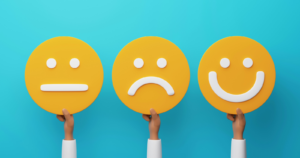
- Tension: The command-and-control leadership that built successful companies in 2010 now creates anxious, depleted teams.
- Noise: We keep promoting yesterday’s heroes into tomorrow’s leadership roles.
- Direct Message: Your best 2010 manager is probably your worst 2026 leader.
To learn more about our editorial approach, explore The Direct Message methodology.
I watched a manager I used to work with destroy his team last month. Not through malice or incompetence, but through excellence — the 2010 version of it. He ran morning stand-ups with military precision. He tracked every metric. He pushed for “110%” and rewarded the ones who stayed latest. He did everything that made him a star fifteen years ago.
His team quit one by one, taking their institutional knowledge with them. The ones who stayed started therapy — I know because three of them ended up in my office back when I was still practicing. They weren’t broken. They were exhausted by a leadership style that treats humans like high-performance engines that just need better fuel.
The heroic leader model is eating itself
We built an entire generation of leaders on a simple premise: strong individuals drive results through force of will. They set ambitious targets. They inspire through their own tireless example. They have the answers. They never show weakness.
This worked when work was more predictable. When you could plan a quarter with reasonable confidence. When “disruption” was something you did to others, not something that happened to you every six months. When employees stayed for years and knowledge transfer happened slowly, through proximity and repetition.
But something shifted, and we kept promoting the same people using the same criteria. We kept rewarding the ones who could push hardest, decide fastest, speak loudest. We kept mistaking exhaustion for dedication and anxiety for high performance.
In my practice, I started seeing a pattern around 2018. Successful professionals in their thirties and forties, no major trauma, no clinical depression — just this persistent sense of depletion they couldn’t name. They’d describe their bosses with a mixture of admiration and dread. “She never stops working.” “He always has the answer.” “They expect us to match their energy.”
The attachment patterns were textbook anxious-avoidant. The employees desperately seeking approval from leaders who had no bandwidth for human connection. The leaders believing that distance equals professionalism, that vulnerability equals weakness, that their job was to have all the answers rather than ask better questions.
Why vulnerability became a superpower
Thomas Lim, Dean for Centre for Systems Leadership at SIM Academy, puts it clearly: “The next phase of leadership also requires a shift in how authority is exercised.”
This isn’t about becoming soft. It’s about recognizing that the human nervous system wasn’t designed for perpetual crisis mode. When leaders model constant urgency, they create teams that can’t distinguish between actual emergencies and manufactured ones. Everything becomes urgent. Nothing gets done well.
The leaders who thrive now are the ones who can say “I don’t know” without their authority crumbling. They can hold uncertainty without immediately filling it with false confidence. They understand that their job isn’t to be the smartest person in the room but to create conditions where collective intelligence can emerge.
I remember one session with a client who couldn’t understand why her team seemed so fragmented. She’d implemented every best practice from her MBA program. Clear KPIs. Regular one-on-ones. Team building retreats. But she’d never once admitted to struggling with anything. Her team didn’t trust her because she didn’t seem human.
The exhaustion economy finally broke
We normalized twelve-hour days and weekend emails. We celebrated founders who slept under their desks. We turned burnout into a badge of honor and wondered why innovation started feeling incremental, why breakthroughs became rare, why our best people kept leaving for “work-life balance” — a phrase we’d mock in 2010.
The pandemic just accelerated what was already breaking. When everyone went remote, the performance theater collapsed. You couldn’t fake presence anymore. You couldn’t substitute visibility for value. The leaders who’d built their entire identity on being seen working hardest suddenly had nowhere to perform.
Meanwhile, the quiet ones — the ones who’d always focused on outcomes over optics — started getting noticed. They ran shorter meetings. They trusted their teams. They didn’t need to control every detail because they’d hired adults and treated them as such.
What actually works now
The best leaders I observe now have made a fundamental shift. They’ve moved from being the hero to being the guide. They create clarity without claiming certainty. They hold space for difficult conversations without rushing to resolution.
They understand something the 2010 leaders missed: sustained high performance comes from psychological safety, not psychological pressure. Teams need to know they can fail without being punished, think without being interrupted, disagree without being dismissed.
This requires a different kind of strength. The strength to not have all the answers. The strength to let others shine. The strength to admit when you’re struggling and model what it looks like to ask for help.
These leaders still have high standards. They’re not running meditation circles and avoiding difficult conversations. But they understand that fear-based motivation has diminishing returns. That creativity requires psychological spaciousness. That innovation happens in the gaps, not in the grind.
The reckoning is here
Organizations are splitting into two camps. There are those still promoting their top performers from 2010, wondering why their culture feels stuck, why their engagement scores keep dropping, why they can’t retain talent despite competitive packages.
Then there are those who’ve recognized that the leadership skills that got them here won’t get them there. They’re promoting different people. The ones who coach rather than command. Who facilitate rather than dictate. Who can hold complexity without defaulting to simplicity.
The tragedy is that many of our 2010 stars could make this transition. They have the intelligence, the drive, the commitment. But it would require them to unlearn everything that made them successful. To admit that their way isn’t just outdated — it’s actively harmful.
In my last year of practice, I kept a notebook of patterns I saw repeatedly. One entry just said: “They mistake their trauma responses for leadership skills.” The hypervigilance they call strategic thinking. The control they call excellence. The emotional distance they call professionalism.
What this means for you
If you’re a leader formed in the 2010 model, this isn’t an indictment. You succeeded in the system you were given. But that system is gone, and clinging to its rules is like using a paper map in the age of GPS. You might eventually get there, but you’ll exhaust yourself and everyone around you in the process.
The transition isn’t easy. It requires confronting the parts of yourself you’ve been rewarded for ignoring. The exhaustion you’ve normalized. The anxiety you’ve reframed as drive. The loneliness you’ve called leadership.
But here’s what I learned in those twelve years of practice: people are remarkably adaptable when they’re given permission to be human. The leaders who make this shift don’t just build better teams — they discover parts of themselves they’d forgotten existed. They sleep better. Their relationships improve. They find that leading from wholeness rather than willpower is not just more sustainable — it’s more effective.
The leadership style that worked in 2010 isn’t just outdated. It’s a relic from a world that no longer exists. And the sooner we stop promoting its practitioners, the sooner we can build organizations that don’t require people to sacrifice their humanity for their paycheck.