
To learn more about our editorial approach, explore The Direct Message methodology.
The things added to modern childhood are not neutral additions. Passwords, cameras, schedules: each of these arrived with a logic that seemed reasonable at the time, and each one quietly reorganized something that had previously been unorganized, which is to say, free. More of a child’s time became accounted for. More of their behavior became visible. More of their movement required prior approval. And the sky, which is one way to describe everything that was not yet claimed by structure, shrank accordingly.
This is not an argument for taking cameras down or eliminating schedules. It is an observation about what those additions cost, which is something that rarely gets named directly because the additions themselves are so defensible. Of course you want to keep your child safe. Of course you want them to develop skills. Of course you want some documented record of their days. Every individual choice makes sense. What has accumulated from those individual choices is something different: a childhood that is, by most available measures, substantially less free than the one that preceded it. The freedom wasn’t replaced by something better. It was replaced by something more controlled. Those are not the same thing.
The passwords dimension is worth sitting with specifically, because it’s the one that gets least discussed. A child in the 60s or 70s moved through the world without being required to authenticate their identity to access it. Libraries were open. Parks were open. Neighborhoods were navigable. The default relationship between a child and their physical environment was one of access, not verification. Today a child negotiates logins, parental controls, permission settings, and acceptable-use policies before they can reach much of the world they want to reach. The gatekeeping has intensified significantly, and most of it happens before they’ve left the house.
The cameras piece is more visible, literally. A generation raised without cameras in their lives learned something about unobserved time that is hard to reconstruct once constant documentation becomes the norm. Think about what it meant to do something with no record being made of it. No photo, no clip, no digital trail. Whatever happened, happened only in the memory of the people present. That gave a certain freedom to try things, fail at them, and move on without those failures being stored anywhere.
The past stayed in the past in a way it no longer does for children today. When you know that no record is being made of what you’re doing, you do things differently. You take different risks, make different mistakes, and recover from them in different ways. The developmental value of unobserved time isn’t well quantified in research because it’s hard to study. But the consistent finding from researchers like Peter Gray at Boston College is that unsupervised, self-directed play, the kind that doesn’t get documented, builds capacities that monitored and structured time simply doesn’t.
And then there is the schedule. The modern childhood schedule is dense in ways that would have been unusual in earlier decades. After-school activities, enrichment programs, sports practice, tutoring, organized playdates with their own start and end times. Each item makes individual sense. The accumulated effect is a childhood in which unstructured time, the kind with no stated purpose and no adult supervision, has become genuinely scarce for many children. What gets squeezed out is exactly what researchers have been most concerned about: the hours that were once children’s own, to fill however they chose. Those hours were not empty. They were the hours in which children learned to be bored and then to resolve boredom on their own, to negotiate with other children without adult mediation, to make and unmake small plans and live with the consequences. That work happened in the unscheduled gap, and the gap is largely gone.
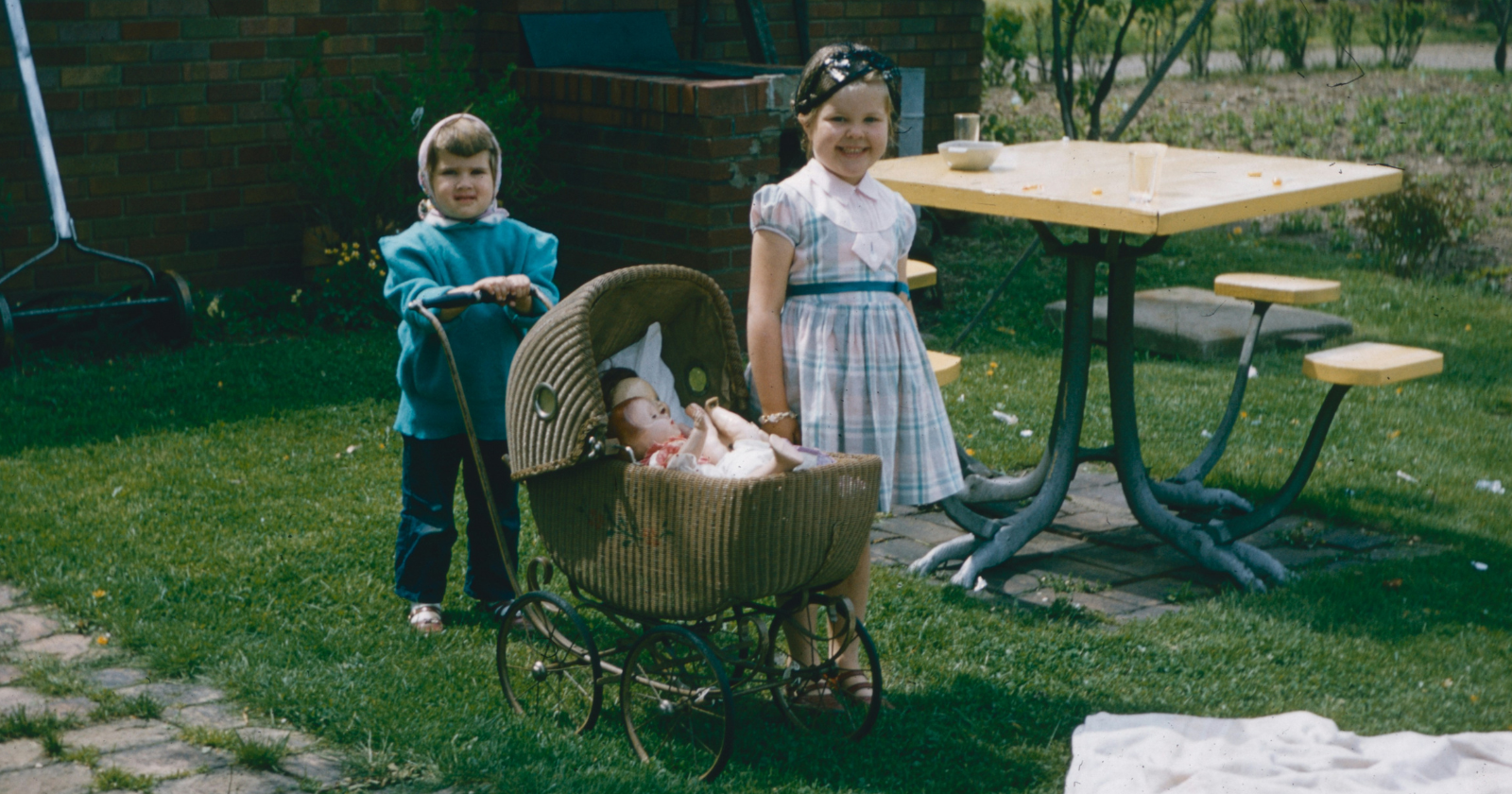
“More sky” is a way of describing all of it at once. The unscheduled hours. The unmonitored space. The movement through the world that didn’t require a password or a parent. Sky is what you see when nothing is in the way, and in the childhoods of those earlier decades, a great deal of the day had nothing in the way. Not because adults were neglectful, but because the structures we now take as standard hadn’t yet been built. The sky wasn’t a gift that got taken back. It was just the natural condition before everything else moved in.
I’m not a child psychologist, and the right balance of structure versus freedom in childhood is genuinely contested territory. Some structure helps children; the research on that is fairly clear too. The question is not whether any structure is appropriate but whether the accumulation of structures across recent decades has tipped in a direction that serves children less well than it serves adult anxiety. There are serious researchers who think it has. There are parents who feel the loss of that sky viscerally but aren’t sure how to get any of it back without feeling irresponsible. Both of those things can be true at the same time: you can know something has been lost and still not feel certain you have the right to restore it.
When safety built a ceiling where the sky used to be
The sky didn’t get taken away. It got built over, one reasonable decision at a time, until the children standing underneath it could no longer tell what they were missing — because they had never known anything else.
That tension, between what you know is missing and what feels safe to restore, is where most of this conversation lives now. It shows up in parenting books, in school design debates, in the quietly embarrassed way parents describe letting their kids walk to a friend’s house alone for the first time, as though they need to justify a decision that would have been entirely unremarkable forty years ago. The question is not whether to give children any freedom at all. The question is whether the bar for what counts as acceptable freedom has moved so far that we can no longer see clearly where it started. The childhoods of the 60s and 70s didn’t have answers to that question either, but they didn’t have to ask it. The sky was just there.