

The strongest version of this story is not that a billionaire wrote a check and bought a foreign-policy outcome. No source cited here establishes that Marc Rowan directed a particular campaign expenditure, purchased a congressional vote or secured a private contract in Gaza.
The supported story is narrower, but it is still consequential. Political financing, reconstruction governance and the language of private capital are now visibly intersecting around the same person.
Rowan is co-founder, CEO and chair of Apollo Global Management, and the Board of Peace’s official profile lists him as both an Executive Board member and a member of the Gaza Executive Board. The White House said in January that UN Security Council Resolution 2803 endorsed Trump’s plan and welcomed the establishment of the Board of Peace.
That distinction matters. The Board was not simply invented as an informal investment club, but describing it as generically “UN-approved” obscures how the arrangement actually works: the Security Council endorsed the broader plan and welcomed the Board, while the Trump administration appointed Rowan and the other members of its founding executive structure.
At the Board’s inaugural meeting, Rowan then supplied the language that gives this story its sharpest edge. The meeting transcript records him putting Gaza into financial terms: $50 billion of coastline value, more than $30 billion in rebuilt housing stock and more than $30 billion in infrastructure. He totaled those figures at “$115 billion of value” and said it needed to be “unlocked and financed.”
Those words landed against extraordinary physical destruction. An August 7 humanitarian report from the UN Office for the Coordination of Humanitarian Affairs, citing UNOSAT satellite analysis, said an estimated 82 percent of all structures in Gaza had sustained damage as of June 16, including more than 134,000 assessed as destroyed.
Rowan’s investment language does not, on its own, establish that Apollo has a financial stake in Gaza reconstruction. No source cited here identifies an Apollo contract or a private Rowan investment in the territory. The conflict-of-interest question is therefore about overlapping roles and incentives, not proven self-dealing.
The political-money side of the story is more concrete. In the 2024 Democratic primary in Missouri’s 1st Congressional District, the Guardian reported that AIPAC put $8.5 million into the race through United Democracy Project to support Wesley Bell. Bell defeated Representative Cori Bush, one of Congress’s most prominent critics of Israel’s war in Gaza, with about 51 percent of the vote to Bush’s 46 percent.
Rowan’s current funding of UDP belongs to a later timeline. Reporting based on Federal Election Commission filings says he contributed $1 million in early March 2026 and another $500,000 on July 23, for $1.5 million during 2026.
On July 23, UDP also spent about $100,000 on phone banking against Bush during her 2026 rematch with Bell. The same reporting makes an important qualification: it is unclear whether Rowan’s contributions financed that operation or any other particular UDP political activity.
That caveat changes the argument. The records establish Rowan as a major UDP donor and UDP as a major election spender. They do not establish that Rowan earmarked his money for Bush, Thomas Massie, Abdul El-Sayed or any other specific target.
The scale of the Board’s financial role is also real, but it needs equally precise language. Axios reported a $10 billion pledge from Trump that would require congressional approval, along with another $7 billion pledged for Gaza, mainly by Gulf countries. That is not the same thing as saying $10 billion in U.S. public funds had already been appropriated and placed under the Board’s control.
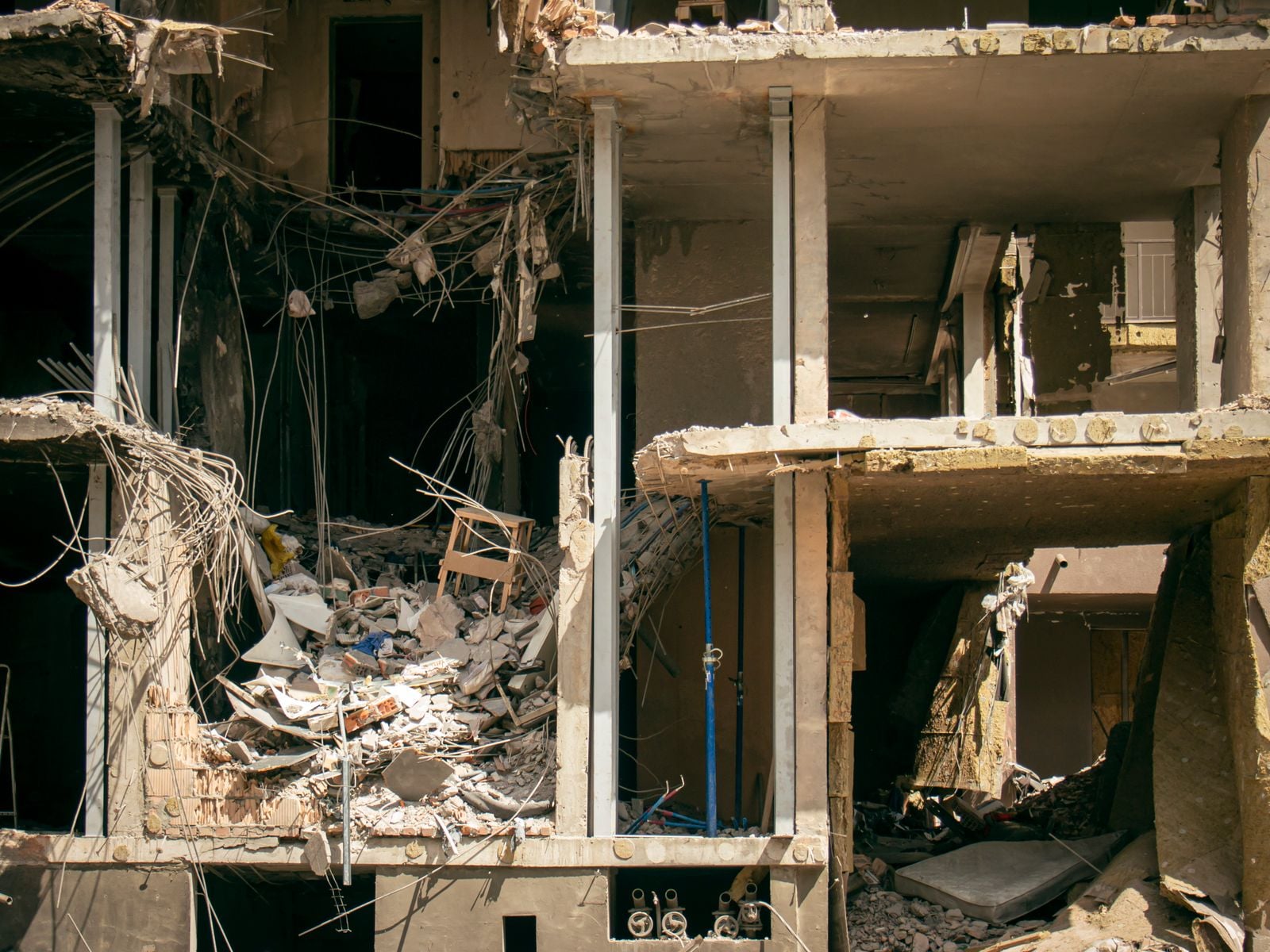
Questions about Palestinian representation are similarly stronger when anchored to what critics have actually said. Raed Jarrar, advocacy director at Democracy for the Arab World Now, said in a February statement that world leaders were discussing Gaza’s future with “minimal Palestinian participation” and argued that reconstruction “must be Palestinian-led”.
That is a specific accountability critique. It does not require claiming that Palestinians have literally no role in the transition structure, which also includes a Palestinian technocratic administration. The harder question is how much decision-making power Palestinians themselves hold when outside governments, donors and investors are setting the reconstruction architecture.
Rowan’s history at the University of Pennsylvania adds context about his willingness to use his public influence, but it should not be treated as evidence of misconduct in Gaza. In 2023, the Philadelphia Inquirer reported that his advocacy ignited donor and alumni pressure that contributed to the resignations of Penn president Liz Magill and board chair Scott Bok.
That episode demonstrates influence. It does not prove corruption, and it does not establish anything about how Rowan will exercise his Gaza role. The distinction is important because this story becomes weaker, not stronger, when every fact about Rowan is forced into a single theory of motive.
The verified sequence is straightforward. Rowan sits on the Board of Peace. He publicly described Gaza’s reconstruction in investment terms. He gave $1.5 million to UDP in 2026. UDP spends independently in congressional races, including against politicians who have challenged U.S. support for Israeli policy. The Board, meanwhile, is involved in reconstruction, capital mobilization and economic recovery.
The unsupported step is turning those facts into a closed causal circuit. The available records do not show Rowan ordering UDP to defeat particular candidates, those candidates determining individual military decisions because of his donations, or Rowan receiving a private financial benefit from the resulting reconstruction.
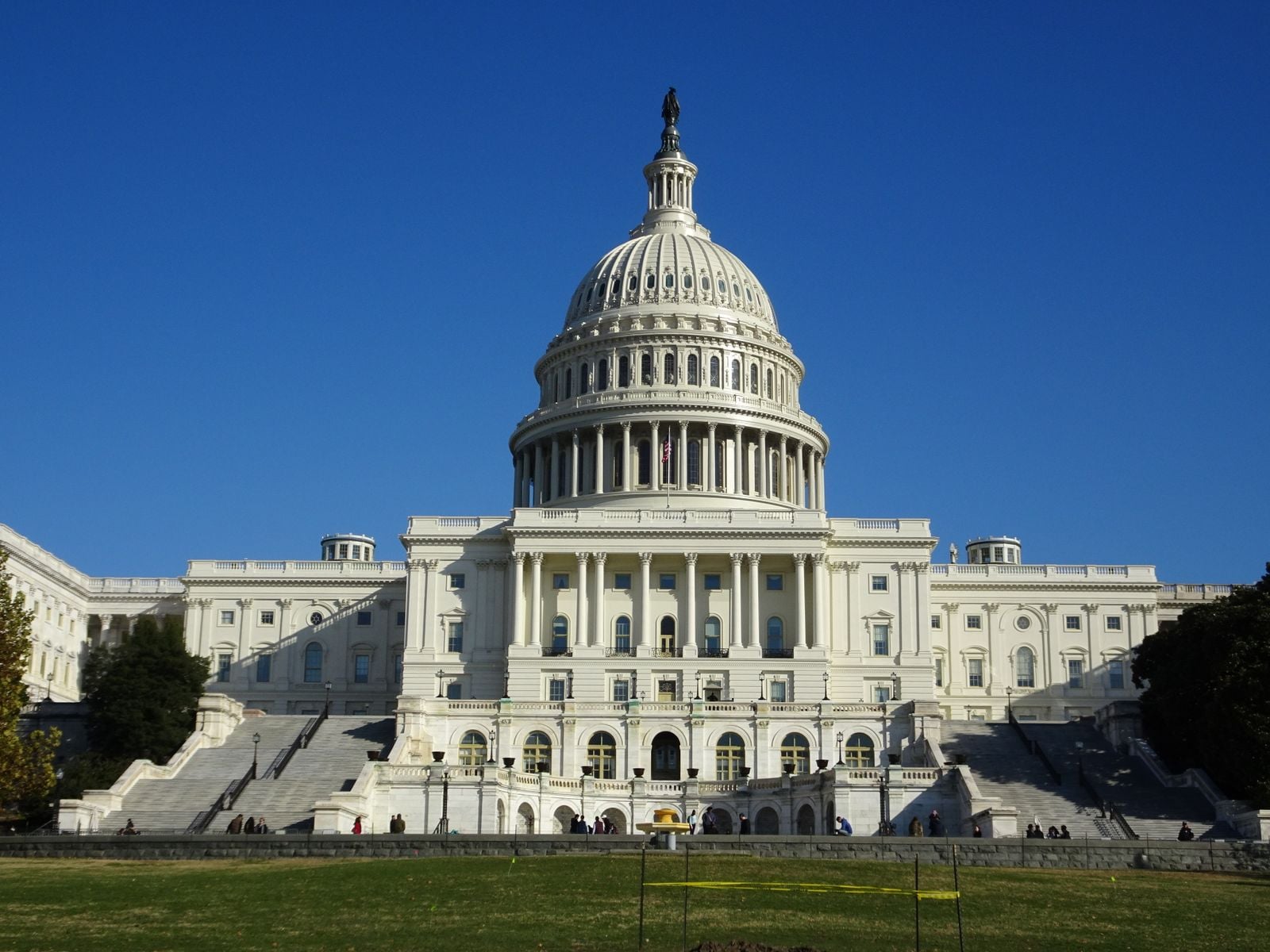
There are related influence channels in Washington, but they need to remain distinct. VoteLog’s investigation does not trace Rowan’s donor network lobbying individual lawmakers. It documents AIPAC lobbying the Defense Department over legislation involving U.S.-Israel defense technology cooperation, while disclosure filings also list the House and Senate among entities contacted.
VoteLog itself notes that lobbying disclosures do not reveal the meetings that took place, their dates or the positions advocated. That makes the investigation relevant to the broader terrain of organized political influence around U.S.-Israel policy, but it cannot be used as evidence that Rowan’s UDP donations financed or directed that lobbying.
The case worth examining is therefore a governance problem rather than a prosecutorial one. Rowan simultaneously leads one of the world’s largest alternative-asset managers, participates in a powerful reconstruction body and contributes substantial sums to a super PAC that intervenes aggressively in congressional elections involving Israel policy.
Disclosure makes those roles visible. It does not automatically answer how conflicts should be managed when public authority, private capital and political spending overlap, or what recusal and accountability standards should apply when reconstruction decisions carry enormous economic consequences.
That is why Rowan’s “$115 billion of value” formulation remains the most revealing part of the episode. It is a verified description of how he presented Gaza’s economic potential, made while serving on the body charged with helping turn reconstruction plans into financing and projects.
It is also fair to place that role beside his funding of the super PAC that spent millions helping defeat Cori Bush. What the evidence does not permit is collapsing correlation into command, or political influence into a proven transaction.
The distinction does not make the story smaller. It makes the real question harder to dismiss: when the same individual moves between private finance, political spending and public reconstruction authority, what safeguards are strong enough to keep those forms of power meaningfully separate?