
What is missing from the 63-page opinion striking down New York’s Climate Change Superfund Act is any serious engagement with the question the law was actually built to answer: who pays when the seawall fails. The ruling, issued from the U.S. District Court for the Northern District of New York, reads as a jurisdictional exercise. The floods it does not mention are the reason the statute existed in the first place.
The New York law would have charged the largest fossil fuel producers a combined $75 billion over 25 years. The money was earmarked for the physical work of adaptation: roads, transit, electric grid hardening, stormwater drainage. Chief Judge Brenda K. Sannes ruled the statute preempted by the federal Clean Air Act and, borrowing the Second Circuit’s phrase, simply beyond the limits of state law.
That is a narrow legal finding with a wide practical shadow.
The legal architecture of the ruling matters, because it will shape the states currently considering similar polluter-pays legislation. Sannes concluded that the Clean Air Act commits greenhouse gas regulation so completely to federal hands that a state cannot impose retrospective financial liability on producers for climate-attributable damage. She reached a second holding as well, and it is the one drafters should worry about most: because the Clean Air Act does not reach emissions generated abroad, any cost-recovery demand against a foreign producer would intrude on the federal government’s authority over foreign affairs. That ground stands on its own, independent of the Clean Air Act analysis.
The decision came in West Virginia v. James, the consolidated case in which the Chamber of Commerce’s parallel suit was folded into the states’ challenge. Vermont is defending a comparable challenge from the U.S. Chamber of Commerce and the American Petroleum Institute in federal court there. The New York decision is not binding on that case. It will be cited in it.
Climate law scholars are already looking past the district court. Patrick Parenteau, Professor of Law Emeritus and Senior Fellow for Climate Policy at Vermont Law and Graduate School, told Inside Climate News that if New York appeals, a three-judge Second Circuit panel will have to decide whether the superfund statute is distinct enough from the 2021 New York City case to warrant a fresh look at how federal and state law interact. That is the whole appeal in one sentence. Sannes found “very little daylight” between the two. The panel does not have to agree.
The plaintiffs’ coalition is worth naming plainly. Twenty-two Republican state attorneys general, led by West Virginia, filed the lead case in February 2025, joined by coal and gas trade associations and the coal producer Alpha Metallurgical Resources. A second suit brought by the U.S. Chamber of Commerce, the American Petroleum Institute, the National Mining Association, and the Business Council of New York State was consolidated into it. The Department of Justice filed a statement of interest in the case and sued New York separately, and its press release after the ruling celebrated the decision in language that mirrored the administration’s broader energy policy posture.
The federal backdrop makes the state-level fight sharper, not softer. In February 2026, the EPA finalized the rescission of the 2009 endangerment finding, the determination that underpinned a decade and a half of federal greenhouse gas regulation. New York argued the obvious point: a field cannot be occupied and vacated at the same time. If Washington has walked away from regulating emissions, how can that authority still crowd out a state cost-recovery statute?
Sannes addressed the argument directly and rejected it. Congress, she reasoned, delegated to the EPA the decision of whether and how to regulate emissions — and that delegation holds whether or not the agency chooses to exercise it. Federal abdication is not the same as federal absence.
That is the reasoning an appeal will have to dislodge, and it is a harder target than the contradiction it appears to be.
Structurally, the superfund model borrowed from a familiar template. The federal Superfund program makes polluters retrospectively liable for the cleanup of hazardous waste sites. It survived legal challenge and produced decades of remediation funded largely by the industries that caused the contamination. New York’s law tried to apply that same logic to a different pollutant on a different timescale. The court found the analogy did not hold.
Whether it holds politically is a separate question, and one the ruling does not answer.
States considering similar legislation will now redraft. Some will narrow the scope. Some will change the trigger, moving from a retrospective attribution model to a forward-looking fee tied to in-state emissions or in-state sales. Some will attach the revenue mechanism to existing state authority over utilities or insurance rather than to a novel liability regime. The opinion is, in that sense, a drafting manual as much as it is a defeat.
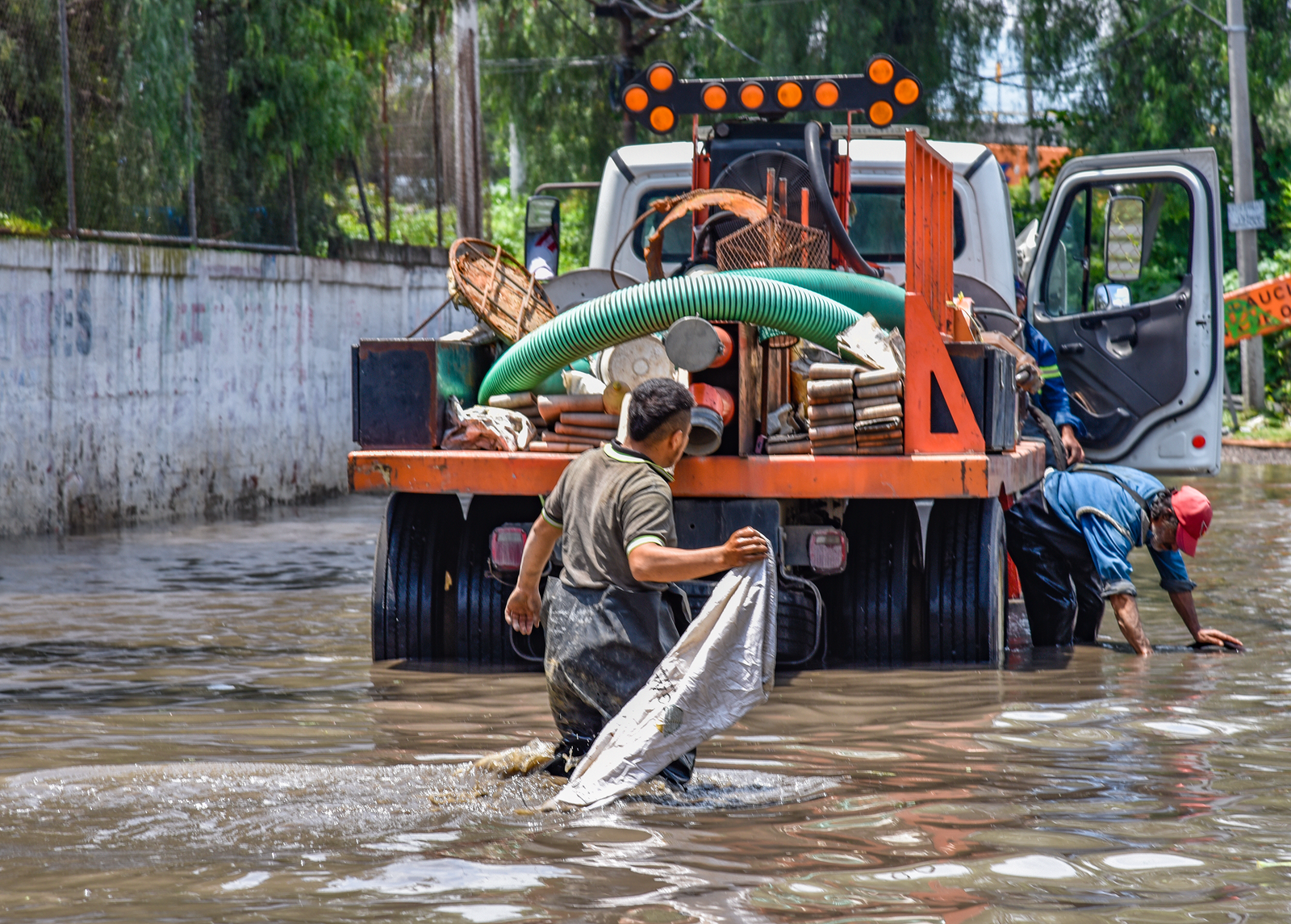
For municipal officials, the practical arithmetic does not change. The floods will still come, roads will still wash out, and communities will still need billions to protect themselves. Those costs do not disappear because fossil fuel companies do not want to pay them. The money comes from somewhere. In the absence of a superfund, it comes from property taxes, state general funds, federal disaster appropriations, and municipal bond issuance — which is to say, from residents and future residents.
The distributional question is the one the ruling is silent on. When a state cannot assign historical liability, adaptation costs default to the general public. That is not a neutral outcome. It is a policy choice made by the absence of a policy.
The wider legal terrain is unsettled in ways that cut in both directions. The Second Circuit’s 2021 decision in the New York City case against oil majors dismissed municipal damages claims on preemption grounds, and Sannes’s opinion acknowledges that courts elsewhere — in Hawaii, Colorado, and the Fourth Circuit — have criticized that reasoning. The Supreme Court is no longer standing aside. It has granted certiorari in Suncor Energy (U.S.A.) Inc. v. Board of County Commissioners of Boulder County, taking up whether federal law forecloses state-law claims for injuries caused by global greenhouse gas emissions, with argument scheduled for October. That ruling will reach further than anything the Second Circuit does with New York’s statute.
What the New York ruling actually decides is smaller than the headlines suggest. It does not hold that fossil fuel companies cannot be sued for climate damages. It does not hold that states cannot regulate emissions. It holds that this particular statute, with this particular retrospective fee structure, is preempted by federal law as currently constituted — and, separately, that it cannot constitutionally reach foreign producers at all. Change the statute and the first analysis changes with it. The second is harder to draft around.
An appeal to the Second Circuit is the expected next step, though New York has not committed to one; the attorney general’s office declined to say, and the governor’s office said it was reviewing the decision. The Vermont case will proceed on its own track. The states drafting new versions will watch both. The July 30 hearing, at which Sannes pressed the state hard on whether the law strayed into federal territory, previewed this outcome. The appellate posture is less predictable.
The question left on the table is who carries the cost of a warming coastline when the courts have said the producers cannot be made to. That question does not resolve itself. It gets answered every time a municipal budget is passed, every time an insurance premium is set, every time a homeowner decides whether to raise the panel again or sell. The law was one attempt to answer it collectively. Its absence is also an answer, quieter and more expensive, paid in smaller installments by people who were never named in the suit.