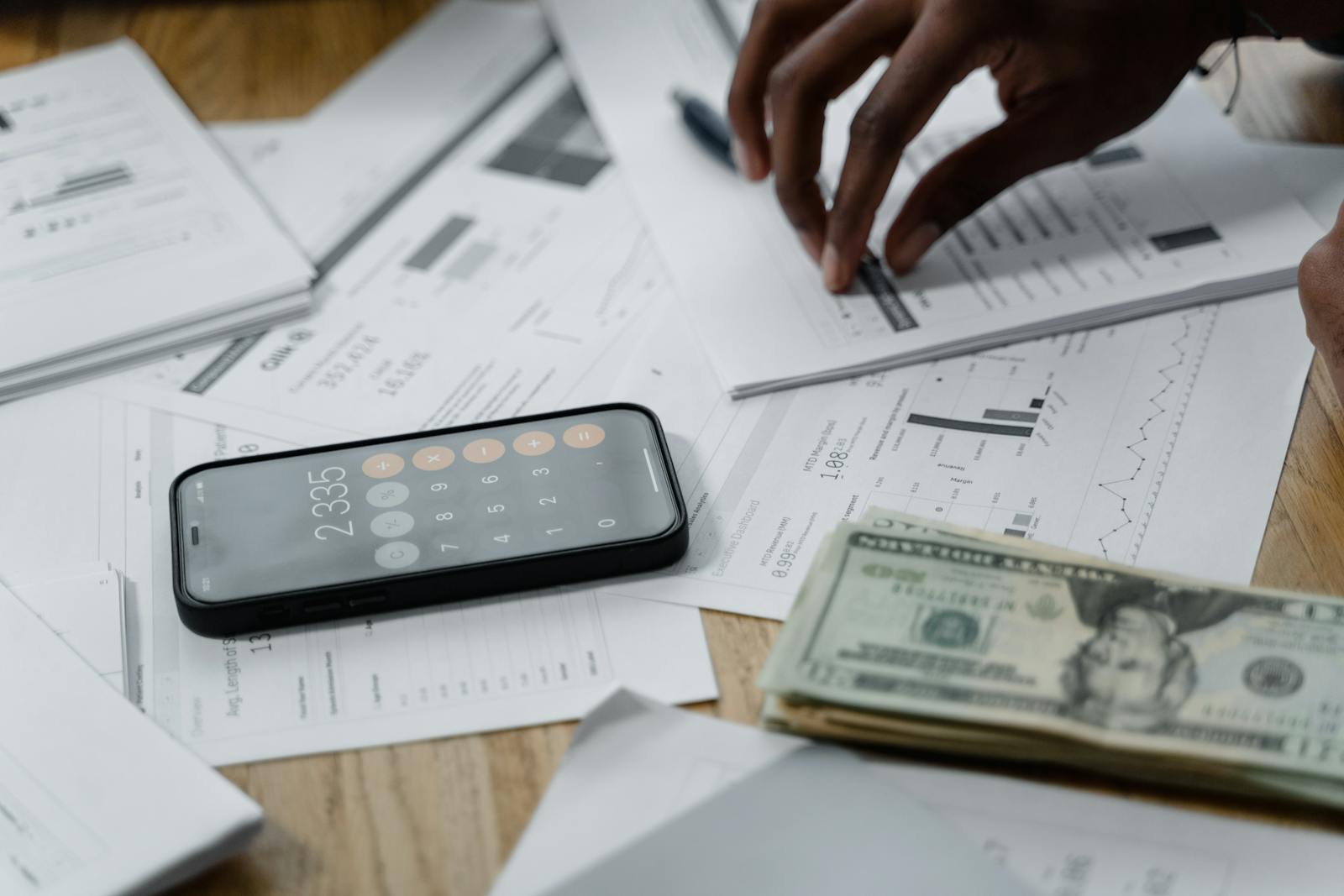

- Tension: A woman who tracked every dollar for a year discovered the most unsettling pattern wasn’t waste or impulse — it was over $14,000 spent on quietly performing membership in an economic class above her own.
- Noise: Personal finance culture frames overspending as a discipline problem and prescribes budgets and willpower. But for millions, the spending engine isn’t impulse — it’s identity, fueled by aspirational consumption, social signaling, and a culture that equates purchases with belonging.
- Direct Message: The most expensive thing most people buy isn’t a product or experience — it’s a version of themselves that was never theirs to begin with. Every dollar spent maintaining a fictional identity is a dollar stolen from the real one.
To learn more about our editorial approach, explore The Direct Message methodology.
On the night of December 31st, Carla Reyes sat cross-legged on her bedroom floor in a one-bedroom apartment in Austin, Texas, surrounded by twelve months of receipts, credit card statements, and a spiral notebook she’d titled “The Honest Ledger.” She was 34, a graphic designer earning $67,000 a year, and she had tracked every single dollar she’d spent for 365 consecutive days. She’d started the project as a budgeting exercise, something she’d seen a financial influencer recommend on TikTok. The idea was simple: awareness leads to control. But what Carla found in those numbers had nothing to do with control. It had to do with costume.
“I thought I’d discover I was spending too much on food delivery,” she told me over the phone in March. “And yeah, I was. But that wasn’t the thing that made me cry. The thing that made me cry was adding up everything I’d spent on looking like someone who makes six figures. It was over fourteen thousand dollars. I make sixty-seven.”
Fourteen thousand dollars. That’s roughly 21 percent of her pre-tax income. And when she broke it down, it wasn’t reckless spending in the way we usually imagine: no gambling, no compulsive shopping sprees. It was calculated, deliberate, even sophisticated. A $180-a-month coworking membership at a space with exposed brick and oat milk on tap, despite having a perfectly functional home office. A $94-a-month ClassPass subscription she used three times a month because the boutique studios were in the “right” neighborhoods. A wardrobe rotation of Everlane, COS, and Aritzia that she described as “quiet luxury before I knew quiet luxury had a name.” A $2,400 annual spend on coffee shops where she’d order a single cortado and work for four hours, because, as she put it, “the people in those places looked like who I wanted to be.”
Carla wasn’t broke. She wasn’t drowning in debt. She was performing solvency at a frequency slightly above her actual station, and it was costing her almost everything she might have saved.
When I wrote recently about a man who died at 56 with a full retirement account he never touched, the response was enormous, and one theme kept surfacing in reader messages: people felt caught between the fear of saving too much for a future they might not get, and the guilt of spending too much on a present they couldn’t quite afford. But what struck me was how many of those messages weren’t about spending on pleasure. They were about spending on belonging.
That distinction matters more than most personal finance advice will ever acknowledge.
There’s a concept in sociology called “aspirational consumption,” and it describes the tendency to purchase goods and experiences associated with a social class above one’s own. It’s been studied extensively. A 2020 paper published in the Journal of Consumer Research found that consumers who perceive a gap between their actual social position and their desired social position spend disproportionately on “status-signaling” goods, even when those goods provide no functional advantage over cheaper alternatives (Ordabayeva & Chandon, 2020). The researchers called it “compensatory consumption.” The rest of us might call it something more familiar: faking it until you make it, except you never quite make it, and the faking has a compound interest problem.
Marcus Ellison, 41, an IT project manager in Charlotte, North Carolina, stumbled into a similar reckoning. He didn’t track his spending for a year the way Carla did. He stumbled into clarity through a more brutal door: his wife, Janelle, asked for a divorce, and in the process of separating their finances, they both had to face what they’d been jointly pretending.
“We had a $640,000 mortgage on a house in a neighborhood where the median income is probably $160,000,” Marcus said. “We made $118,000 combined. Every single month was a negotiation with gravity.”
The house had a three-car garage. They owned one car and a lawnmower. The third bay held boxes from a move three years earlier that they’d never unpacked, because the rooms they were meant to furnish required furniture they couldn’t afford.

“We bought the house because of the school district,” he said, and then paused. “That’s what we told people. The truth is we bought the house because of the neighbors. We wanted to be those people. We wanted our kids to grow up thinking they were those people.”
Marcus and Janelle’s story echoes a pattern that economist Elizabeth Warren identified years before she entered politics. In her 2003 book The Two-Income Trap, Warren argued that middle-class families weren’t going broke from frivolous spending but from bidding wars over housing in “good” neighborhoods and school districts. The consumption wasn’t hedonic; it was positional. You weren’t buying a house. You were buying a zip code. You were buying proximity to a class identity that promised safety, opportunity, and belonging.
Two decades later, the positional spending has metastasized far beyond housing. It lives in the $7 latte you order without flinching (because flinching would reveal something). It lives in the gym membership you chose over the one half its price, because the expensive gym has a sauna with eucalyptus towels and the clientele wears Vuori. It lives in the subscription boxes, the premium streaming tiers, the airline credit cards with $550 annual fees that you justify by saying “but the lounge access,” as if sitting in an airport lounge is an experience and not just a chair with free hummus.
Priya Chandrasekaran, 29, a second-year law associate in Chicago, told me she spent $8,200 on dining out in 2024. Not on food she loved. On restaurants she felt she needed to be seen at.
“My firm has this culture where the associates go out together, and the places they choose are always $85-a-plate minimum,” she said. “I could say no. Nobody’s forcing me. But saying no is a signal. It says: I can’t keep up. And in law, if you can’t keep up socially, people start wondering if you can keep up professionally.”
Priya earns $215,000 a year, which sounds like more than enough until you subtract $2,900 a month in student loan payments, $2,200 in rent, and the relentless social overhead of performing at the level her peers inherited. Several of her fellow associates come from wealthy families. They own condos their parents helped finance. They vacation without budgeting. They choose restaurants the way Priya chooses lunch spots: casually, instinctively, without the silent arithmetic happening beneath every “sure, sounds great.”
“I calculated it once,” Priya said. “I spend about forty-five minutes a week doing math in my head about whether I can afford to be in the room I’m currently sitting in. That’s a part-time job of anxiety.”
The cultural machinery that drives this behavior is extraordinarily well-oiled. A 2018 study in Psychological Science found that exposure to luxury goods on social media increased materialistic values and decreased life satisfaction, with the effect being strongest among people who already felt economically insecure. The researchers noted something crucial: the dissatisfaction didn’t come from wanting the specific items. It came from the implicit message that those items represented a way of being that was available to everyone who made the right choices. The corollary, of course, is devastating: if you haven’t arrived there yet, it must be because your choices are wrong. Your taste is wrong. You are wrong.
This is where the conversation about “lifestyle inflation” misses the point. Most financial advice treats aspirational spending as a discipline problem. Just stop buying things you can’t afford. Make a budget. Use the envelope method. And sure, those tools can help. As We explored in a piece about how small daily choices became the architecture of financial freedom, the mechanics of money management are genuinely powerful. But the mechanics only work when you’ve identified the engine. And for millions of people, the engine isn’t impulse. It’s identity.
There’s a term I keep returning to: “class drag.” I first heard it from a therapist in Portland named David Yoon, who works primarily with millennials and Gen Z clients struggling with financial anxiety. He uses the phrase to describe the performance of class membership that doesn’t match your actual economic reality.
“Drag, in the gender sense, is a conscious, often joyful performance,” Yoon told me. “Class drag is almost never conscious. People genuinely believe they belong in the economic bracket they’re performing, or that they will very soon, or that they deserve to. And the spending feels rational in the moment because it’s tied to identity rather than desire. You’re not treating yourself. You’re maintaining a self.”
That distinction between treating and maintaining landed hard when I spoke with Nolan Vickers, 38, a freelance video editor in Denver who spent $4,300 on tech gear in 2024 that he described as “professionally necessary” before admitting, under his own scrutiny, that most of it was professionally adjacent at best.

“I bought a $1,200 monitor because the colorist I admire uses it,” Nolan said. “I’m not a colorist. I edit talking-head videos for small brands. My old monitor was fine. But using the same tools as someone at the top of the field made me feel like I was in the conversation, you know? Like I was a peer, not a grunt.”
Nolan’s spending followed a logic that’s common in creative and knowledge-work industries where the line between tool and totem is deliberately blurred. As we explored in our coverage of what small businesses can learn from the success of Mini Brands, the products we surround ourselves with tell stories about who we are, often more powerfully than anything we say. The gear, the coffee, the coworking space, the neighborhood: they’re all narrative devices. And the narrative they construct is, “I belong here.”
The question nobody wants to sit with is: where is “here”?
Because “here” keeps moving. That’s the nature of aspirational consumption: it’s a treadmill calibrated to never let you arrive. The moment you can comfortably afford the $7 latte, the $7 latte stops signaling anything. The goalpost shifts to the $14 matcha with collagen. Then the $22 adaptogenic smoothie. Then the private wellness membership. The destination isn’t a place. It’s a feeling of having arrived that’s engineered to remain perpetually out of reach.
The influencer economy has turbocharged this dynamic in ways we’re still coming to terms with. Influencer marketing pays for itself eight times over, and part of that extraordinary ROI comes from the fact that influencers don’t just sell products. They sell class membership. The “day in my life” video isn’t showing you a routine. It’s showing you a standard. And every item in that standard, from the Stanley cup to the Dyson Airwrap to the specific shade of mushroom-colored linen duvet, is a toll you pay to feel like you’re on the right road.
Carla, back in Austin, told me the single most expensive category in her year of tracking wasn’t any individual purchase. It was what she calls “ambient spending”: the low-level, continuous financial hum of maintaining an aesthetic that communicated something she wanted to be true about her life. The right skincare products displayed on the bathroom shelf (even though she lived alone and no one saw them). The right tote bag for the farmers’ market. The right dog food brand, recommended by an influencer whose golden retriever looked exactly like the life Carla wanted.
“My dog literally cannot tell the difference between a $90 bag of kibble and a $40 bag of kibble,” she said, laughing, then not laughing. “But I could. Because the $90 bag said something about the kind of dog owner I was. And the kind of dog owner I was said something about the kind of person I was. And the kind of person I was determined whether I belonged in the rooms I was spending all my money to be in.”
There’s a parallel to what happens in K-pop fan culture, which has been dominating trending conversations this year. Fans spend thousands on albums, merchandise, concert tickets, and fan projects. From the outside, it looks like consumer excess. From the inside, it’s community membership. You buy to belong. You display to be recognized. The spending is social glue. And for many fans, the emotional return is real, even if the financial cost is steep. The difference with class-aspirational spending is that the community you’re buying into doesn’t know you’re auditioning. The velvet rope is imaginary, and you’re paying a real cover charge to stand behind it.
I asked David Yoon, the therapist in Portland, what he sees when clients finally confront the gap between their spending and their actual economic identity. He said the most common reaction isn’t shame about the money. It’s grief about the self.
“They’re not mourning the $14,000 or whatever the number is,” he said. “They’re mourning the version of themselves they built with that money. Because if you stop spending, you have to meet the person underneath. And that person might live in a smaller apartment, shop at Target, and drive a 2016 Civic. And there’s nothing wrong with that person. But they’ve spent years constructing an identity that says there is.”
This tracks with what I hear constantly from readers. When We wrote about how owning just five basic items makes you wealthier than 90 percent of the world, the most common response wasn’t relief or gratitude. It was discomfort. People didn’t want to be told they were wealthy by global standards because that framing threatened the story they tell themselves, the story that says they’re still climbing, still striving, still not quite there yet. Being “there” would mean they’d have to stop. And stopping means reckoning with why they were running in the first place.
Marcus, the IT project manager in Charlotte, moved into a two-bedroom apartment after his divorce. His rent dropped from $3,900 a month to $1,450. His kids share a room when they stay with him. The apartment complex has a pool with a cracked deck and a vending machine that only reliably dispenses Sprite.
“My kids love it,” he said. “They think the pool is amazing. They don’t care about the three-car garage. They never did. That was my thing. That was always my thing.”
He paused for a long time on the phone. I could hear his refrigerator humming.
“I think I spent about $340,000 over the life of that mortgage paying for the privilege of pretending I was someone else. If I could get that money back, I wouldn’t buy a nicer house. I’d buy back the years I spent anxious.”
Priya, in Chicago, has started declining about half the restaurant invitations from her firm. She told me she expected social consequences, a coolness, a subtle exclusion from the inner circle. Instead, something unexpected happened: two other associates quietly told her they’d been wanting to opt out for months but were afraid to go first.
“We go to a Thai place now,” she said. “It’s $16 a plate and the food is better. We actually talk instead of performing.”
Nolan sold the $1,200 monitor. He kept his old one. His clients haven’t noticed.
And Carla, the woman who started all of this by tracking every dollar, told me she’s still tracking. But the categories have changed. She no longer sorts her spending into “needs” and “wants.” She sorts it into “mine” and “borrowed.”
“A ‘mine’ purchase is something I’d buy if nobody ever saw it or knew about it,” she explained. “A ‘borrowed’ purchase is something I’m buying because it belongs to an identity I’m performing. When I started sorting that way, almost 40 percent of my discretionary spending landed in ‘borrowed.’ Forty percent of my money was going to someone else’s life.”
She’s down to about 12 percent now. She still goes to nice coffee shops sometimes. She still buys the occasional Everlane sweater. But she told me the experience of wearing it changed.
“It used to feel like armor,” she said. “Now it just feels like a sweater.”
The spreadsheet that started as a budgeting exercise became something closer to an autobiography. And the most important line item wasn’t the biggest number or the most shocking category. It was the quiet, persistent, perfectly reasonable-looking column of expenses that, added together, told the story of a woman spending her real life funding a fictional one.
Every dollar is a vote for the life you’re building. That’s a cliché from a hundred personal finance books, and Carla would agree with it, mostly. But she’d add a caveat that none of those books seem willing to print.
Sometimes you’re not voting for your life. You’re voting for someone else’s. And the ballot looks exactly the same.
Feature image by Tima Miroshnichenko on Pexels