

The common wisdom about caring for aging parents runs like this: the exhausting part is the logistics. The pill schedules, the specialist appointments, the endless calls with the insurance company, the physical labor of helping someone bathe. Solve the logistics, the thinking goes, and you solve the difficulty.
This is wrong, or at least, only a fraction of the truth. The logistics are heavy. But adult children who have been in it for a year or more tend to describe something different when they talk honestly. What breaks them is not the tasks. It is the sensation of standing in a room with the person who was supposed to be the ceiling, and realizing they are now looking to you to be the ceiling instead.
That reversal tends to show up in small moments rather than big ones. Not the hospital paperwork or the rehab schedule, which a lot of adult children can run in their sleep, but something smaller: a mother, in a voice that has never once sounded uncertain, quietly asking whether it’s okay to take the second pain pill after a stroke. The question is trivial. The reversal inside it is not.
For roughly forty years, an adult child’s internal map of the world places the parent slightly above them — the person who knew, the person who decided, the person whose approval mattered and whose disapproval stung. That map does not update just because a doctor delivers a diagnosis. It updates slowly, painfully, and against the resistance of every habit the relationship has ever built.
This is the part almost nobody prepares adult children for.
The scale of the phenomenon is quietly enormous. Tens of millions of Americans provide care for aging or disabled adults, with the number increasing significantly in recent years as the population ages. The numbers make caregiving sound like an operations problem. The people inside it know it is not.
A useful place to start is with the demography. Late-life family caregiving is changing shape in the United States — smaller sibling groups, longer lifespans, more parents living into stages where care is needed for years rather than months. Care tends to be divided unevenly among adult children in ways that surprise the family itself. One child usually carries more. That child is often the daughter who lives closest, or the son who never quite left home in the way the others did.
These are patterns of arrangements. They describe who does what. What they cannot quite measure is what happens inside the person doing it.
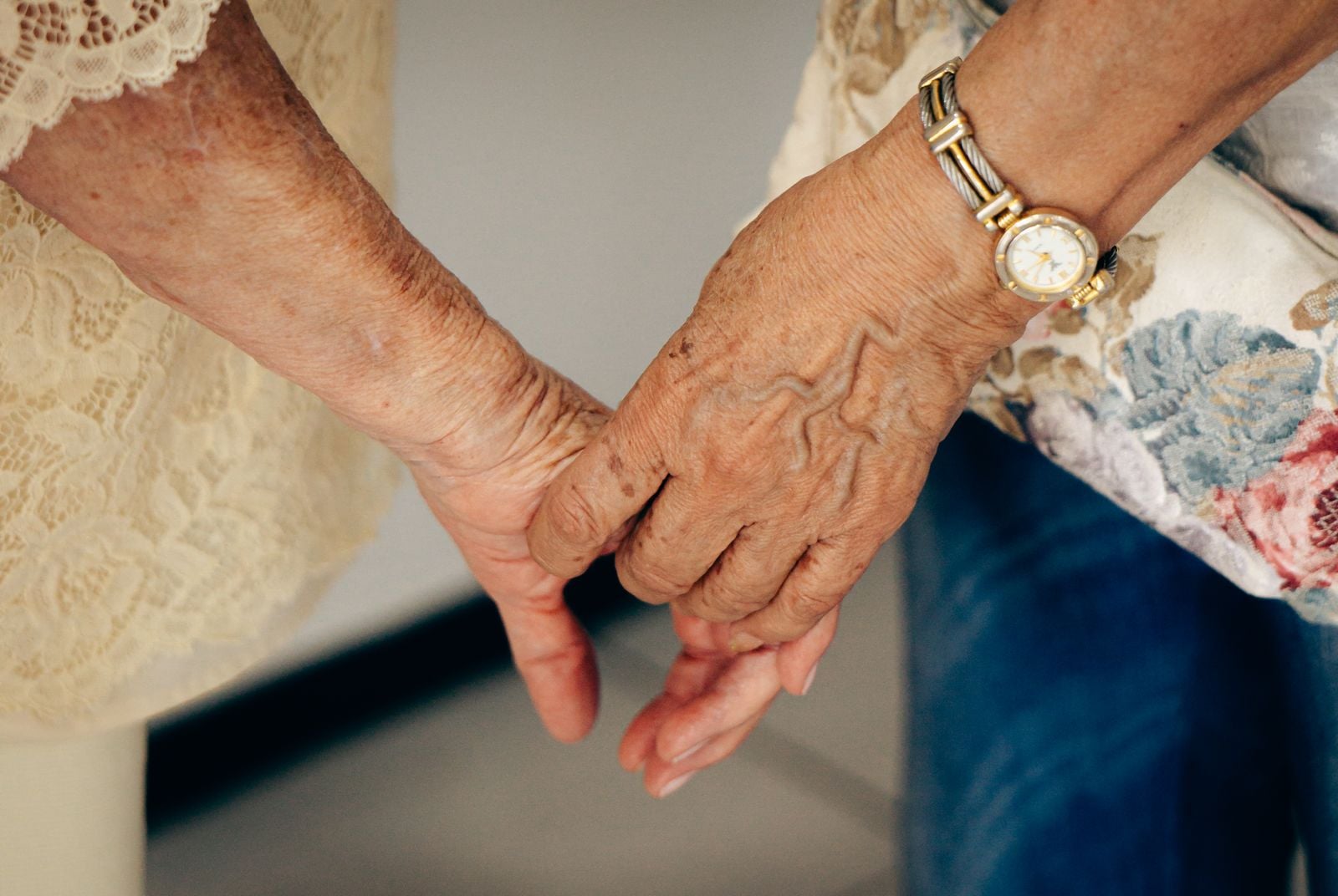
The internal event is a slow inversion of authority. For most of adult life, even long after a child becomes independent, the parent remains a kind of reference point. You do not consult them on every decision. But they exist, in the back of the mind, as the person who once knew what to do when you did not. Their competence was a form of quiet infrastructure. You stopped noticing it the same way you stop noticing the foundation of a house.
Then the foundation shifts. And you feel the whole building wobble.
One recognizable version of this: an adult child asked, by a parent who once ran their own small business, to explain — step by step — how to set up automatic bill pay. The explanation gets repeated three times. The parent writes each step down carefully in a notebook they’ve started keeping. Afterward, the adult child sits in the car for twenty minutes without turning the key. The problem was never the bill pay. The problem was that the parent had a notebook now.
What is being grieved in these moments is often mistaken for grief about the parent’s decline. It is that, partly. But it is also grief about the loss of one’s own position in the family — the position of being someone’s child, in the operational sense of the word. Being someone’s child means having a person above you in the hierarchy of competence. When that person steps down, or is pulled down by illness, the position vanishes. There is nobody above you anymore. You are the one being consulted. You are the one who has to decide.
People who have not been through it tend to imagine this feels like promotion. It does not. It feels like exposure.
Adult children arrive at caregiving with a lifetime of relational history already loaded into the situation. The mother who was warm becomes a warmer patient. The father who was distant becomes a distant patient. The parent who was controlling often becomes a controlling person being cared for, which is its own particular hell. Caregiving does not reset the relationship. It amplifies whatever the relationship already was, and then asks the adult child to keep functioning inside the amplification.
There is a related pattern worth naming carefully. Children of parents who were emotionally reserved often struggle to identify what they are feeling as caregiving intensifies, because they were never given a working vocabulary for family closeness in the first place. Those same adults, in caregiving, often report feeling numb rather than sad, and then feel guilty about the numbness. The numbness is not evidence of not caring. It is evidence of a relationship that was never rehearsed for this kind of intimacy.
The physical intimacy is its own reversal. Helping a parent to the bathroom, cutting their food, buttoning a shirt they used to button for you — these acts run in the wrong direction along a track the body knows well. Early parent-child interactions build attachment through touch, playfulness, and physical presence. Those patterns are usually understood forward — how a parent’s presence shapes a child. Read backward, they describe a template. The template says: this direction of care is what family bodies are for. When the direction reverses in late life, the reversal is not just emotionally disorienting. It is somatically disorienting. Something in the body objects.

Layered on top of all this is the ordinary noise of adult life. Plenty of long-distance caregivers are managing a parent’s dementia from a thousand miles away while raising their own kids and holding down a full-time job — a shared spreadsheet with a sibling, flights booked on weekends, calls from the memory-care facility taken during a lunch break. The visible burden is the calendar. The invisible burden is lying awake at 2 a.m. rehearsing the next day’s conversations — with the neurologist, with a sibling, with a boss. That pattern is familiar to anyone whose responsibilities have exceeded what they can comfortably hold in mind. Caregiving pushes it into overdrive because so many of the obligations involve a person whose own memory is failing. There is no one to hand the list to.
Siblings complicate everything and clarify almost nothing. Care gets divided unevenly, and this plays out in family group chats every day. The child doing the most feels resentful. The children doing less feel guilty, or defensive, or convinced that the primary caregiver is doing it wrong. Old sibling roles reactivate. The bossy one gets bossier. The peacekeeper burns out. The one who moved far away calls with suggestions. None of this is anyone’s fault, exactly. It is what happens when a family system built decades ago is asked to perform a task it was never designed for.
Work adds its own pressure. Many primary caregivers reduce their hours or step out of jobs entirely, which introduces financial stress on top of everything else. The choices are not really choices. They are trade-offs between two things a person cannot afford to lose.
And underneath all of it, quietly, the hierarchy keeps inverting.
What tends to help — not to fix, but to help — is naming the inversion out loud, calling it what it is: grief for who a parent used to be to the adult child, not only grief about their decline. People who can name it that way often describe something loosening. They’re still exhausted. Still overwhelmed by the paperwork. But they stop expecting themselves to feel only love and duty. They make room for the other feeling — the disorientation of no longer having a parent above them — and the room itself becomes a kind of relief.
Naming does not solve the caregiving. It solves a smaller and more important thing: it stops the caregiver from adding self-judgment on top of the actual difficulty. Most adult children in this situation are not struggling because they are doing it badly. They are struggling because they expected the emotional work to be limited to sadness about their parent, and it turns out to include sadness about themselves.
Small structural moves matter more than grand ones. The people who last longest in caregiving tend not to overhaul their lives. They rearrange the edges — a standing Wednesday call with a sibling, a two-hour window on Saturdays that belongs to nobody but themselves, a rule about not answering the facility’s non-emergency emails after 8 p.m. Caregivers who survive the long haul protect small pieces of time with unreasonable ferocity.
A note on scope. This piece is about the ordinary emotional weight of caregiving, not about clinical distress. Caregiving can push some people into territory where professional support genuinely helps — a therapist, a support group specific to the parent’s condition, or in some cases a physician. If the weight has stopped feeling like weight and started feeling like something you cannot see the edges of, that is worth taking seriously with someone qualified to help. DMNews is not a clinical resource. What follows is observation, not medical guidance.
Here is what the observation comes to.
The hierarchy an adult child grew up inside was never really about power. It was about orientation. It told the child which direction help flowed, which direction worry flowed, which direction the small daily competencies of life flowed. When a parent grows frail, that orientation flips, and the flip happens faster than the internal map can be redrawn. For a long stretch — sometimes years — the adult child is operating with two maps at once. The old one, which still says they are above me, and the new one, which says I am the one who has to know. Living inside both maps at the same time is what exhausts people. Not the pill schedule. Not the appointments. The double map.
The map redraws eventually, though never all at once and never cleanly. What helps is knowing that the redrawing is the work — the actual, invisible, uncredited work — and that being tired from it is not weakness. It is the cost of a shift most people are asked to make with no training and no ceremony, in the middle of everything else their life is already doing.