
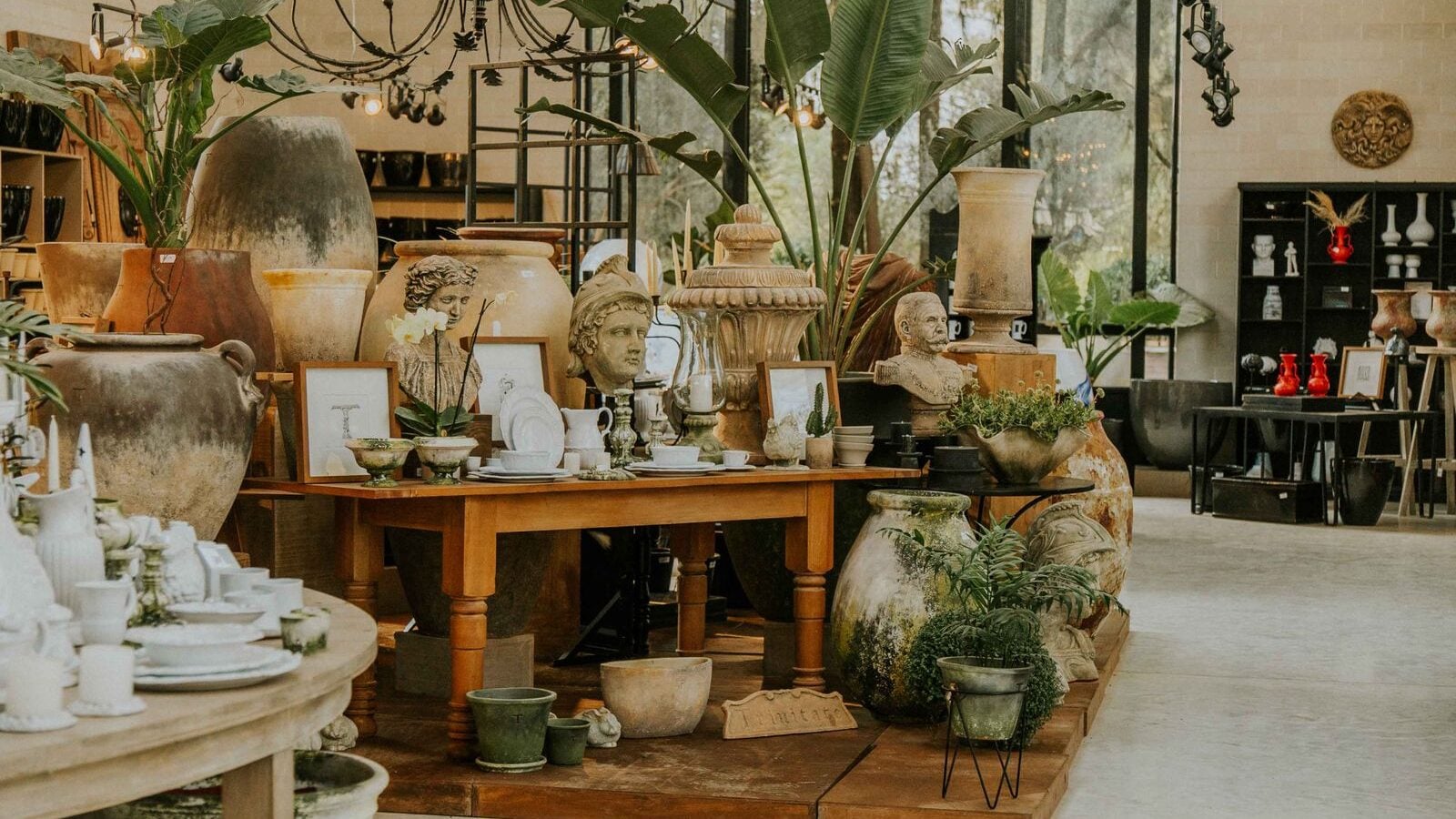
Before the pandemic, Williams-Sonoma’s revenue was split almost evenly between its stores and its website. It is not anymore. E-commerce now accounts for about two-thirds of the company’s total revenue, across a portfolio that runs from the Williams-Sonoma kitchenware brand to West Elm, Rejuvenation and Pottery Barn.
Pottery Barn is the largest of those brands, and the one that built its reputation on Sunday-afternoon catalog browsing and cavernous suburban showrooms. The stores are still there. The catalog still lands in mailboxes. But the center of gravity has moved.
That shift, quiet as it seems, is the story of American home retail in 2026.
The furniture category was supposed to resist it. Sofas are tactile. Beds are personal. Dining tables are heirloom decisions. And yet the tactile argument, long the industry’s shield against e-commerce, has been quietly worn down by a combination of better product visualization, generous return policies, and a generation of shoppers who trust reviews more than salesfloor lighting.
Williams-Sonoma’s pivot reads less as a strategy than as an accommodation. The company has spent the intervening years thinning its store footprint — 506 locations at the end of fiscal 2025, down from 512 a year earlier — while pouring capital into the software layer that connects a room-planner app to a delivery truck.
The competition tells you the direction of travel. Cozey, the Montreal-based direct-to-consumer brand, opened an approximately 5,000-square-foot pop-up on Abbott Kinney Boulevard in Los Angeles in April 2026, with a permanent New York City store planned for early 2027. The interesting part is not the ambition but the sequence: online first, then physical.
Pottery Barn is running the same sequence in reverse. Same destination.
The omnichannel model, a term that has been used to mean almost nothing for a decade, is finally being forced to mean something concrete. It means a customer can begin a purchase on a tablet in bed, continue it on a laptop at work, walk into a store to sit on the floor model, and complete the transaction from the parking lot. The retailer that cannot stitch those four moments into a single experience loses the sale to the one that can. The retailers still treating digital and physical as competing budgets are the ones losing it.
The industry backdrop is not gentle. Home furnishings has been in a slump for the better part of two years, squeezed by tariffs, elevated mortgage rates that suppress home purchases, and consumers who deferred discretionary upgrades through 2024 and much of 2025. Closures and bankruptcies have kept thinning the middle of the market, from national chains to independents that had traded for decades. Zak Stambor, a senior analyst at eMarketer, has described the mechanism plainly: elevated mortgage rates and home prices have pushed housing turnover close to historic lows, and people who are not moving are not in the market for a couch. Even the strongest operator felt it — Pottery Barn, Williams-Sonoma’s biggest brand, grew revenue 0.4 percent in fiscal 2025, after a 6.2 percent decline the year before.
Pottery Barn’s advantage, such as it is, comes from brand equity built over decades of catalog aesthetics that shaped what an entire generation of American households believes a living room should look like. That equity translates online more cleanly than it does in a physical store, because the aspirational image was always the point. The store was a place to touch what you had already decided to buy.
The technological substrate matters here. Shopify’s 2025 results underline how much of the plumbing for modern commerce now runs through a handful of platform providers: US$378 billion in merchandise volume across its merchants in 2025 and, on the company’s own estimate, more than 14 percent of the US e-commerce market. Augmented reality visualization, once a novelty, is now standard. Financing at checkout, once a phone call to a credit desk, is a two-tap decision. The friction that once protected physical retail has been engineered away, one release cycle at a time.
None of this is unique to America. India’s digital economy is projected to reach US$1 trillion by 2030. The playbook translates. The question of what a store is for, when the transaction happens on a screen, is being asked in Mumbai and Melbourne with the same urgency as in Manhattan.
What the store is for, in the emerging answer, is confidence. Not conversion. There are fewer Pottery Barn showrooms in 2026 than there were in 2016, and the ones that remain increasingly function as a physical trust signal for a digital transaction — somewhere to confirm that a finish looks the same in person before ordering from a phone in the parking lot. On that reading, the store is a marketing expense that happens to sell things, rather than a sales channel that happens to build the brand.
What remains unresolved is what happens to the mid-market. Pottery Barn sits comfortably above IKEA on price and below Restoration Hardware on aspiration, in a slice of the market that has historically depended on impulse and habit. Neither impulse nor habit travels well through a checkout screen. The brands in that slice have to earn every click, and the ones that fail to build a reason for the click are being quietly delisted from consumer consideration, one algorithm at a time.
The furniture industry spent twenty years telling itself that its category was different. That sofas were too big, too personal, too tactile to sell online at scale. The generation that grew up buying mattresses in cardboard boxes did not receive the memo. They are now furnishing their first, second, and third homes, and they expect the couch to arrive the way the mattress did — configured on a phone, delivered on a Tuesday, returned without a phone call if it doesn’t work.
Pottery Barn is not so much building an online home as accepting that its customers already live in one. The catalog on the coffee table has become the tab open on the laptop. The showroom has become the confidence layer. The transaction has moved to the phone. Everything the brand does now sits downstream of that fact.
The stores that survive will do so because they have found something to be, other than places where furniture is sold.