
This article follows the Direct Message methodology, designed to cut through the noise and reveal the deeper truths behind the stories we live.
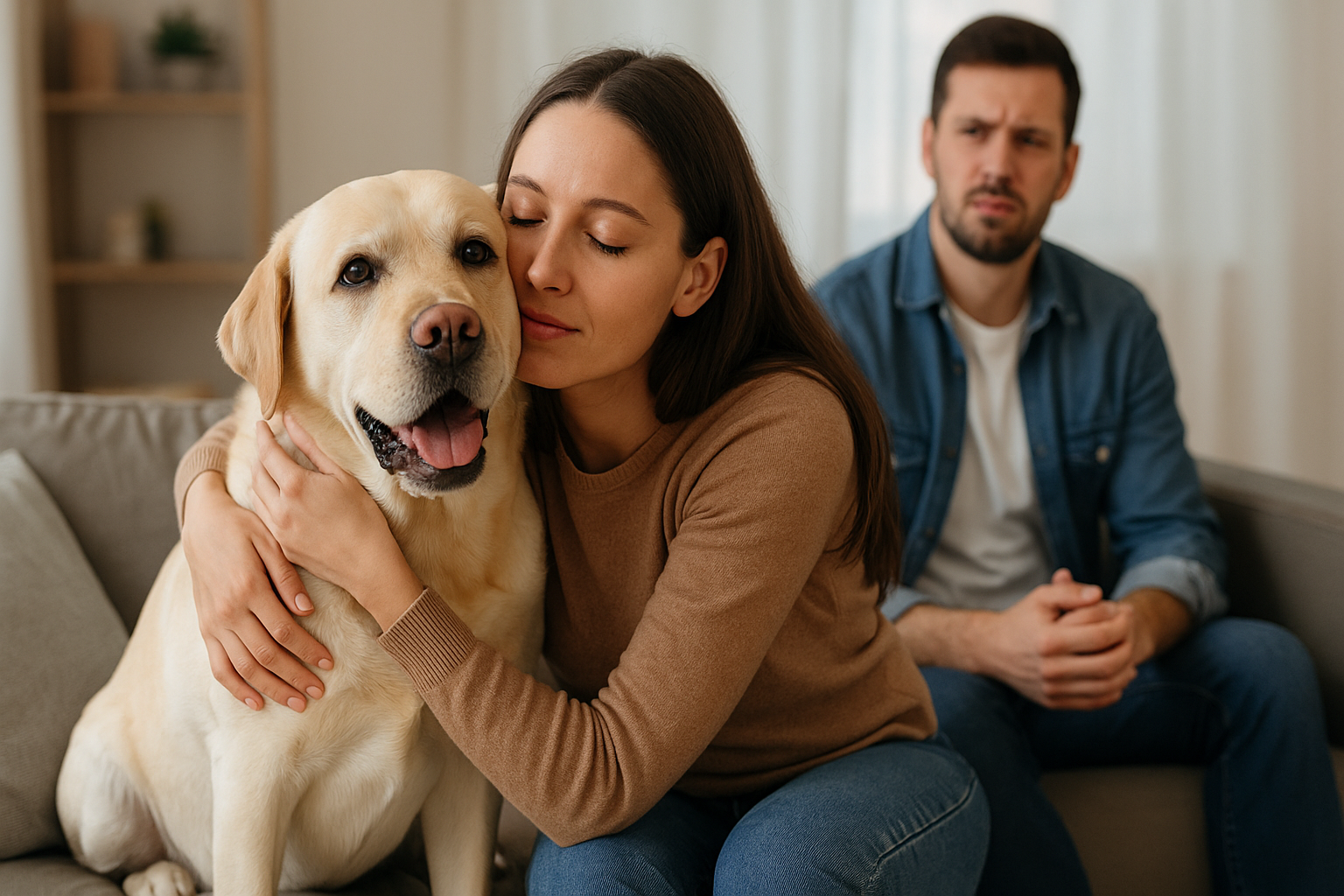
Let’s be honest—there are days when hanging out with a dog sounds way better than dealing with people.
And if you’ve ever looked into the eyes of a Labrador and thought, “You get me more than most humans do,” you’re not alone.
But according to psychology, this preference says a lot more about your personality than you might think. It’s not just about loving dogs—it’s about how your brain and heart are wired.
So what does it really mean when you’d rather cuddle with a dog than make small talk with people?
Let’s take a look.
1) You’re highly empathetic—just in a quiet way
Many people who prefer dogs are deeply empathetic, but they’re not loud about it.
They feel emotions strongly. They pick up on energy in the room. They can sense when someone—or something—is hurting. And that’s why dogs make perfect companions. They don’t need words. They just need presence. And for you, that’s enough.
Psychologists call this affective empathy—feeling what others feel. And dog lovers often have it in spades.
2) You’re drained by drama and emotional games
People can be complicated. Passive-aggressive messages, fake small talk, social obligations—it’s a lot.
Dogs, on the other hand, are straightforward. They love you. They’re loyal. They’re not going to guilt trip you or talk behind your back.
If you find yourself avoiding drama like the plague, psychology would say you might score high in low social reactivity—meaning you just don’t enjoy navigating the emotional ups and downs of human interaction.
3) You value loyalty over popularity
Here’s the thing: dogs don’t care how many followers you have or what car you drive. They care if you’re kind. If you feed them. If you come home.
People who prefer dogs tend to value deep trust and loyalty over surface-level popularity. You’re probably someone who keeps a tight circle and would rather have one real friend than ten flaky ones.
This points to a personality that’s high in conscientiousness—you’re loyal, responsible, and consistent. Just like your dog.
4) You’re more observant than you let on
When you spend a lot of time with animals, you become really good at noticing subtle behavior.
You might not say much in a crowded room, but you’re definitely watching. You notice tone changes, body language, energy shifts.
According to psychology, that means you might score high in social sensitivity. You read the room—just quietly.
5) You have a strong need for emotional safety
People can be unpredictable. One minute they’re warm and friendly, the next they’re cold or distant. That inconsistency can feel exhausting, especially for sensitive souls.
Dogs? They’re a safe space. Their love is consistent.
Psychologists suggest that people who are drawn to this kind of emotional safety may have experienced inconsistent connections in childhood—or they simply place a high value on emotional security as adults.
6) You’re comfortable with silence
Not everyone needs constant conversation.
People who prefer dogs often enjoy peace, quiet, and just being. They’re not afraid of silence. They find comfort in presence—not just words.
This links to a personality that leans introverted, or at least introspective. You recharge in calm settings, and dogs are the perfect companion for that.
7) You’re a bit of a nonconformist
Let’s face it—society kind of expects us to be “people people.” But not everyone fits that mold.
Preferring dogs over people is, in a way, going against the grain. It’s quietly rebellious. It says, “I know what brings me peace, and I’m not afraid to choose it.”
That’s a sign of individualism. You think for yourself. You don’t follow trends just to fit in.
Final thought
If you prefer dogs over people, there’s nothing wrong with you. In fact, psychology says it might mean you’re more emotionally intelligent, observant, and loyal than most.
It might mean your heart is soft in a world that can feel sharp.
So next time someone raises an eyebrow when you say you’d rather hang with your dog than go to a party—just smile. You’re wired for something deeper. And your dog knows it, too.