
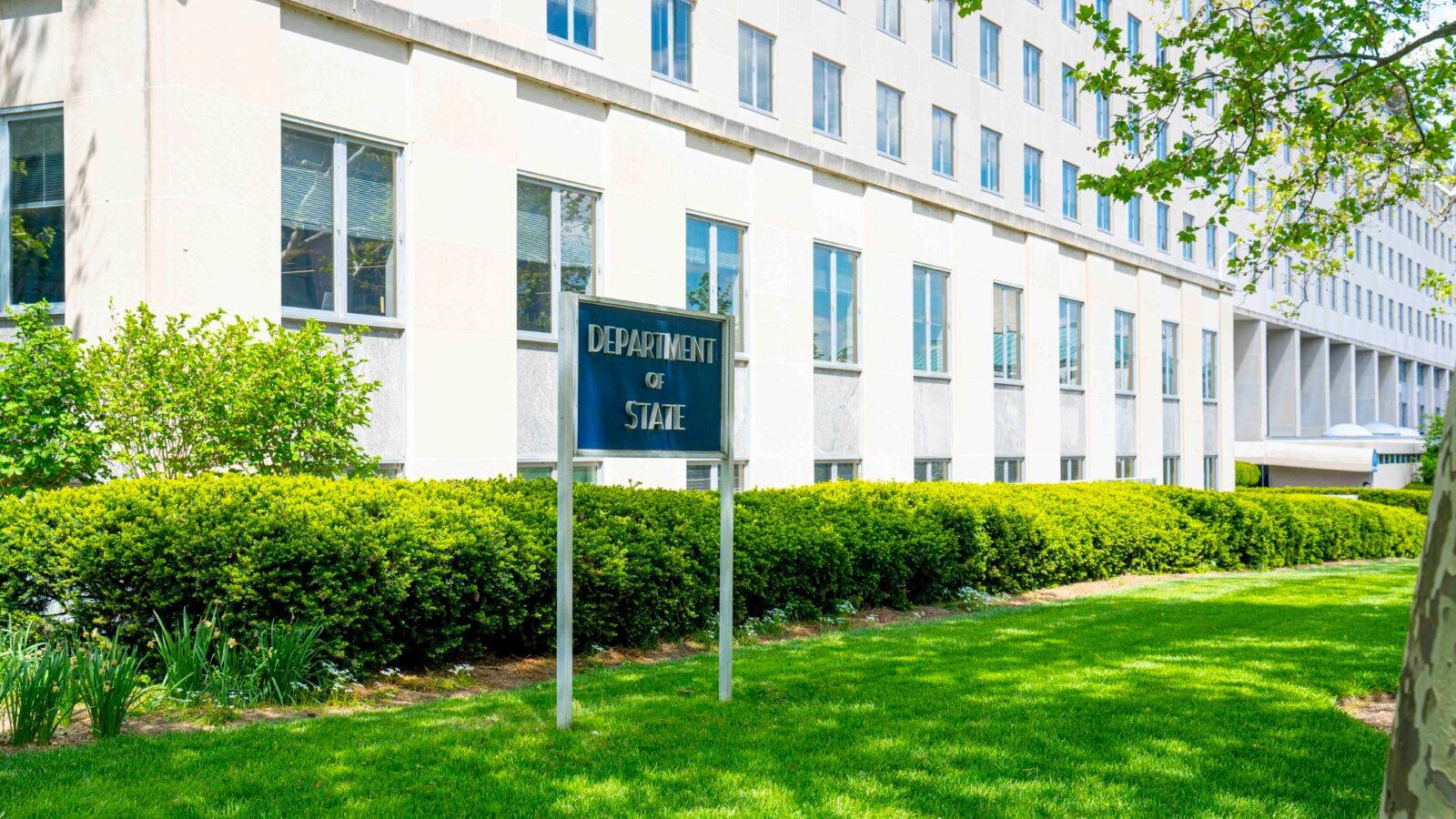
The Diversity Visa program spent much of the fiscal year frozen. Then, on or about August 28, 2026, Judge Edward J. Davila of the U.S. District Court for the Northern District of California granted in part the relief sought in Medani et al. v. Trump et al., Case No. 5:26-cv-06332, directing the Department of State and U.S. Citizenship and Immigration Services to resume ordinary adjudication of FY-2026 diversity visa cases to the extent practicable and in good faith. The same order certified nationwide subclasses covering FY-2026 selectees and their family members.
What the order did not do is change the calendar. Diversity visa numbers and DV-2026 eligibility expire on September 30, 2026, by statute. A district judge cannot manufacture more time. That leaves a compressed window between a late-August order and a hard end-of-September cutoff, and inside that window sits a large pool of African selectees and their family members. Secondary reporting citing State Department data has put the figure at roughly 53,939 prospective applicants across 48 African countries, with Kenya, Egypt, Ethiopia and Ghana the nationalities that coverage has named most often.
What the Medani order actually changed
The practical effect of the order was to unfreeze machinery, not to guarantee visas.
Before the ruling, DV-2026 processing had been suspended, and USCIS had been operating under a policy memorandum, PM-602-0193, that shaped how diversity-based cases were held. In its alert dated September 4, 2026, USCIS described the court order as temporarily vacating that hold policy pending further litigation, and said it must take all reasonable steps during the remainder of the diversity visa fiscal year to resume ordinary adjudication of pending adjustment of status applications without applying it. The agency stated it disagrees with the court’s conclusion but will comply while it considers further review.
That framing matters for anyone reading the order as a permanent settlement. It is not. A temporary vacatur pending litigation is a status that can shift again if an appellate court intervenes or if the district court modifies its own order. The agencies are complying under protest, which is a normal posture in immigration litigation but a fragile one for applicants trying to plan travel, medical exams and interview attendance in a matter of weeks.
The order also contemplated a status report deadline in mid-September, on or about September 18, which is the kind of checkpoint that tells a court whether “to the extent practicable and in good faith” is producing measurable movement. That phrase carries weight. It is not a command to issue a specific number of visas by a specific date. It is a command to stop treating the program as suspended and to run cases through normal channels, with the government retaining discretion over how quickly capacity can be rebuilt at individual consular posts.
For selectees, the difference between those two readings is the difference between an interview slot and a case that stays technically active until it expires.
Why 53,939 is a scale figure, not a relief figure
The number circulating most widely deserves careful handling.
The roughly 53,939 figure describes prospective DV-2026 applicants from African countries, and the reporting is explicit that it counts principal selectees, spouses and children together. That is not an editorial gloss. It is how the State Department itself constructs the category: its DV-2026 selected entrants breakdown is expressed in prospective applicants, meaning selectees and their spouses and children.
That distinction alone reshapes the story. A single selected entrant with a spouse and two children accounts for four people in the prospective applicant count and one drawn entry. The pool is therefore smaller in households than the headline number suggests, and the visa numbers consumed per household are larger than one.
Second, selection is not entitlement. Diversity Visa selection has always produced more selectees than available visas, because the State Department deliberately over-selects to account for applicants who never file, who are found ineligible, whose documents fall short, or whose case numbers never become current before the fiscal year closes. In an ordinary year, a meaningful share of selectees never reach an interview. In a year that lost months to suspension and litigation, that share is likely to be larger, not smaller.
Third, and most importantly, the court did not grant relief to a headcount. It ordered agencies to resume processing. Saying a judge delivered green cards to a fixed number of Africans misstates both the mechanism and the arithmetic. The accurate statement is that a large African applicant pool is now inside a reopened process with a hard expiration date at the end of it.
It is also worth correcting a smaller distortion. Egypt, Ethiopia and Ghana recur in secondary coverage because a widely syndicated headline named them, not because they sit at the top of the table. The State Department’s own DV-2026 breakdown puts Egypt highest among African nationalities at 5,527 prospective applicants, followed by Algeria at 5,457, Sudan at 5,226, Kenya at 3,949 and Morocco at 3,670. Ethiopia is genuinely high at 3,287. Ghana, at 1,642, is well down the list. The named countries are illustrative of the pool, not a ranking of it, and the 48-country footprint spans most of the continent.
Resumption on paper, uncertainty in practice
The reconciliation problem is where careful readers should slow down.
On the question of whether the freeze actually lifted, the State Department has said so itself. Its updated diversity visa issuance guidance, last revised August 31, 2026, states that as of August 28, 2026, in accordance with the court’s order in Medani, the December 2025 pause of diversity visa issuance is no longer in effect. That is primary confirmation, from the agency that issues the visas, that the government moved from freeze to resumption at the departmental level.
At the same time, secondary reporting has described continued screening uncertainty in the weeks following the order, including additional vetting steps and pauses affecting immigrant visa processing more broadly. Those accounts are not the same thing as a declared nationwide DV freeze, and they should not be read as one. What can be said with confidence is narrower: the court ordered resumption, the State Department published guidance confirming the pause was lifted as of August 28, and applicants and attorneys have since reported an uneven picture at the operational level.
Both things can be true simultaneously. A department can lift a policy suspension while individual posts still face appointment backlogs, staffing limits, administrative processing queues and security-review requirements that slow issuance to a fraction of theoretical capacity. Resumption is a policy state. Issuance is a throughput problem.
For DV-2026 selectees, throughput is the only variable that matters now. Interview availability at posts serving high-volume African markets, document readiness, medical exam scheduling and any case-specific administrative processing all have to resolve inside the same shrinking window.
The relief in Medani is real, and it restored something that had been shut. But the statute did not blink. Unused FY-2026 diversity visa numbers expire on September 30, 2026, and a case that is active but uninterviewed on October 1 is a case that ended. Whether the reopened process converts into visas for a meaningful share of that African applicant pool will be decided by consular capacity and vetting timelines, not by the order itself.