
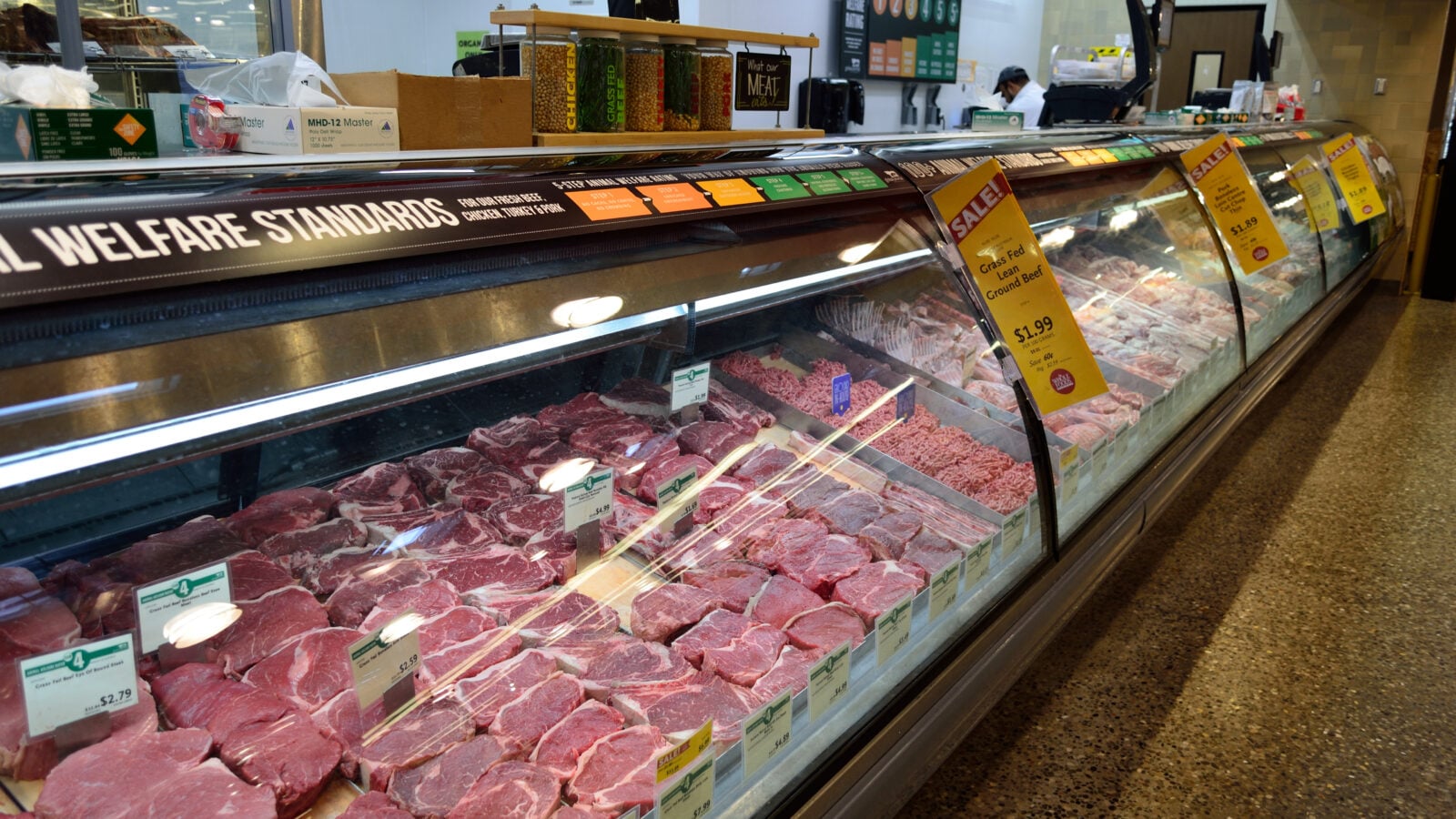
Letters dated 14 July 2026 went out from Associate Attorney General Stanley Woodward to eight retailers: Kroger, Costco, Aldi, Amazon, Walmart, Albertsons, Publix, and Ahold Delhaize USA. The requests, reported with letter PDFs by Independent Newsroom, seek beef pricing strategies, profit margins, costs, wholesale purchasing arrangements, and internal market analysis covering roughly 2020 through 2026. That is about six years of commercial decision making at the shelf level, from the pandemic supply shock through the current run of record retail beef prices.
The letters also instructed the companies to preserve relevant documents, and Independent Newsroom reports the department asked for personnel briefings by roughly 24 July 2026. The Justice Department publicized the retail expansion around 1 and 2 September 2026, which is why most readers encountered the story in September rather than July. The gap matters, and it is worth holding onto before drawing conclusions about pace or intent.
What the letters actually ask, and why retail joined the frame
Antitrust inquiries into beef have historically pointed upstream. The dominant packers occupy a narrow chokepoint between hundreds of thousands of cattle producers and tens of thousands of retail outlets, and the existing meatpacking inquiry, described in coverage with May 2026 context, reflects that structural logic. Concentration at the packing stage has been the standard explanation for why cattle prices and retail beef prices sometimes move in ways that feel disconnected.
Adding retailers changes the shape of the picture rather than replacing it. A packer’s margin tells you what happened between the feedlot and the boxed beef contract. A grocer’s margin tells you what happened between that contract and the price sticker. Without both, the ledger has a hole in the middle. The July letters, as reported by Transport Topics, read as an attempt to close that hole by asking the companies at the end of the chain to show their own arithmetic.
The specific categories requested are instructive. Pricing strategies and market analysis are internal reasoning documents, the memos and models that explain why a chain moved ground beef up eleven cents in a given quarter. Wholesale purchasing arrangements describe the contracts that determine what the retailer actually paid. Costs and margins connect the two. Taken together, they let investigators test whether shelf prices tracked input costs or diverged from them, and whether any divergence appears coordinated or simply parallel.
Parallel is the operative distinction. Competitors in a concentrated market often move in similar directions at similar times for entirely lawful reasons, because they buy from the same suppliers and face the same input shocks. Antitrust law does not prohibit similarity. It prohibits agreement. Six years of documents is the kind of record that can, in principle, separate the two, or fail to.
July letters, September announcement
The two dates are doing different work, and conflating them distorts the story.
The 14 July letters were the investigative act. They imposed obligations on the recipients: preserve documents, provide records, make personnel available for briefings on a near term timeline. That is the department operating in its normal mode, which is quiet. Civil investigative demands and informal information requests generally do not arrive with a press conference, because publicizing an inquiry at its early stage can complicate the inquiry itself. Recipients respond differently when the request is a matter of public record. Markets react. Stock prices move on the fact of an investigation rather than its findings.
The early September publicization was a separate decision, made roughly six weeks later, after the letters had been out long enough for responses and briefings to begin. Farm Policy News at Illinois placed the expansion in the context of ongoing agricultural price scrutiny, which is where much of the political pressure on beef originates. Cattle producers have argued for years that the spread between what they receive and what consumers pay is too wide to be explained by ordinary market friction.
Woodward is the department’s number three official, and coverage has been careful to note that he appears to be overseeing antitrust matters while a nominee for the top antitrust post remains pending. That is a soft point worth keeping soft. It suggests the inquiry has senior attention. It does not, by itself, indicate a predetermined outcome.
What six years of margin data can and cannot settle
Here is where analytical discipline matters most.
Record retail beef prices in 2026 have at least three candidate explanations that are not mutually exclusive. The first is cattle supply. The national herd contracted substantially following drought years, and fewer cattle entering feedlots means less beef reaching the market, which raises prices through ordinary scarcity. This explanation requires no misconduct at any stage.
The second is packer margin. If the processing stage captured an unusual share of the total value between the ranch and the register, that would show up in the packer side of the inquiry, which predates the retail letters.
The third is retail margin, which is what the July letters are designed to examine. If grocers widened their own markup on beef beyond what their wholesale costs required, the documents would show it. If they did not, the documents would show that too.
Data requests can establish sequence, magnitude, and internal reasoning. They can show whether a retailer’s margin on beef expanded or compressed relative to its historical baseline, and whether internal analysis anticipated consumer tolerance for higher prices. What they cannot do on their own is establish agreement between competitors, which is the core requirement for most antitrust claims of this kind. Nor can they resolve causation cleanly when three pressures operate simultaneously on the same product. A herd contraction and a margin expansion can coexist, and separating their contributions requires more than a spreadsheet.
The honest reading of the current record is narrow. Eight major grocers received requests for six years of beef pricing documents in July. The department confirmed the retail expansion in September. Both the packing and retail stages are now within the inquiry’s scope. None of the named companies has been charged with anything, and none has been found to have done anything unlawful.
Expanding who has to answer questions is a statement about the investigation’s reach. It is not a statement about the answers.