
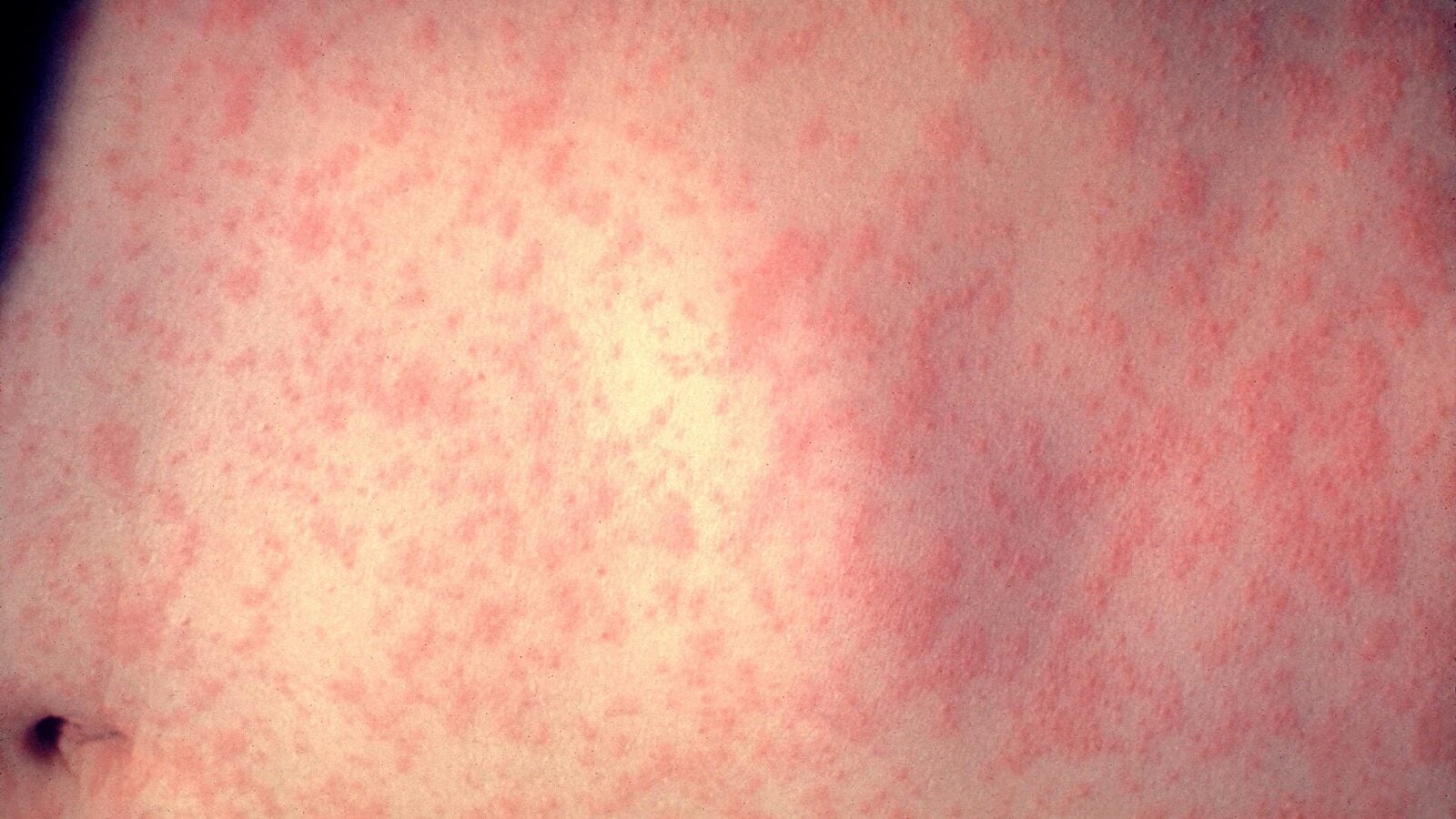
A county coroner in Pennsylvania has attributed an infant’s death to measles, NBC News reports, moving the cause out of the category of suspected or unconfirmed and into the category of an official finding tied to a death certificate. The coroner is Dr. Stephen Diamantoni of Lancaster County. The reporting places that attribution alongside national case tally reporting for the year, and notes that federal acknowledgment of Pennsylvania’s 2026 measles deaths has not moved at the same pace as local determinations.
That gap, between a county office naming a cause and a national system counting it, is the actual story here. It is easy to read the gap as scandal. It is more accurate, and more useful, to read it as two different instruments doing two different jobs on two different clocks.
The subject is an infant. There is no need for detail beyond what has been attributed, and this piece will not add any.
What a coroner’s attribution actually is
A death certificate is a legal document, not a press release and not an epidemiological data point. In Pennsylvania, county coroners hold medical-legal authority to investigate deaths that fall into certain categories and to determine cause and manner. When a coroner attributes a death to a specific disease, that determination carries administrative weight: it enters vital records, it can affect what families are told, and it becomes the baseline document that other systems eventually read.
That is different from the phrase public health agencies often reach for, which is some version of “measles-associated.” Associated language is deliberately wide. It covers cases where the virus was present and plausibly contributory without the agency asserting a single primary cause. Agencies use it because their job is surveillance across many cases, not adjudication of one. A coroner’s job runs the other direction: one death, one file, one determination.
Neither framing is dishonest. They are built for different burdens of proof and different consequences. A coroner who writes measles as cause of death is making a call about a specific person with specific findings in front of them. A state or federal agency describing a death as measles-associated is often signaling that its own review is incomplete, or that its classification criteria require something the local file has not yet supplied in the format the agency uses.
NBC’s video package carries the coroner’s attribution directly, which is worth watching if you want to hear how the determination is being described rather than how it is being characterized secondhand.

The third layer is the national count. The CDC’s fatality figures for a given outbreak year are not assembled by scanning headlines. They move through state reporting channels, case classification, and internal review. That process introduces lag by design. Lag is not denial. But lag becomes politically legible when a local official has already said something plainly and the national number has not changed to match.
Why the distinction matters in a contested outbreak
Pennsylvania’s measles reporting this year has not been smooth. There has been visible friction between how state health framing describes deaths, what county coroners have said publicly, and how quickly federal acknowledgment has followed. Earlier NBC reporting on a separate newborn death showed how granular that friction can get: in that case, the coroner discussed a ruptured spleen and the presence of measles virus in tissue while disputing measles as the primary cause. That is the same office, applying the same medical-legal standard, and reaching a different conclusion on a different death.
That earlier case is the strongest argument against treating coroner findings as a rubber stamp for outbreak narratives in either direction. A coroner willing to say measles was not the primary cause in one death, and to say it was in another, is behaving like an investigator rather than an advocate. It also means the current attribution should not be read as a shift in institutional posture. It should be read as a finding about one file.
The dispute matters because measles deaths are politically loaded in a way that most vital-records determinations are not. Vaccination policy, federal health leadership, and state outbreak response are all being argued over simultaneously, and a single certificate can get conscripted into any of those arguments within hours. Once conscripted, the actual epistemic content of the document tends to disappear. People start arguing about what the death proves rather than what the coroner determined.
Keeping those separate is not pedantry. It is the only way to have the argument honestly.
What one certificate can and cannot tell you
What it can tell you: a county official with statutory authority reviewed a specific death and concluded that measles was the cause. That is a substantive, on-the-record determination, and it is more than a suspicion. It is reasonable to treat it as the most authoritative available statement about that particular death unless and until it is formally amended.
What it cannot tell you: how many measles deaths Pennsylvania has had this year, whether federal counts are correct or suppressed, or what the national trajectory of the outbreak is. One certificate is a data point of size one. It does not settle the total, and per NBC’s reporting, federal acknowledgment of Pennsylvania’s 2026 measles deaths has lagged behind local determinations, which means the national figure and the county finding may not align on any given day.
It also cannot tell you the motives of anyone involved. Slow federal counting is consistent with bureaucratic process, with methodological caution, and with institutional reluctance. Nothing in a death certificate distinguishes among those.
The defensible reading is narrow and holds up. A coroner in Lancaster County has attributed an infant’s death to measles. That finding is official within its own lane. The national ledger operates on a slower clock and a different standard, and readers should expect those two things to disagree in public for a while before they reconcile.