The Direct Message
Tension: The funniest person in a friend group is often the one carrying the most unacknowledged pain, because their humor creates an illusion of resilience that prevents anyone from checking on them.
Noise: Society classifies humor as a ‘mature’ defense mechanism and celebrates those who wield it, conflating comedic skill with emotional well-being and rewarding the performance that keeps the real person invisible.
Direct Message: The joke was never about making people laugh — it was about making sure they stayed. And the only person who knows the difference between genuine resilience and skilled deflection is the one who can’t stop performing.
Every DMNews article follows The Direct Message methodology.
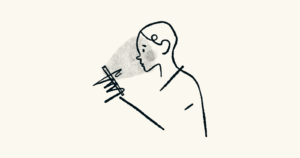
Try this experiment: Next time you’re having coffee with a friend, count how many times one of you glances at your phone. Not full-on scrolling—just those quick, almost unconscious checks. The little peek when it buzzes. The reflexive flip when there’s a lull in conversation.
I tried this recently, and the number shocked me. In a 45-minute catch-up, we collectively looked at our devices 23 times. Twenty-three moments where we weren’t fully there, despite sitting three feet apart.
Here’s the kicker: we both genuinely wanted to connect. We’d scheduled this time specifically to catch up. Yet somehow, the gravitational pull of our digital worlds kept yanking us away from the actual human being right in front of us.
This isn’t a story about two people with poor self-control. It’s about what happens when an entire culture normalizes—even celebrates—being constantly available to everyone except the person you’re actually with.
The illusion of connection
We’ve been sold a beautiful lie. The promise was simple: technology would bring us closer together. No more missing important moments. No more feeling disconnected from loved ones. Just seamless, constant connection at the tap of a screen.
And technically, it delivered. You can video chat with someone on the other side of the planet. You can share your breakfast with hundreds of people simultaneously. You can be “reached” 24/7.
But here’s what nobody mentioned: being reachable isn’t the same as being present.
Kaja Perina, a psychologist studying our relationship with technology, found something disturbing: “The average adult checks their phone 96 times daily – which averages out to approximately once every 10 minutes of our waking life.”
Think about that. Every ten minutes, we’re pulled away from whatever—or whoever—is in front of us. It’s like trying to watch a movie while someone keeps pausing it every few minutes to show you random TikToks. You might technically “see” the whole film, but did you really experience it?
The constant availability hasn’t made us more connected. It’s made us perpetually distracted, always half-listening, always partially somewhere else.
What presence actually means
Real presence is becoming a lost art. And I’m not talking about some mystical, meditation-retreat version of presence (though that’s cool too). I’m talking about the basic human ability to be fully engaged with another person.
Remember the last time someone gave you their complete, undivided attention? No phone on the table. No glancing at their smartwatch. Just… them, fully there with you. It probably felt unusual, maybe even intense.
That’s how rare genuine presence has become.
In my book Hidden Secrets of Buddhism: How To Live With Maximum Impact and Minimum Ego, I explore how Buddhist monks have understood this for centuries. They don’t have a word for “multitasking” because the entire concept would seem absurd to them. When you’re drinking tea, you drink tea. When you’re listening to someone, you listen.
But in our world? When you’re having dinner, you’re also checking work emails, responding to texts, and maybe posting a photo of your meal. Your body might be at the table, but your mind is scattered across a dozen different digital spaces.
The psychology of fractured attention
Our brains aren’t wired for this level of constant switching. Every ping, buzz, and notification triggers a small stress response. Your brain has to decide: Is this important? Should I respond? What am I missing?
This creates what psychologists call “continuous partial attention”—we’re always partially focused on multiple streams of information but never fully engaged with any single one.
The cost? We’re losing our ability to have deep, meaningful interactions. Those moments of genuine connection that used to happen naturally—the pause in conversation where you really see someone, the shared laughter that bonds you, the vulnerable admission that brings you closer—they require a type of sustained attention we’re training ourselves out of.
Vanessa Lancaster, a psychologist who studies human connection, notes: “Studies find that eye gazing can produce synchronous blinking, brain activity, and a feeling of being ‘merged’ together.”
But when was the last time you maintained eye contact long enough for any of that to happen? We’re so busy documenting our lives and managing our digital personas that we’re missing the actual experience of living them.
Breaking the availability trap
Since becoming a father recently, I’ve been forced to confront this head-on. You can’t be half-present with a baby. They demand—and deserve—your full attention. No checking emails while feeding. No scrolling while playing.
It’s been a wake-up call about how often I was physically present but mentally elsewhere before.
The solution isn’t to throw your phone in the ocean (though some days that’s tempting). It’s about creating intentional boundaries around your availability.
Start small. When you’re with someone, put your phone completely away—not face down on the table, but in your bag or another room. The first few times will feel uncomfortable, like you’re missing a limb. That discomfort? That’s your brain adjusting to actually being where you are.
Create “office hours” for your digital availability. Just because you can be reached 24/7 doesn’t mean you should be. Your constant availability isn’t serving anyone—not your friends, not your family, and definitely not you.
The radical act of being unreachable
Here’s something I learned during my battles with anxiety in my twenties: being constantly available to everyone means never being fully available to anyone—including yourself.
Those moments of true connection, real creativity, and genuine peace? They happen in the spaces between the pings. They require what’s becoming increasingly rare: uninterrupted time.
I take regular tech breaks now. Not because I’m anti-technology, but because I’ve learned that my ability to be present with the people I care about depends on it. When I’m riding my bike through the streets of Saigon, navigating the beautiful chaos, my phone stays in my pocket. When I’m with my daughter, notifications can wait.
These aren’t sacrifices. They’re investments in the relationships that actually matter.
Reclaiming real connection
The culture of constant availability has created a paradox: we’re more connected than ever but lonelier than we’ve ever been. We have hundreds of “friends” online but struggle to maintain a handful of deep relationships. We can reach anyone instantly but rarely feel truly heard.
The fix isn’t complicated, but it does require going against the cultural current. It means choosing depth over breadth, quality over quantity, presence over productivity.
Next time you’re with someone, try being revolutionary: be completely unavailable to everyone else. Turn off notifications. Resist the urge to document the moment. Just be there.
Watch what happens when you give someone your full presence. Notice how the conversation deepens, how the laughter becomes more genuine, how the silence becomes comfortable rather than something to fill.
Final words
The culture of constant availability promised connection but delivered distraction. It promised to bring us together but left us feeling more isolated. It promised efficiency but stole our ability to be truly present.
But here’s the thing: you don’t have to accept this as normal. Every time you choose presence over availability, you’re pushing back against a culture that profits from your distraction. Every moment of genuine connection is a small rebellion against the attention economy.
Start today. Put your phone away during your next conversation. Set boundaries around when you’re available. Practice being fully where you are.
Because at the end of your life, you won’t remember the emails you answered quickly or the texts you never missed. You’ll remember the moments when you were fully present—the deep conversations, the shared laughter, the quiet moments of connection that made you feel truly alive.
Those moments are still available to us. We just have to be brave enough to be unavailable for everything else.