
To learn more about our editorial approach, explore The Direct Message methodology.
The sizzle hits the flat-top grill and the fat begins to render, pooling in amber rivulets along the edges of the patty. Steam curls upward carrying the unmistakable smell of seared beef. A line cook in a Singapore hawker center flips the burger with practiced ease, presses it once with a spatula, and slides it onto a toasted brioche bun.
The customer who ordered it takes a bite, nods, and keeps chewing. Nothing about this scene looks unusual.
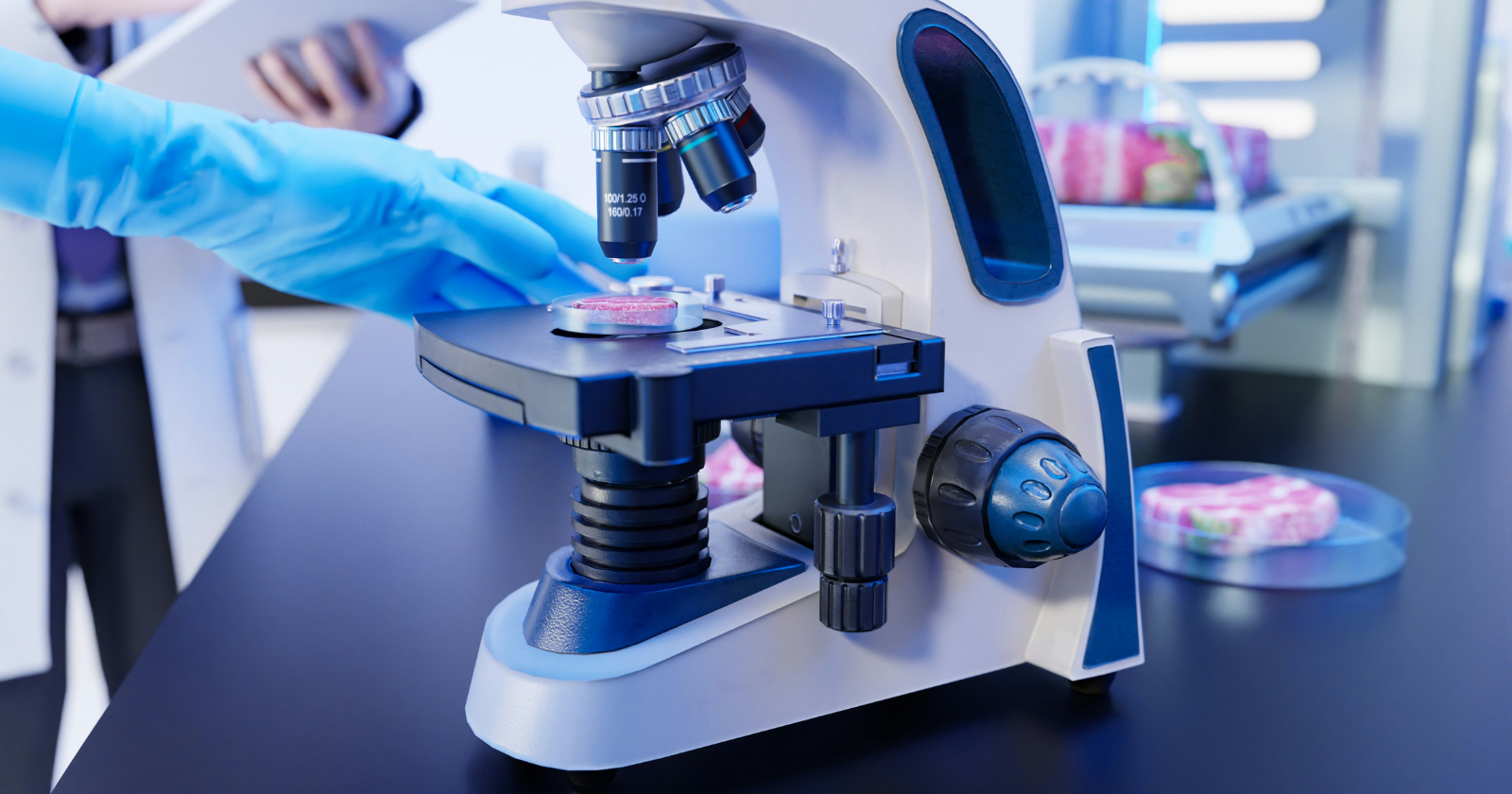
But the patty was grown from bovine cells in a bioreactor, shaped by a 3D printer, and has never been part of a living, breathing cow.
A few thousand miles away, restaurants in Europe are serving 3D-printed steaks that mimic the exact fiber structure of a ribeye. What once belonged to speculative fiction panels now belongs to dinner menus. And yet, most people I talk to in Oakland, where I live with my wife and two kids, still raise an eyebrow when I mention any of this. The gap between what is technologically possible and what feels emotionally acceptable has become the central story of food in our decade.
The idea of printing our dinner or growing it in a lab used to sound like science fiction, but here we are — with some companies already rolling out prototypes. It makes sense if you think about how far we’ve come: a decade ago, few imagined that something like a drone-delivered meal would be viable. Now, many of us barely flinch at the concept.
I spent more than a decade working in digital marketing before I made the leap into writing about life choices and human behavior. In that previous career, I saw how rapidly tech innovations can reshape entire industries.
Watching that same level of disruption happen to the food sector is fascinating because it challenges some of our core traditions — how we farm, how we cook and even how we see ourselves as consumers.
When Progress Tastes Like Betrayal
Food is identity. It carries memory, culture, and a sense of place that few other consumer products can replicate. I grew up in a small town in Oregon where the nearest mall was two hours away, and dinner meant whatever my parents could source from the local grocery store or a neighbor’s garden.
That upbringing gave me a deep skepticism of consumer culture, but it also gave me something else: an emotional attachment to the idea that real food has a traceable origin. A field. A ranch. A river. When you tell someone their steak was printed by a machine, you’re asking them to override decades of sensory conditioning and inherited meaning.
This is the core friction that the alternative protein industry struggles to name. The technology is advancing at a remarkable pace. A 2024 review published in Trends in Food Science & Technology detailed how 3D bioprinting can now produce lab-grown muscle meat and seafood products with complex internal structures, including muscle fibers, fat layers, and even blood vessels, offering a genuine path toward sustainable meat alternatives. The engineering is extraordinary. But the emotional landscape is far more complicated than any bioprinter can map.
Consider what’s happening simultaneously in the broader food conversation. The government officials are pressing major food companies to eliminate artificial additives, reflecting a growing public demand for cleaner, more transparent ingredients. Consumers are increasingly suspicious of anything that sounds engineered. They want fewer chemicals, fewer intermediaries, and more honesty about what ends up on their plates.
Into this environment walks a product that is, by definition, entirely engineered. The tension is real: people want innovation that solves climate problems, yet they also want food that feels trustworthy and ancestral. These two desires collide every time someone reads the phrase “cell-cultured protein” on a label.
What I’ve found analyzing consumer behavior data is that this contradiction runs deeper than simple technophobia. It touches something primal about control. When you buy a steak from a butcher, you participate in a chain of custody you believe you understand. When you buy one from a bioreactor, you’re trusting institutions, scientists, and corporations in ways that many people, after years of food scandals and misleading labels, are unwilling to do.
The Loudest Voices Are Selling Something
The public conversation around lab-grown and 3D-printed meat has become almost impossibly distorted. On one side, venture-capital-funded startups present alternative proteins as the single greatest lever for planetary survival. On the other, traditional agriculture lobbies frame these products as existential threats to rural livelihoods and food safety. Both camps cherry-pick data. Both rely on emotional manipulation. And caught in the middle is a consumer who still has to decide what to feed their family on a Tuesday night.
Eshchar Ben-Shitrit, co-founder and CEO of Redefine Meat, has stated plainly: “The biggest reason for going to alternative meat is because of the future of our planet.” That’s a compelling argument, and one grounded in legitimate environmental data about land use, water consumption, and methane emissions from conventional livestock. But framing the conversation exclusively through planetary urgency has a paradoxical effect. It pressures consumers into acceptance rather than inviting them into understanding. And pressure, as any marketer who has studied behavioral psychology knows, breeds resistance.
During my time working with tech companies in the Bay Area, I watched this pattern repeat itself across industries. The more aggressively a product is positioned as morally imperative, the more skeptical consumers become about what’s being hidden behind the righteousness. It happened with electric vehicles, with plant-based milks, and with cryptocurrency. The cycle is predictable: hype, backlash, fragmentation, and then a slow, quieter adoption driven by practical value rather than ideology.
Meanwhile, media coverage oscillates between breathless futurism and alarmist rejection. One headline promises that 3D-printed meat will end world hunger. The next warns it could destroy farming communities. Neither frame gives people what they actually need: clear, honest information about safety, taste, nutrition, cost, and environmental trade-offs. The oversimplification is staggering. Complex questions about cellular agriculture’s scalability, energy inputs, and regulatory frameworks get compressed into binary arguments that generate clicks but erode comprehension.
Where Clarity Lives
Strip away the hype and the fear, and a simpler truth emerges about what will determine whether these foods become mainstream.
The adoption of lab-grown and 3D-printed meat will hinge on trust built through radical transparency, where companies show consumers exactly what they’re eating, how it’s made, and what trade-offs remain unresolved, rather than hiding complexity behind marketing narratives.
This is the insight the industry keeps sidestepping. Technology alone will never be enough. Neither will environmental urgency. What earns a place on someone’s plate is the belief that they’re being told the whole truth.
Building Trust One Honest Label at a Time
So what does this mean in practice? It means the companies leading this space need to resist the temptation to over-promise. It means acknowledging that 3D-printed steaks are still expensive, that scaling bioreactor production remains an engineering challenge, and that the taste and texture gap, while narrowing, has not fully closed. Consumers can handle complexity. What they cannot handle is the feeling that they’re being managed.
I learned the hard way in my career that data without empathy creates products nobody wants. You can have the most sophisticated consumer research, the most elegant technology, and the most airtight environmental case, and still fail if you treat the people you’re serving as obstacles to overcome rather than partners to engage. The alternative protein industry sits at precisely this crossroads. Its technical achievements are genuinely impressive. Its marketing, too often, talks at people rather than with them.
There are encouraging signs. Some companies have started publishing detailed lifecycle analyses comparing their products to conventional meat, including the areas where the conventional product still wins. Others are inviting third-party auditors into their production facilities and livestreaming the process. These gestures may seem small, but they represent a fundamental shift in posture: from persuasion to participation.
For consumers navigating this landscape, the most useful filter is simple. Ask what a company is willing to admit it hasn’t solved yet. The ones that give you a real answer are the ones worth trusting with your dinner. The future of protein is arriving faster than most people expect. Whether it earns a permanent place on the menu will depend less on the printers and bioreactors, and more on whether the people behind them remember that trust is the one ingredient no machine can fabricate.